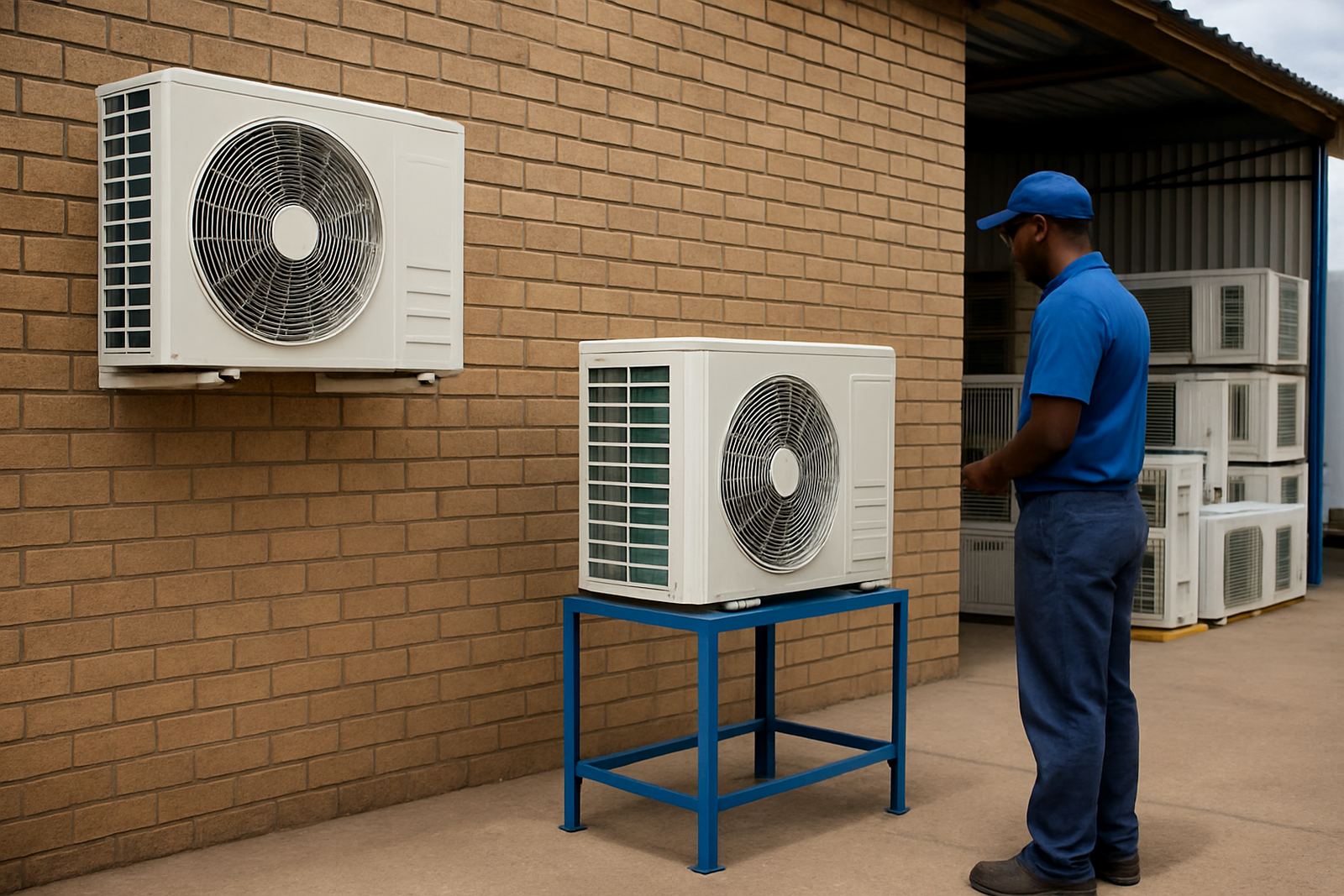
Why commissioning is more than switching the unit on
Many people think a new air-conditioner is ready once it blows cold air. In practice, that is only the first sign that the unit is alive. Commissioning is the full final process that checks the installation, the controls, the refrigerant circuit, the drain line and the electrical connections before the system is signed off.
For a warehouse, shop, home or small office in Mbombela, White River, Hazyview, Klerksdorp, Potchefstroom or Rustenburg, this stage matters because the weather and power conditions are not gentle. Summer humidity in the Lowveld, dust in the North West and load-shedding all place pressure on a system. A unit that is only fitted and switched on may work today, but it can fail early if the final checks are skipped.
The checks done before handover
Commissioning is a practical inspection, not a paperwork exercise. The installer confirms that the system matches the room size, the pipe runs are correct and the indoor and outdoor units are mounted securely. Then the system is tested under operating conditions so faults can be caught before the client takes over.
- Check that the indoor and outdoor units are level and firmly fixed.
- Inspect pipework, flares and insulation for leaks or damage.
- Test the drain for correct fall and free water flow.
- Confirm isolators, cabling and breaker sizes are suitable.
- Verify remote settings, temperature control and fan speeds.
- Record operating pressures, temperatures and current draw.
If one of these steps is rushed, the customer may only notice it later as poor cooling, water dripping from the wall unit or a nuisance trip at the distribution board.
What a good commissioning test should show
A proper handover gives the owner clear proof that the system is operating within spec. That means the room pulls down to the set temperature, the airflow is strong, and the unit is not drawing more power than expected. It should also mean the condensate water is draining away cleanly, not pooling near the ceiling or running back into the room.
On inverter units, commissioning is especially important because the system needs time to settle and modulate properly. On cassette units in shops and offices, the air throw has to be balanced so one side of the room does not feel cold while the other stays stuffy. With portable units, the exhaust hose, window kit and room sealing must be checked or cooling performance will drop fast.
- The system starts and stops correctly on the controller.
- There is no unusual vibration, noise or smell.
- The pipework and joints stay dry during the test run.
- Air delivery reaches the intended part of the room.
- Power use is reasonable for the unit size and load.
Why local conditions change the handover
A system that is fine inland may still need different attention near the coast or in a hot, dusty area. In the Lowveld, high humidity can expose bad drainage and poor insulation very quickly. In towns across North West, dust and long operating hours can make a weak installation show its flaws within weeks.
That is why site assessments and commissioning should be treated as one process. The installer must look at the room size, sun load, ceiling height, number of people in the room and the likely use of the space. A small boardroom in Rustenburg may need a different approach from a takeaway counter in Mbombela. A school office in Potchefstroom may run for long periods during the day and then sit idle after hours, so controls and timer settings matter too.
Signs the installer did not finish the job properly
Clients often only realise something was missed after the first hot spell or the first power cut. A rushed handover can leave hidden faults that cost more later. If you see any of the signs below, the system needs attention before it becomes a bigger repair.
- Water dripping from the indoor unit or staining the wall.
- Breaker trips when the system starts.
- Airflow feels weak even on the highest setting.
- The unit struggles to reach the set temperature.
- Ice forms on the pipes or on the indoor coil.
- The outdoor unit hums loudly or vibrates badly.
These problems are often caused by poor pipe work, a gas issue, incorrect cabling or a bad drain slope. They are far easier to correct during commissioning than after the client has moved in and started using the aircon every day.
What clients should ask for at handover
Good commissioning is not only the installer’s responsibility. The client should ask for a short handover and make sure the basic operating details are understood. This is useful for homeowners, shop managers and facilities teams alike.
Before sign-off, ask for the following:
- A demo of the remote or controller and its basic settings.
- Confirmation of where the isolator and breaker are located.
- Advice on filter cleaning and service intervals.
- Any notes on gas charges, pipe lengths or access limits.
- A contact point for faults, follow-up servicing and seasonal checks.
For a business, this small step helps avoid confusion during load-shedding, after-hours shutdowns or the first heat wave. For a home, it makes it easier to keep the unit working well without guessing.