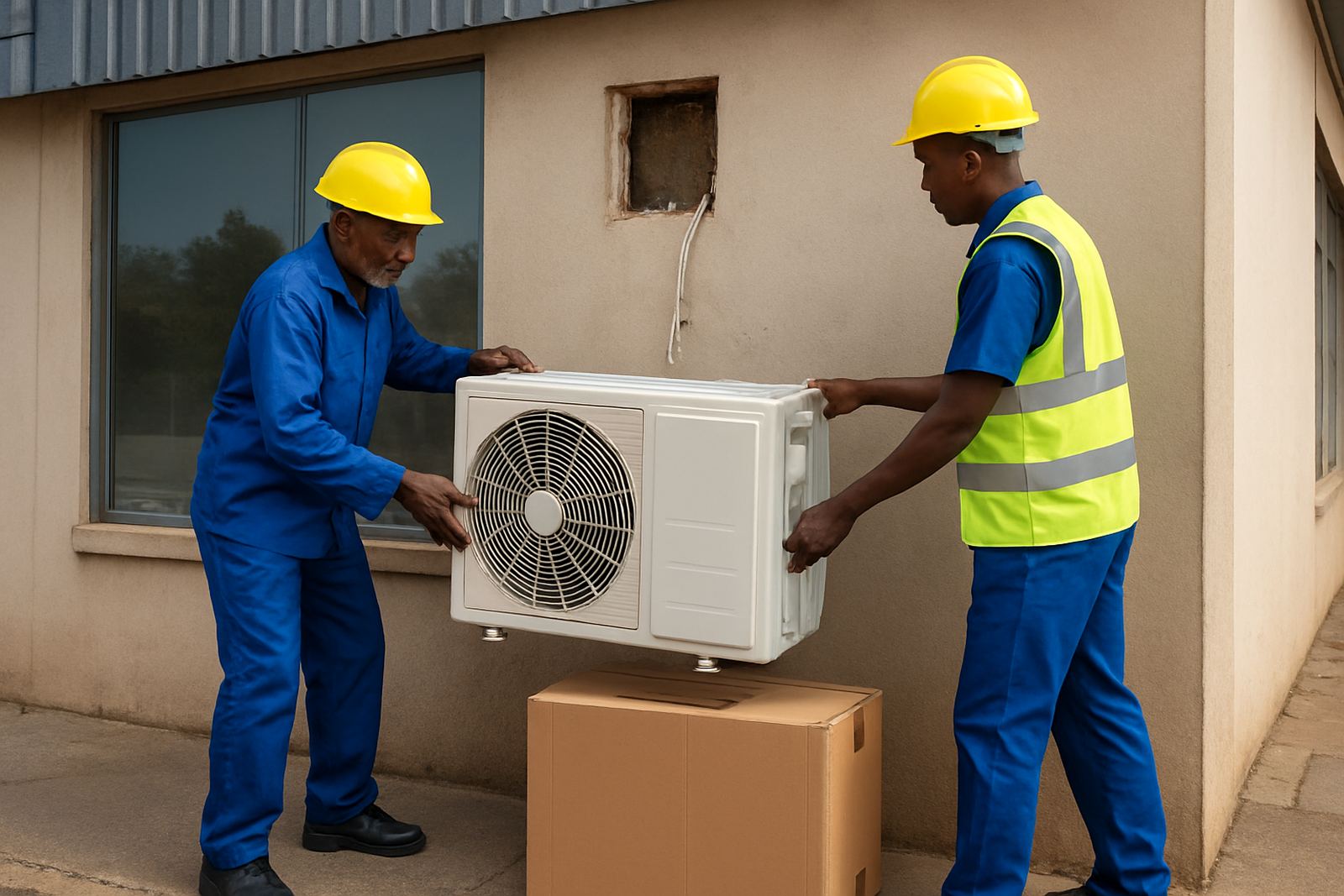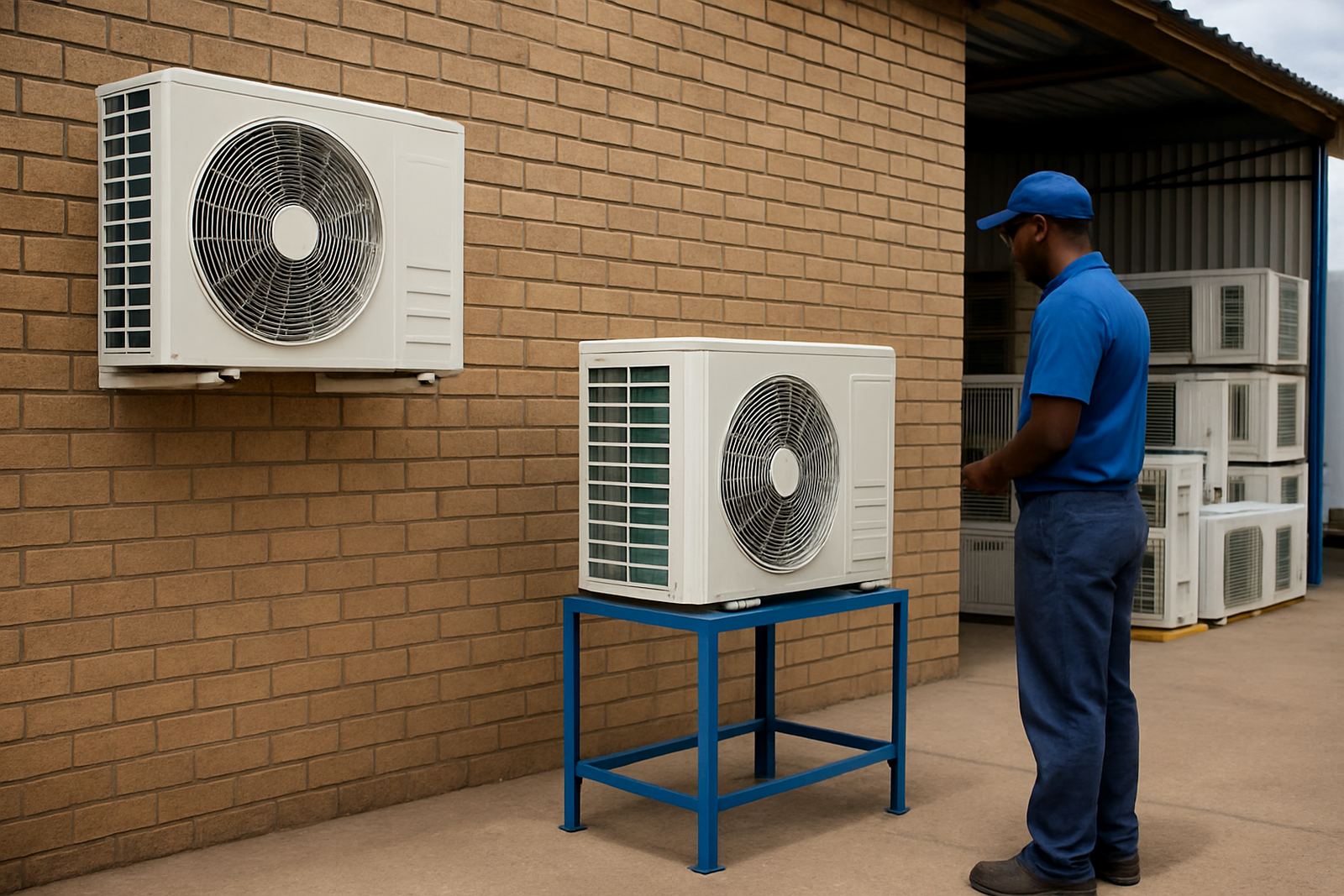
When a wall bracket makes more sense than a stand
Wall brackets suit many split systems because they keep the outdoor unit off the ground, away from puddles, minor flooding, dust build-up and accidental knocks. In places like Mbombela, White River and Hazyview, where summer rain can be heavy and gardens stay damp, a raised unit can help reduce rusting around the base and keep the condenser cleaner for longer.
They also work well where yard space is tight. If the only practical spot is along a boundary wall or beside a narrow walkway, a bracket can free up the floor for moving around, refuse bins or delivery access. For some homes, that is the difference between a neat installation and one that is constantly in the way.
Wall mounting is not the answer for every building though. The wall must be strong enough, the fixing points must be sound, and the unit has to sit with enough clearance for air movement and service access. If the wall is old, cracked or made from light materials, a stand may be the safer choice.
What floor stands solve on busy or uneven sites
Floor stands are the practical option when the wall is not suitable or when the outdoor unit needs to sit on paving, a concrete apron or a service area. On business premises in Klerksdorp and Potchefstroom, where back yards and plant areas are often shared with staff movement and general storage, a stand can place the unit where technicians can reach it without climbing or working off a ladder.
A good floor stand also helps on uneven ground. If the site has soft soil, a patchy lawn or a slope that turns into muddy runoff after rain, a stand can be fixed to a solid slab and levelled properly. That matters for long-term vibration control and for keeping the pipework from being strained.
There is another benefit people overlook. In some North West towns, dust and wind-blown grit can be harsh on low-mounted equipment. Lifting the unit a bit higher can reduce direct exposure, especially where there is vehicle traffic, loose sand or nearby landscaping that sheds leaves and grass cuttings.
- Best where the wall is weak, thin or cracked
- Useful on uneven yards, paving or service aprons
- Helps keep the unit accessible for cleaning and repairs
- Can reduce contact with dirt, splash-back and garden debris
Why slab stands are often the neatest long-term option
Slab stands, or ground-mounted stands fixed to a proper concrete base, are often the cleanest solution when the site allows it. They give a solid footing, good drainage clearance and easy access for installation and maintenance. On a new build, they can be planned before the paving is finished, which avoids awkward drilling later and saves a lot of trouble.
In hotter inland areas, many units run hard for long periods and need space around them to release heat properly. A slab stand gives that breathing room without depending on a wall being perfectly positioned. It can also be the better answer where the owner wants the outdoor unit hidden lower down but still protected from standing water.
For body corporate properties and commercial sites, a slab stand can be easier to standardise. If several units are being fitted across a row of offices or flats, one base height and one fixing method makes servicing simpler. It also gives a tidier finish when municipal or estate rules are strict about visible plant equipment.
The checks that matter before anyone drills or bolts
Before choosing brackets or stands, the installer should look at more than the aircon model. The wall material, wind exposure, service route, drainage path and security of the position all matter. In the Lowveld, a bracket that sits under a roof edge may be fine, but in an exposed yard it could get hammered by weather and vibration if the fixings are poor.
A proper site assessment should answer a few basic questions:
- Is the wall strong enough for the weight of the unit and the bracket?
- Will the outdoor unit get enough airflow without recirculating hot air?
- Is there clear access for future cleaning, gas checks and fault finding?
- Will rainwater, sprinklers or runoff collect under the unit?
- Can the position help deter theft and tampering?
If the answer to any of these is uncertain, the mounting method needs to change before installation starts. That is far cheaper than moving a unit later because the wall is failing or the stand is rusting out. On coastal routes the issue is humidity, but inland the bigger concern is often dust and heat cycling, which can loosen poor fixings over time.
A local example from Mbombela and the North West
A common Mbombela request is a split system for a small office or shop where the outdoor space is limited by parking and paving. In one case, the back yard had a narrow passage with a boundary wall on one side and a refuse area on the other. A wall bracket kept the unit out of the walkway and lifted it clear of splash-back from summer rain.
In contrast, a workshop in Klerksdorp had no suitable wall section at all. The only solid location was a concrete apron beside the building. A slab stand was the better call there because the unit could be anchored securely, kept level and positioned where service access would not disrupt staff or deliveries. The owner also wanted the unit high enough to avoid dust from the yard and minor flooding after heavy storms.
The lesson is simple: the same aircon can need a different mounting method depending on the site. A bracket is not automatically cheaper if the wall needs repair first, and a floor stand is not automatically better if it sits in a puddle or blocks the only access path.
Getting the mounting right for service, safety and noise
Good mounting is about the day after the installation too. The outdoor unit should not shake the wall, rattle against the stand or sit so low that weeds, litter and stones build up underneath. If the unit is too close to a bedroom window or office wall, noise can become a complaint even when the equipment is working as it should.
For service teams, the right height and position make fault finding, deep cleaning and gas top-ups much easier. Technicians can check pipe joints, isolate the power and inspect the condenser without fighting cramped access. That saves time and reduces the chance of damage during maintenance.
As a rule, if the site is exposed, cramped or prone to water, start by asking whether the mounting method helps the aircon breathe and stay serviceable. A neat-looking bracket or stand is only useful if it keeps doing its job through load-shedding, heat, rain and the ordinary wear that comes with South African conditions.
The practical rule we use on real sites
Bracket or stand, the best choice is the one that suits the building first and the equipment second. If the wall is strong and the position is sheltered, brackets can be the tidy answer. If the ground is the safer place, a floor or slab stand is usually the better long-term option. There is no point saving a small amount on fittings if the unit ends up harder to clean, noisier or exposed to damage.
When we assess a site in Mbombela, White River, Hazyview, Klerksdorp, Potchefstroom or Rustenburg, we look at airflow, access, drainage and serviceability before recommending the mounting method. That is how you avoid future call-outs that could have been prevented on day one.