When a portable unit does the job well
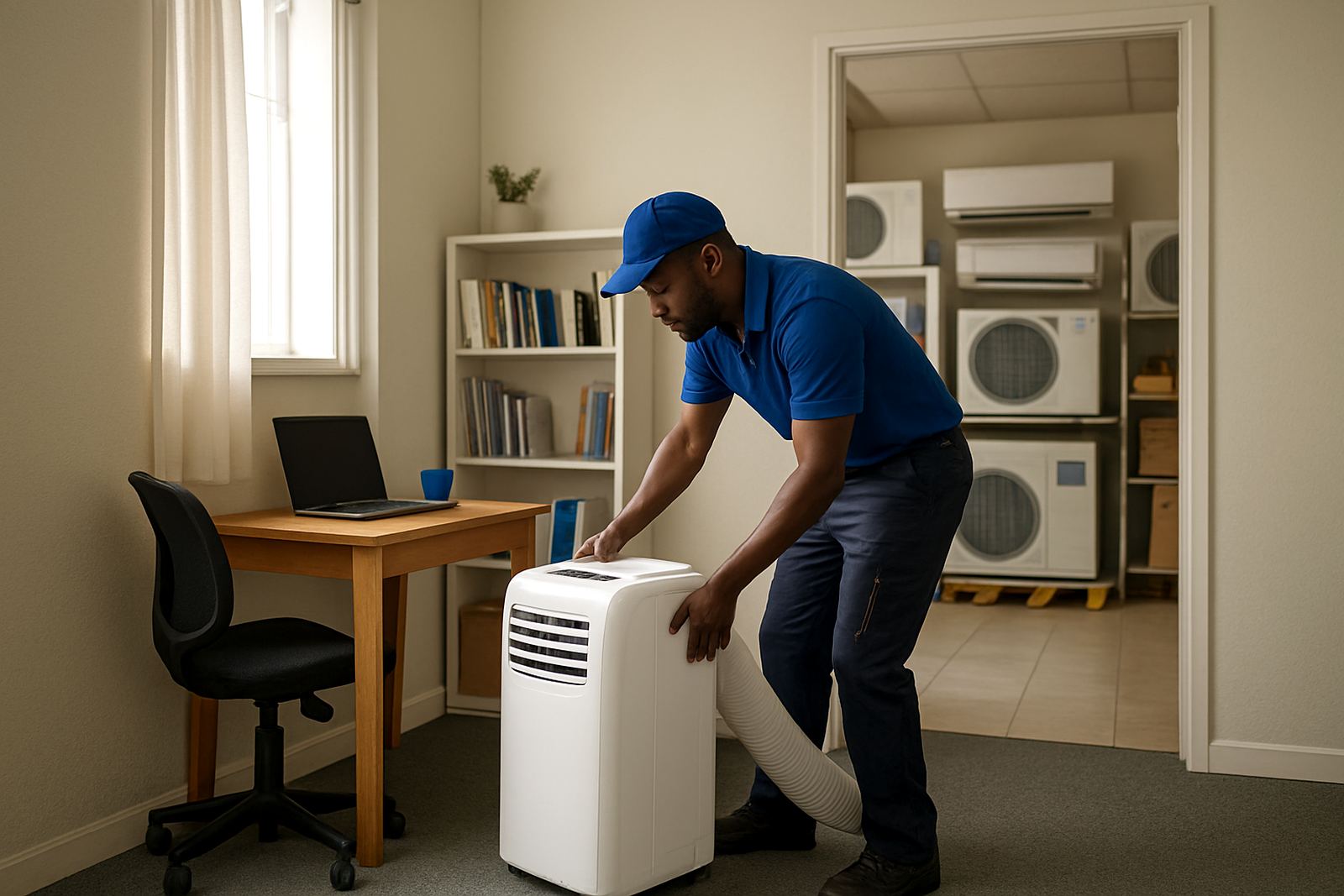
A portable unit can be a practical choice where you need cooling quickly and you cannot do a permanent installation yet. It works best in a single enclosed room with manageable heat gain, like a small bedroom, home office or temporary rental space. If you are in Mbombela and the room faces afternoon sun, a portable can take the edge off for sleep or short work periods, especially when the doors stay shut and the window vent is fitted properly.
These units suit people who need flexibility. You can move the machine from one room to another, or use it in a property where the landlord will not allow wall penetrations. They are also handy during a short stay, renovation, or when you need a stopgap solution before a full installation is approved. In that sense they have value, but it must be said clearly: they cool best under controlled conditions.
- One room only, not a whole house
- Short term use or temporary arrangements
- Rentals where fixed fitting is not allowed
- Light-duty cooling for sleeping or small office use
The limits that catch people out
The biggest mistake is expecting a portable unit to behave like a wall split. It cannot usually match the same cooling strength, lower noise level or energy efficiency. The hose must push hot air out through a window or opening, and if that venting is poor the unit works harder and the room still feels sticky. In the Lowveld, where humidity can climb fast, that extra moisture makes a real difference.
Portable units also take up floor space, and they often need the window partly open for the exhaust kit. That means warm outside air can sneak back in around the gap, which reduces performance. Add in power cuts and the picture gets less attractive. When the electricity comes back, a portable unit may restart, but it still has to fight against the same hot room and the same air leakage. It is a stop-start solution, not a full answer for heavy daily use.
- More room noise than a fixed unit
- Needs correct venting to work properly
- Uses more space on the floor
- Less efficient for long daily running
- Weak choice for big open-plan areas
When a fixed installation makes more sense
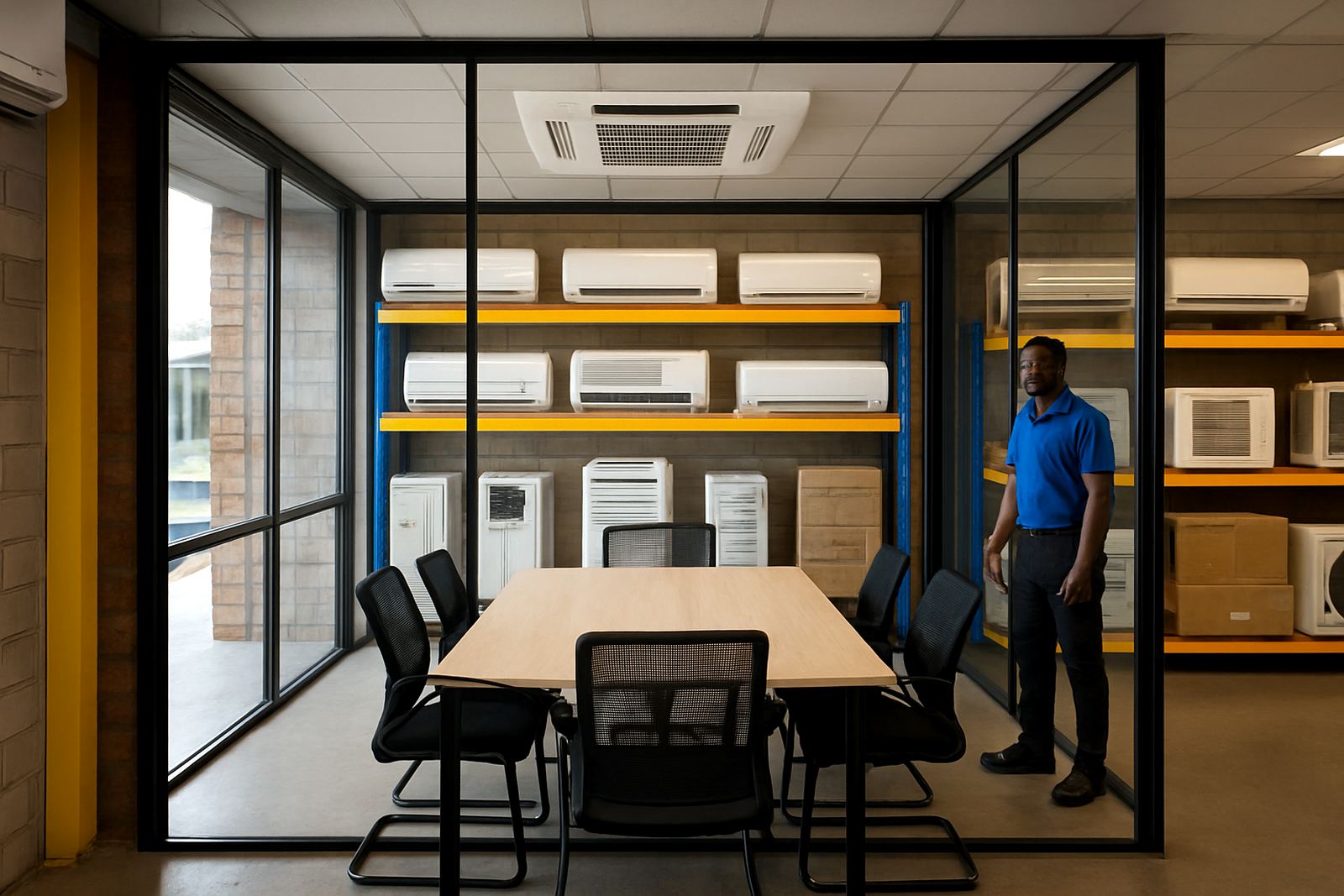
If you want reliable cooling every day, a fixed system is usually the better investment. Wall splits and cassette units are designed to move heat out of the room properly, with better airflow control and less mess around the window. They are a stronger fit for living rooms, boardrooms, retail spaces and bedrooms that are used for many hours a day. You also get a neater finish and less risk of warm air re-entering the room.
In places like Klerksdorp and Potchefstroom, where offices often need cooling through long working hours, a fixed installation is normally easier to justify. The same goes for a shopfront or salon where customers expect a comfortable space and staff need stable conditions. Once the running hours grow, the portable unit often costs more in frustration than it saves in convenience.
- Long daily operating hours
- Rooms with regular occupancy
- Businesses that need stable comfort
- Spaces where floor space matters
- Areas with high heat from sun or equipment
Local conditions change the answer
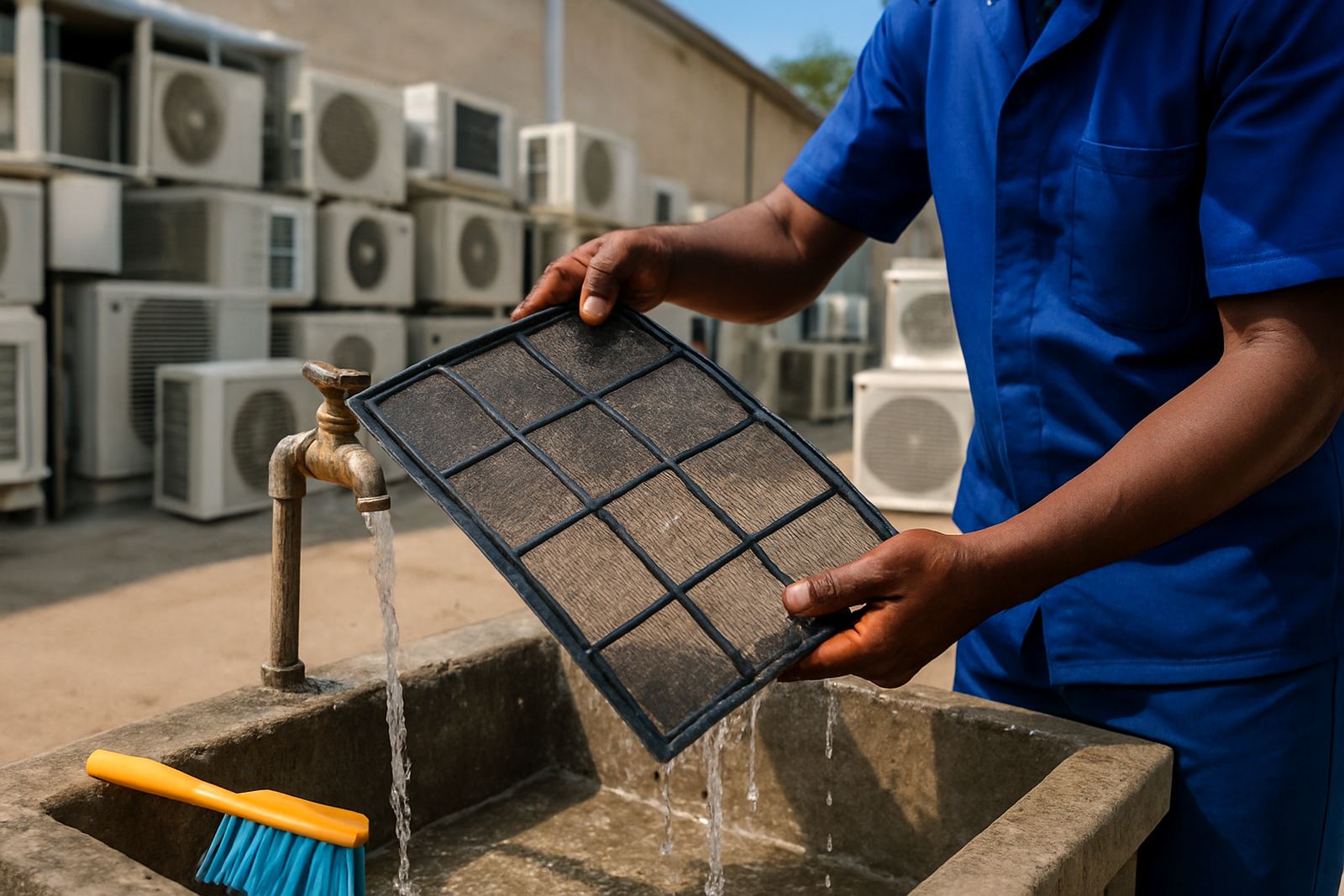
North West heat and Lowveld humidity do not behave the same, so the right choice depends on where the unit will work. In White River or Hazyview, the moisture in the air can make a small portable feel weaker than expected. In Rustenburg, afternoon heat and dust can also expose the limits of a unit that is moved around and not cleaned often enough. A portable can still be useful, but only if the room size and usage match its capacity.
Take a small guest room in Mbombela, for example. If the room is shut at night and only used for sleeping, a portable unit may be enough. But if that room is also used as a home office during the day, with a computer, sunlight and regular door opening, a fixed unit will usually perform better. That is the sort of practical judgement site assessments are for. You want cooling that suits the room, not just the catalogue.
What to check before you buy a portable unit
Before you spend money on a portable unit, look closely at the room and the way it is used. A unit that is too small will run flat out and still leave the room uncomfortable. A unit that is too big for a very small room can cycle badly and feel less pleasant. The window type, ceiling height, sun exposure and number of people in the room all matter.
Also check whether you have a proper place to vent the hot air and whether the hose route is short enough. If the hose is long and bent around furniture, performance drops. In some homes a better answer is to move the load with curtains, shade, or improved ventilation, then install a fixed unit in the main room later. Cheap cooling that fails on the first hot spell is not cheap at all.
- Room size in square metres
- Window style and venting option
- Sunlight on the room during the day
- How many people use the room
- Whether the unit will run daily or only sometimes
Choosing between stopgap and proper fit
A portable unit is worth considering when you need quick, movable cooling and you understand its limits. A fixed installation makes more sense when the room is used often, the heat load is high, or you want better comfort over the long term. The honest answer is not about which product is better in general, it is about what suits the space and the way you live or work in it.
For homes and businesses in Mbombela, White River, Hazyview, Klerksdorp, Potchefstroom and Rustenburg, we often find that a portable unit is a short-term bridge, while a wall split or cassette becomes the proper solution later. If you are unsure, a site assessment is the best place to start. It keeps the decision grounded in the room size, power supply and actual daily use, not guesswork.
A simple rule to remember
If you need cooling for one room, for a limited time, and you can vent it properly, a portable unit may be enough. If you need comfort every day, in more than one room or in a busy space, fixed aircon is usually the smarter choice. That is the plain truth and it saves time, money and disappointment later on.