Why an aircon starts dripping inside
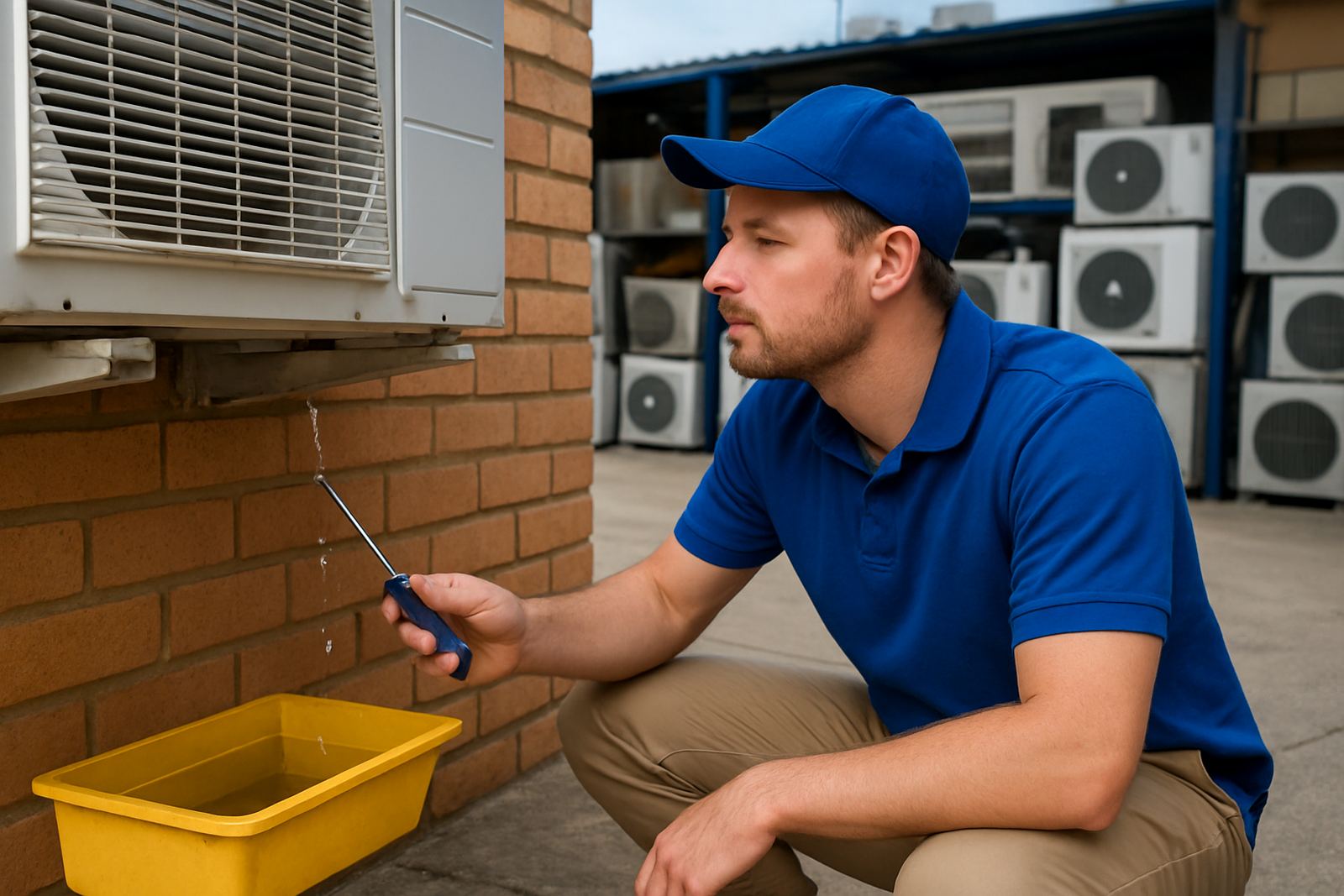
When an indoor unit cools warm air, moisture in the air condenses on the coil and must leave through the drain tray and drain pipe. If that water cannot flow away freely, it backs up into the unit and escapes indoors. That is why a clean-looking installation can still leave a wet patch on the skirting board or a drip mark on the wall below.
The most common causes are simple enough. The drain pipe may not have enough fall, the outlet may be blocked, or the installer may have left the pipe kinked behind the wall. In some homes, especially near Mbombela and White River where humidity stays high for much of the year, the unit can produce more water than expected and expose a weak drainage run. A little bit of grit or algae is enough to slow things down.
Installation details that decide whether water runs out or back in
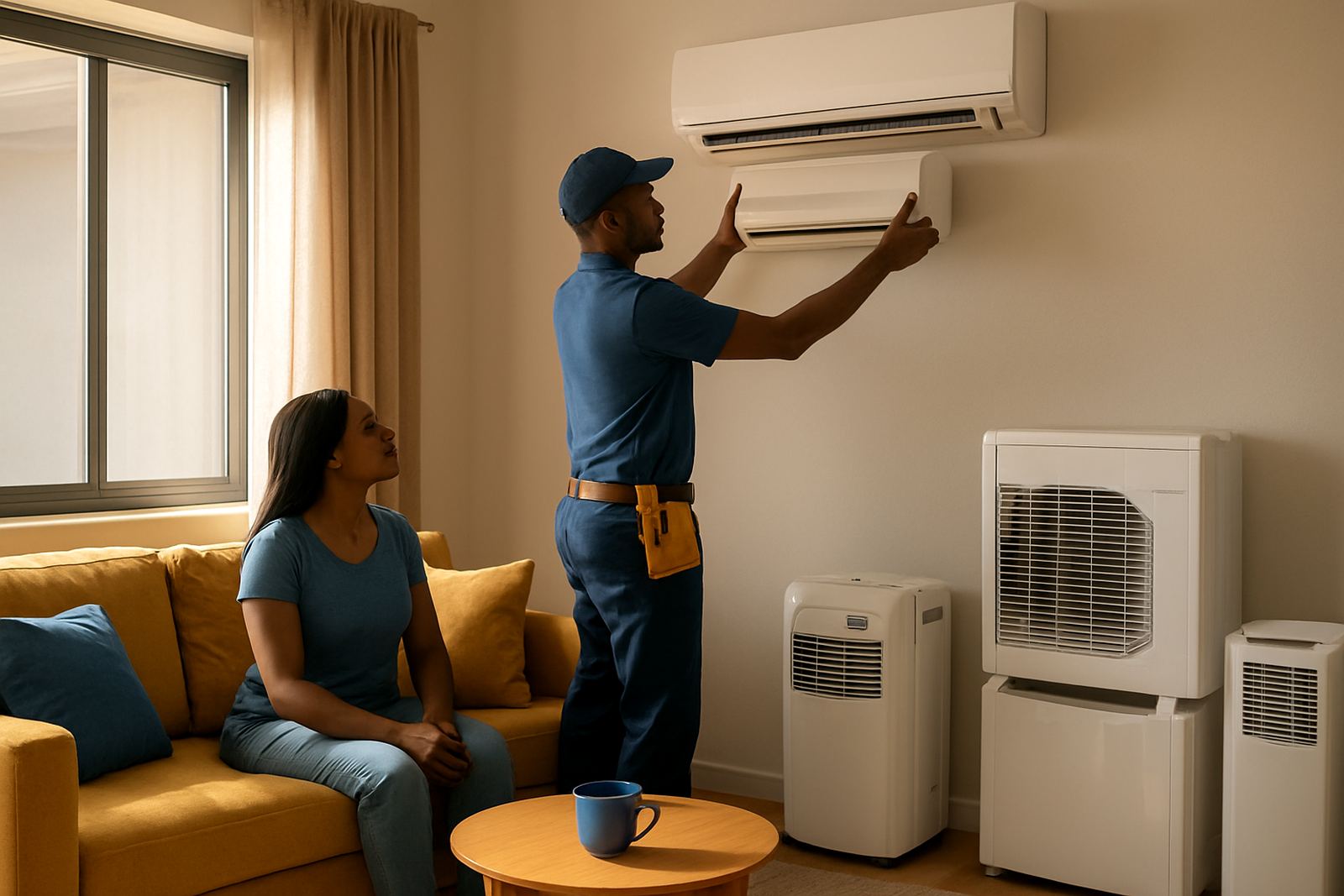
Drainage problems often begin on the day of fitment. A wall split needs the indoor unit mounted level, with the drain side slightly lower as specified by the unit layout. The pipe should run continuously downward to the outside discharge point. If it rises even for a short section, water can sit in the line and push back into the tray.
On longer runs, poor routing causes trouble too. A drain pipe trapped behind ceiling insulation, bent too tightly through the wall sleeve, or run through a hot roof space without enough support can sag over time. In Potchefstroom and Rustenburg, where many installations are in offices and retail sites, ceiling voids often hide these problems until the first serious drip complaint arrives.
- Drain pipe must have a steady downward fall
- Pipe joins need to be sealed properly
- Indoor unit must sit level and not twist on the bracket
- Wall sleeve should not crush the drain line
- Condensate route should end where water can discharge safely
What indoor dripping looks like before the damage spreads
Water does not always pour out at once. More often, it begins as a stain, a faint smell of damp, or a small drip only when the unit runs for long periods. By the time the water is obvious, the drip tray may already be overflowing or the drain line may be partially blocked. In homes, that can damage paint and ceiling board. In shops or reception areas, it leaves the kind of marks that customers notice immediately.
Look out for these signs:
- Gurgling from the indoor unit
- Water staining under the front casing
- Drips only when the unit has been running for an hour or more
- Damp patches near the wall outlet
- Musty smell after the unit switches off
If the unit is also short cycling during load-shedding recovery or on very humid days, the drainage problem can seem intermitent. That makes it easy to ignore until the ceiling starts showing water rings.
Local conditions that make drainage failures more common
Air conditioners in the Lowveld deal with heat, dust and moisture at the same time. In Mbombela, Hazyview and nearby areas, an indoor unit can pull a lot of condensate out of the air, especially in summer. On the North West side, Klerksdorp and Potchefstroom often see dust build-up that settles in the tray and drain outlet. Both conditions increase the chance of blockage.
Load-shedding adds another layer. After repeated shutdowns, units restart hard and may run longer to catch up with the room temperature. That means more condensate in a shorter period. If the drainage line is already weak, the overflow appears at the worst possible time, often after hours when the room is in use and nobody is watching the unit.
How to prevent indoor drainage trouble before it starts
Good prevention starts with correct sizing and correct installation, then follows up with scheduled servicing. A unit that is too small will run almost constantly and create more moisture movement through the tray. A unit that is mounted poorly may never drain properly no matter how often it is topped up with gas. The answer is not guesswork, it is proper assessment and fitment.
For property owners and site managers, the practical steps are straightforward:
- Ask for a site assessment before replacement or new fitment
- Make sure the drain route is checked during commissioning
- Have the indoor unit deep cleaned before winter and summer use
- Clear dust and algae from the drain line during servicing
- Check for wall movement or ceiling sag that could affect the pipe fall
If the unit was installed years ago and the room has since been altered, the original drain route may no longer suit the space. A cupboard added below the outlet or a new ceiling bulkhead can force water to sit in the line. A quick review can save a bigger repair later.
A practical example from a Mbombela installation
A small office in Mbombela called after water started dripping onto a filing cabinet every afternoon. The unit itself still cooled well, so the staff assumed the problem was a blocked filter. On inspection, the drain pipe had a gentle rise behind the ceiling after a later partition wall was built. During humid afternoons the tray filled faster than the water could escape.
The fix was simple once the route was corrected. The pipe was re-laid with proper fall, the tray was cleaned and the indoor unit was serviced. No parts were replaced, yet the dripping stopped immediately. That case shows how often the fault is not the aircon itself but the way the condensate is guided out of the room.
When to call for service instead of waiting it out
If water is already dripping indoors, do not keep running the unit hoping it will dry out. Continued use can soak plasterboard, damage electrical points nearby and create more repair cost than the drainage fault itself. A technician should check the drain pan, pipe route, insulation and fall, then confirm whether the issue is blockage, fitment or a damaged component.
At Aircon Warehouse, the team handles site assessments, new installations, replacement units, cassette fitment, portable setup, system commissioning, scheduled servicing, fault finding, gas top-ups and deep cleaning across Mbombela, White River, Hazyview, Klerksdorp, Potchefstroom and Rustenburg. For indoor drainage problems, that full check matters because water issues are usually part of a larger installation story, not a single loose joint.
Once the route is corrected and the system is cleaned, the indoor unit should leave the moisture outside where it belongs. That is the difference between a room that stays comfortable and a room that keeps showing damp spots after every hot spell.