Why salons feel hotter than the thermostat says
A salon is not just a room with chairs. It is a working space with constant activity, warm styling equipment, open doors, mirrors, lighting and people moving in and out. Each of those adds heat, and the effect is stronger in towns like Mbombela, White River and Hazyview where outside temperatures can climb hard in summer.
When the cooling system is sized only for floor area and not for the actual heat load, the room may start cool in the morning and then struggle by midday. That is when clients begin fanning themselves, staff slow down and the temperature keeps creeping up, especialy near the styling stations.
The main heat sources in a salon
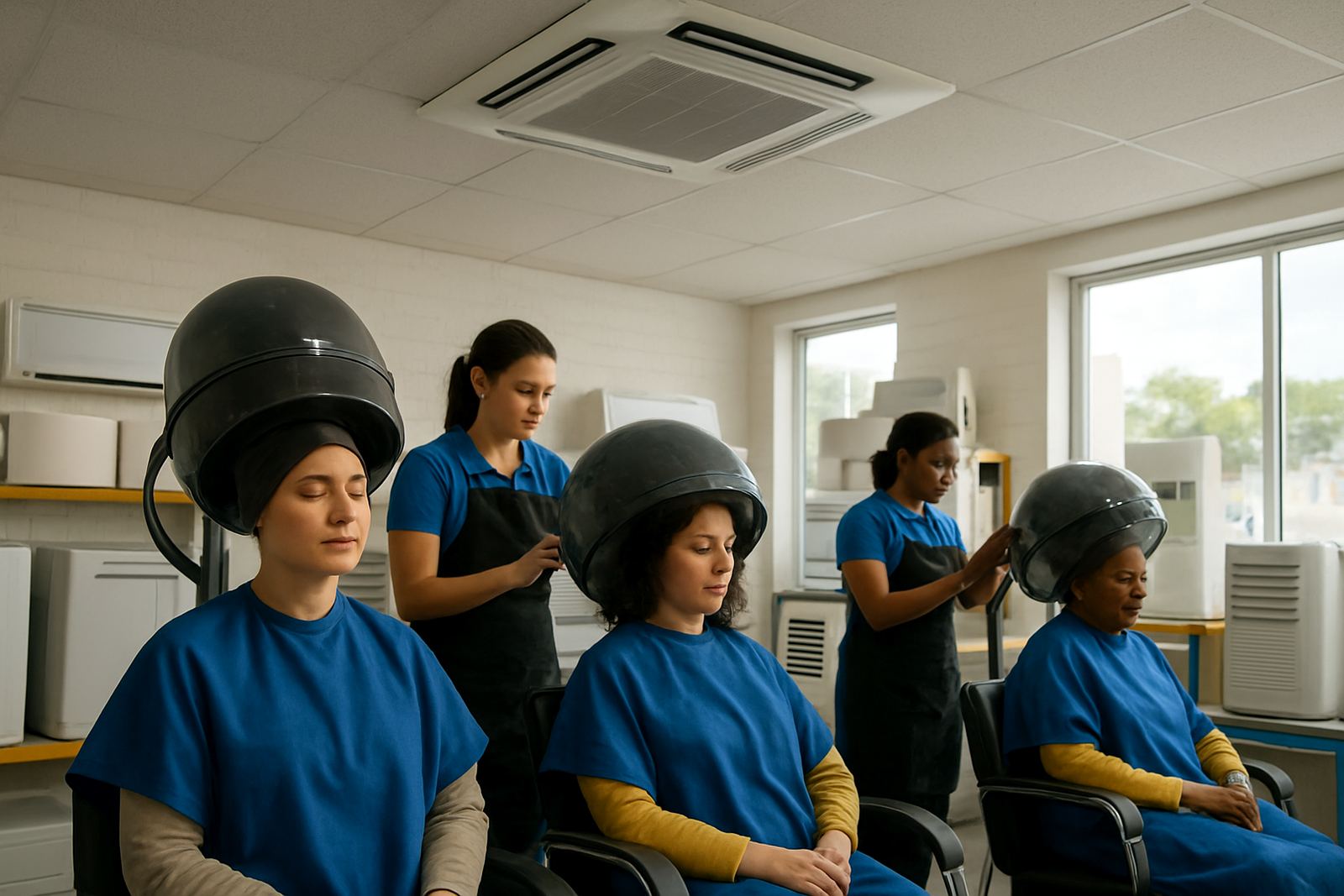
Hair dryers are usually the biggest problem because they run for long periods and discharge heat directly into the room. Flat irons, curlers and wash bay water heaters also add to the load. Even LED lights, while efficient, still contribute when there are many fittings switched on for long trading hours.
- Hair dryers and heat styling tools
- Ceiling and mirror lighting
- Warm bodies in a busy appointment schedule
- Direct sunlight through shopfront glass
- Open doors from foot traffic
- Hot water use in wash areas
In smaller salons, one treatment area can already change the whole room temperature. In larger shops, the combined effect of several operators working at once is what matters most.
How occupancy changes the cooling load
Occupancy is often missed during planning. A salon may hold six or eight people at once, including stylists, assistants and clients. Each person gives off body heat, and when appointments overlap the room needs to recover that heat quickly so the place does not become stuffy.
Good airflow matters as much as cooling capacity. A unit that only blows cold air at one point can leave the reception area warm while the styling section feels icy. Proper site assessments help map where people stand, where dryers are used and where air movement gets blocked by partitions or product shelving.
- Reception areas need different airflow to backwash bays
- Waiting corners often need their own supply of cool air
- Rooms with treatment beds should allow for quieter operation
A Lowveld salon example that shows the problem
Take a salon in Mbombela with a glass front facing afternoon sun. The owner installs a single wall split sized only from the square metre count. It cools the front counter early on, but by 2 pm three stylists are using dryers, two clients are under heat tools and the front door keeps opening for walk-ins. The room gets hot again and the compressor runs almost non-stop.
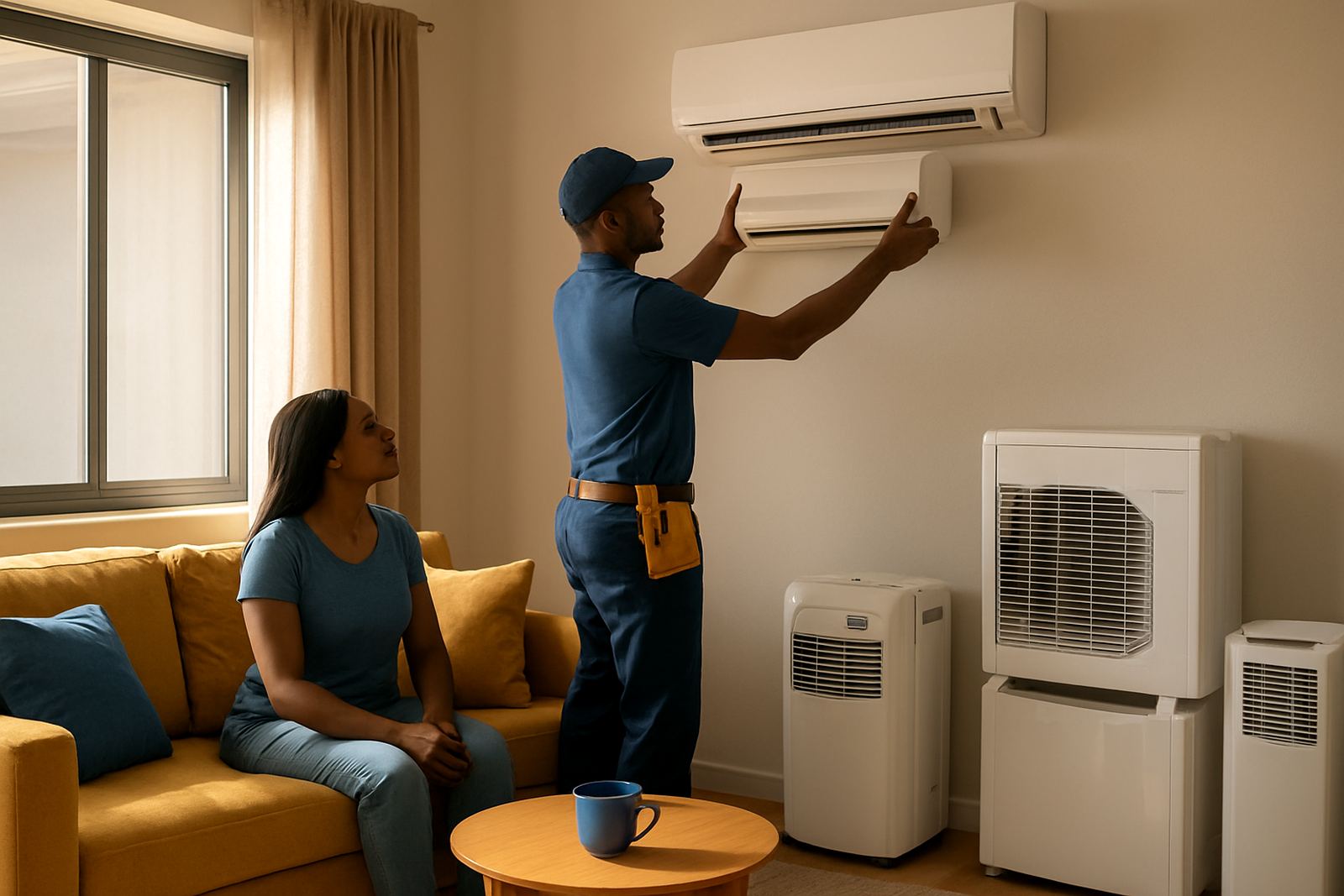
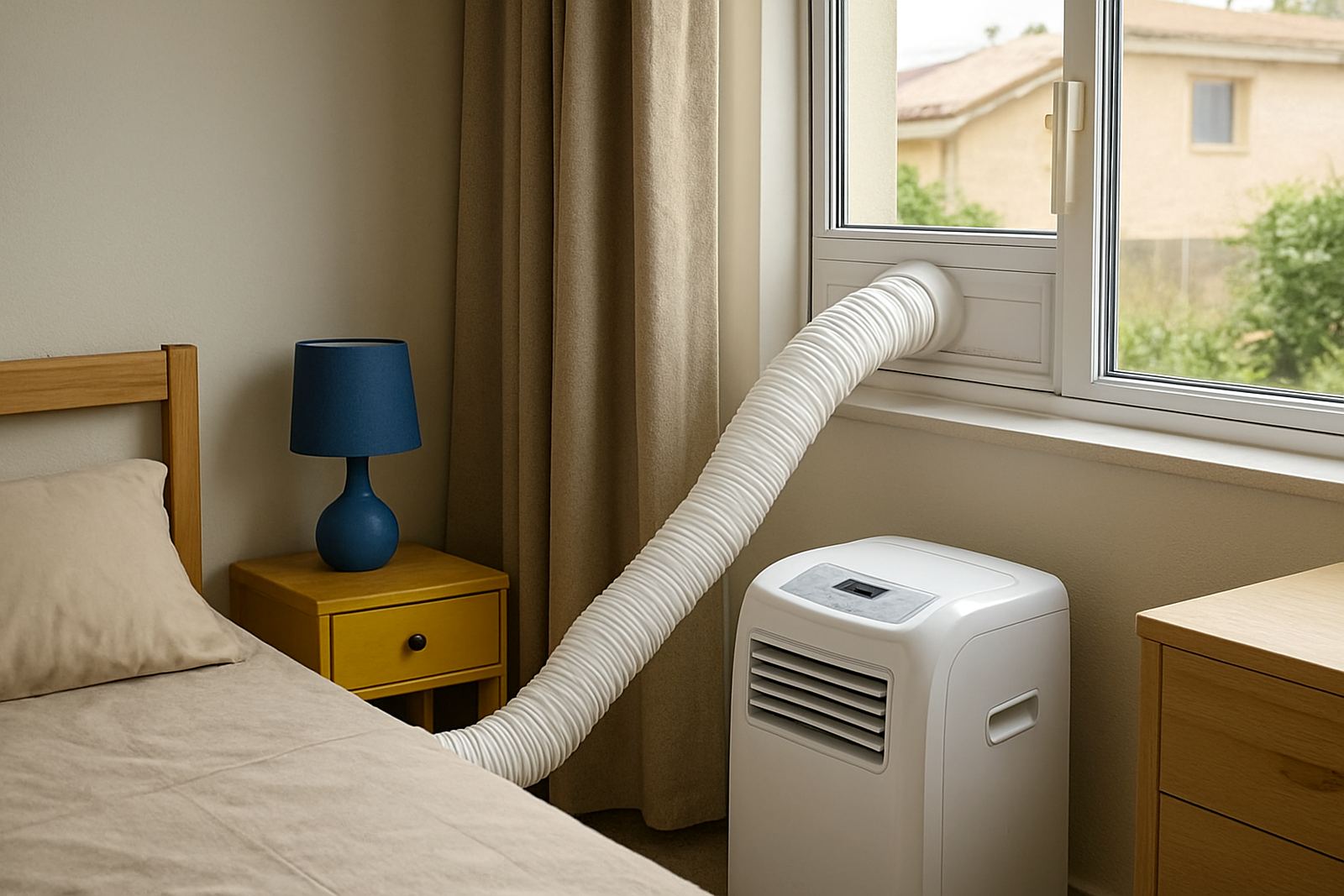
After a proper assessment, the layout is looked at again. The solution may include a better placed wall split, a cassette unit to spread air more evenly over the main floor, and a separate portable unit for a small treatment room or overflow area. The aim is not just lower temperature. It is steady comfort through the full trading day.
What to look for when choosing salon cooling
For salons, cooling choice should start with the heat load, not the brand of unit. The number of stations, window size, glass exposure, ceiling height and daily operating hours all matter. So does whether the salon has load-shedding back-up, because some sites need a plan that handles short outages and fast restart times.
In busy parts of Klerksdorp, Potchefstroom and Rustenburg, many salons trade in compact retail spaces where noise matters too. A noisy unit can spoil the customer experience. Cassette fitment can work well in open plan salons because it spreads air across the room without taking wall space near mirrors and display shelves.
- Match the unit size to real heat gains, not guesswork
- Check whether the shopfront gets afternoon sun
- Allow for staff numbers during peak booking times
- Consider quieter operation near client seating
- Plan for maintenance access and safe condensate drainage
Maintenance that keeps a salon comfortable all year
Salons move dust, hair spray and fine product particles through the air, so filters clog faster than in a normal office. That means scheduled servicing matters. If filters are left too long, airflow drops and the unit works harder for less result. On top of that, dirty coils can lead to poor cooling and higher power use.
Regular deep cleaning, gas top-ups when required, and fault finding before peak season help prevent breakdowns. In coastal or humid inland pockets, drain lines and indoor coils need attention because moisture and residue can build up quickly. A small drip near a styling station is not a minor issue, it becomes a daily nuisance.
Getting the right setup for Mbombela and North West salons
Aircon Warehouse supplies wall splits, cassettes and portable units at trade prices, with installation support in the Lowveld and North West. For salon owners, the practical route is usually a site assessment first, then a recommendation based on the room layout, client flow and heat sources on the floor. That is the only way to avoid under-sizing or paying for capacity you do not need.
Whether the salon is in Mbombela, White River, Hazyview, Klerksdorp, Potchefstroom or Rustenburg, the same rule applies: count the dryers, count the people, check the glass and think about how the room is used hour by hour. Then size the cooling to suit the work being done, not just the room on paper.
For installation, replacements, commissioning and ongoing servicing, the team at Aircon Warehouse works from Mbombela with North West coverage. If you need advice for a new salon, an upgrade or a stubborn hot spot that keeps coming back, a proper assessment will save time and money.