Why service intervals matter in everyday use
An air-conditioner can still switch on long after it should have been serviced, but that does not mean it is running properly. Once filters clog, coils collect dust and the drain starts backing up, the unit uses more power, cools less and puts more strain on the compressor. In places like Mbombela, White River and Hazyview, where humidity is high and systems run hard in summer, small issues build up fast.
The right service interval protects airflow, keeps temperatures even and helps you avoid surprise breakdowns during peak heat or load shedding periods when people are already putting pressure on their cooling systems. It is not only about comfort. It is also about electricity use, cleaner air and fewer call-outs for fault finding later.
- Better cooling with less power draw
- Fewer water leaks from blocked drains
- Cleaner indoor air for staff and customers
- Longer equipment life and fewer emergency repairs
Homes: once a year is a fair starting point
For a normal home, a full service once every 12 months is usually enough if the unit is used in the warmer months only. If the home has pets, dusty access roads or the system runs day and night, bring that forward to every 6 to 9 months. Homes near busy roads, building sites or low-lying areas can also pick up dirt faster than expected.
A proper home service should include filter cleaning, indoor coil cleaning, outdoor unit inspection, drain clearing, gas pressure checking and a general performance test. If you notice musty smells, weak airflow or water dripping from the indoor unit, do not wait for the annual date. That is usually the system telling you something is already off.
- Standard family home: every 12 months
- Homes with pets or heavy summer use: every 6 to 9 months
- Units showing leaks, smells or weak air: service straight away
Shops and salons need tighter service schedules
Retail shops and salons work differently from homes because the doors open and close all day, dust comes in from foot traffic and the unit often runs longer hours. In a salon, hair clippings, sprays and chemical residue can build up on the filters and coils quicker than many owners expect. In a shop, packaging dust and constant customer flow can have the same effect.
For these spaces, a service every 3 to 6 months is a practical rule. If the business is in Rustenburg, Potchefstroom or central Klerksdorp where road dust is common, shorter intervals are often worth it. A clean system keeps the room comfortable for customers and stops the aircon from fighting against blocked airflow all day. That matters when staff are standing under it for hours.
- High foot traffic shop: every 3 to 4 months
- Salon or grooming space: every 3 to 6 months
- Busy premises near dusty roads: more often if filters clog quickly
Offices should plan services before complaints start
Office spaces often seem easier on air-conditioning because the thermostat is set and left alone, but the system can still take a beating. Computers, printers and people all add heat, and boardrooms or enclosed offices may run the unit longer than the reception area. If the building has multiple splits or a cassette system, one neglected indoor unit can create uneven temperatures across the whole floor.
A good office schedule is usually every 4 to 6 months, with a deeper clean at least once a year. For spaces that host clients, handle paperwork or store sensitive stock, regular servicing also reduces the chance of damp smells and poor air quality. If a unit starts cycling on and off too often, that is a sign the system may be working harder than it should and needs checking.
- Small office with light use: every 6 months
- Busy office or client-facing space: every 4 months
- Multi-unit premises: stagger servicing so all rooms do not go at once
What a proper service should include
Not every call-out is the same. A quick dust-off is not a proper service, and it will not help much if the drain line is partly blocked or the gas charge is low. A decent service should cover both the indoor and outdoor sides of the unit, plus a check that the machine is cooling at the right temperature and moving air correctly. If the installation is older, the technician should also look for vibration, loose brackets and worn insulation.
At minimum, ask for the following:
- Filter cleaning or replacement advice
- Indoor coil and blower cleaning
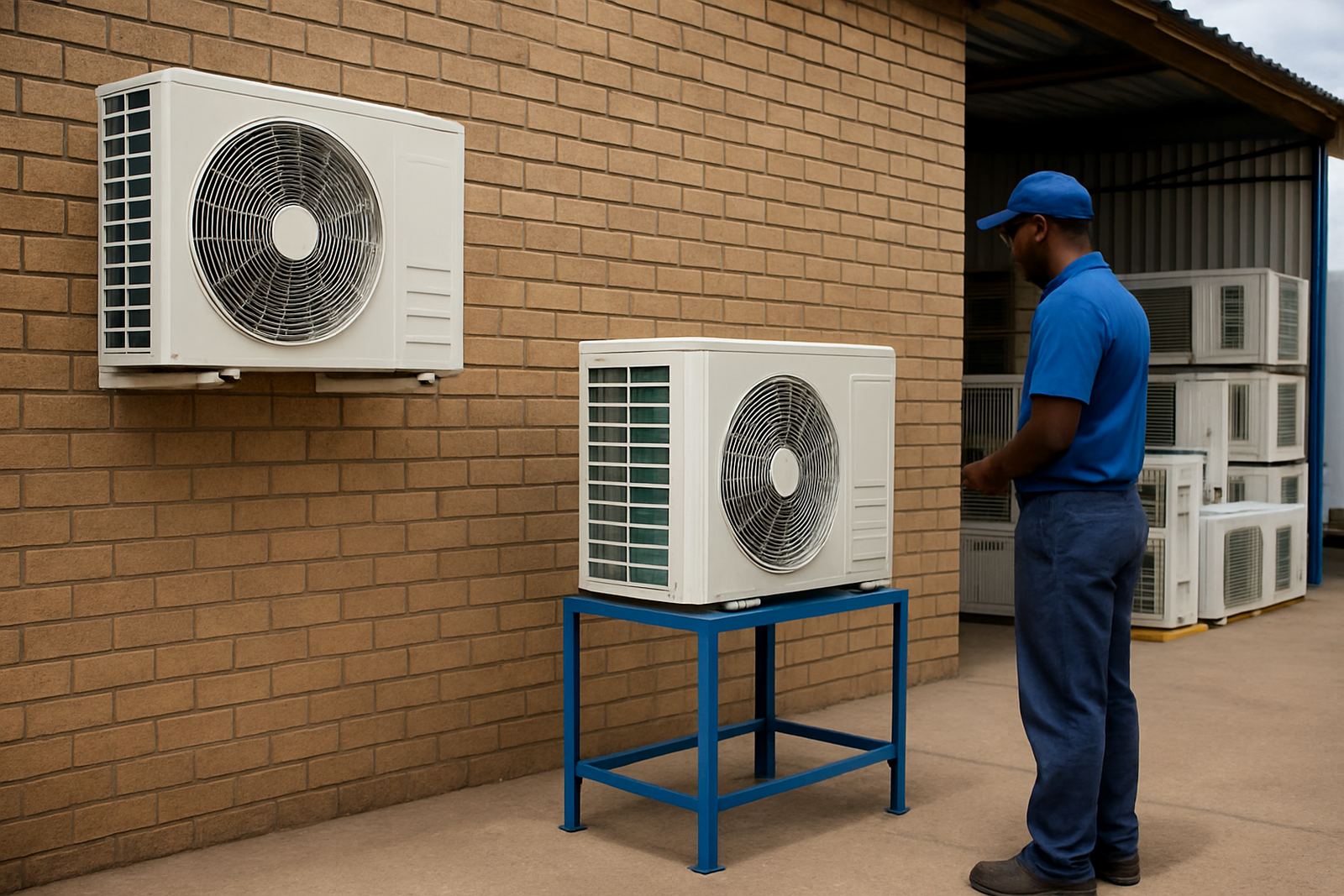
- Outdoor condenser cleaning
- Drain line clearing and leak check
- Gas pressure and electrical checks
- Test run and temperature reading
If the system has been struggling through summer, a deep cleaning may be needed rather than a basic service. That is especially true after building work, a long closed period or months of heavy use.
A local Mbombela example shows the timing clearly
A small salon in Mbombela might think one yearly service is enough because the unit is only one room. But if the shop sits near a dusty access road and the door opens all day, filters can clog in a few months. By mid-summer the room starts feeling sticky, the unit blows harder but not colder, and water may begin to drip inside. That is usually when the owner loses a trading hour waiting for help.
In that case, a 3 to 4 month service cycle would have kept the air clean and the machine under less strain. The same logic applies to a shop in Klerksdorp or a small office in White River. The harsher the conditions, the shorter the interval should be. It is cheaper to service on time than to replace parts later.
When to book sooner than the calendar says
Service intervals are a guide, not a rule carved in stone. Book sooner if you notice any of these signs:
- Weak airflow from the indoor unit
- Water dripping, damp patches or blocked drain signs
- Unusual smells when the unit starts
- Higher electricity use with no change in habits
- Warm air when the thermostat is calling for cooling
- Rattling, vibration or repeated fault trips
If you catch these early, the fix is often simple. Leave them too long and you may be dealing with replacement parts, re-gassing or a full system check. For homes, shops, salons and office spaces across Mbombela, the Lowveld and North West, the best schedule is the one that matches the real conditions in the building, not just the receipt date.