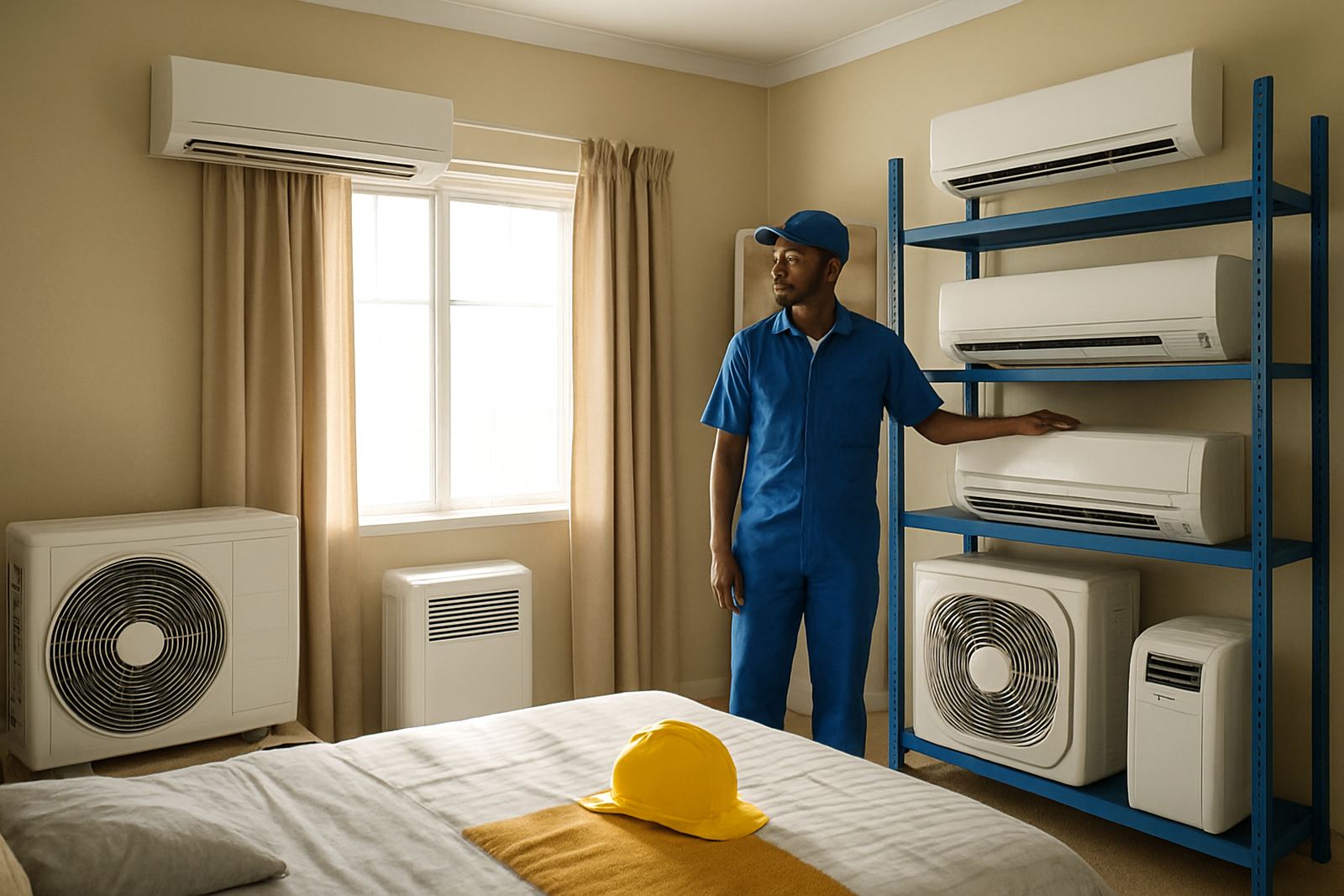
Start with the room size, then check the real heat load
The first step is simple, measure the bedroom in metres and work out the floor area. A small bedroom of about 9 m² will need much less cooling than a main bedroom of 18 m² or a long room with a walk in cupboard. But floor size only gives the starting point, not the full answer.
In South African homes the real heat load often comes from the roof space, west facing windows, thin ceilings and poor insulation. A room under a tiled roof in Mbombela can feel very different to the same sized room in a shaded brick home in Potchefstroom. If the bedroom gets strong afternoon sun, you may need to size up slightly so the unit does not run flat out all night.
- Measure length x width in metres to get the room area.
- Note if the room is upstairs or directly under the roof.
- Check if the room faces north or west, which usually means more heat.
- Look at window size, curtain coverage and ceiling insulation.
Why Lowveld bedrooms often need a bit more cooling
In the Lowveld, heat and humidity are the two big factors. A bedroom in White River or Hazyview may cool down well in the evening, but once the humidity rises the room can still feel sticky. That is why many homeowners want a split that can lower temperature and pull moisture out of the air without cycling on and off every few minutes.
Mbombela homes also deal with long warm spells and summer storms. If the power cuts are frequent, people often prefer a unit that starts efficiently and reaches temperature quickly when the supply comes back. Oversizing is not the answer though. A unit that is too big can cool the air fast but leave the room clammy, which is the opposite of what you want in a bedroom.
For the Lowveld, accurate sizing matters because the room needs steady cooling, not a quick blast. That helps with sleep, especially for children and older people who notice temperature swings more than most.
North West conditions and what changes the calculation
In Klerksdorp, Potchefstroom and Rustenburg, dry heat is common for much of the year, but the building still decides the load. A bedroom with a north facing window and no ceiling insulation can be tougher to cool than a bigger room with shade and decent roof space protection. Brick walls that hold the day heat can also keep releasing warmth well into the night.
In these areas, a correctly sized split should cool the room without blowing cold air too hard across the bed. People often ask for the biggest model available, but a bedroom usually performs better with a sensible unit and a good installation position. If the indoor head is placed badly, even the correct size can leave one side of the bed too cold and the other side warm.
- Hot roof spaces increase load, even in smaller rooms.
- West facing rooms usually need more attention.
- Large TV screens, gaming PCs and extra fridges in the room add heat.
- Sliding doors and poor seals can make a modest room feel much larger.
Use people, appliances and sleep habits in the sizing check
A bedroom is not empty space. Two adults sleeping in one room add body heat, and a child with the door shut all night can trap heat quickly. If there is a television, decoder, laptop or study corner in the room, that adds to the cooling load too. Many people only use the room at night, but the aircon still has to handle the heat stored during the day.
Think about how the room is used. If the bedroom is sealed tightly with good curtains and only opened in the evening, the load stays lower. If it has a door to an en suite bathroom, regular movement in and out, or a balcony door that opens often, you may need a slightly stronger unit. That is why site assessments help. The same room size can need a different split depending on how it is lived in.
A useful rule is to size for the real use, not the hope that the room will one day be cooler than it is today.
A practical example from Mbombela and Klerksdorp homes
Take two bedrooms, both 12 m². The first is in Mbombela, upstairs, under a tiled roof with one west facing window and light curtains. The second is in Klerksdorp, ground floor, shaded by an outside wall and fitted with heavier blinds. The Mbombela room will usually need more cooling support because the roof and afternoon sun add heat. The Klerksdorp room may be fine with a smaller split if the insulation is decent and the door stays closed.
This is why trade pricing and stock are only part of the job. The right answer comes from matching the room to the climate, the building and the way the bedroom is used. A quick estimate on a call can help, but for final sizing a physical check is best. That is especially true where the room is in a block of flats, a new townhouse, or a home with thin ceilings and lots of glass.
- Lowveld bedrooms often need careful humidity control.
- North West rooms often need help with stored heat from walls and roofing.
- Each installation should be checked for air flow, drain fall and outdoor unit position.
What a proper bedroom installation should include
Once the size is confirmed, the install must support it. A well sized split can still underperform if the piping is too long, the drain is wrong, or the indoor unit blows straight onto the pillow. The outdoor unit also needs enough ventilation and a position that meets local body corporate or municipal rules where those apply.
Good commissioning matters too. Gas charge, pressure testing, vacuuming and leak checks should all be done before handover. If the room is in a coastal or humid inland area, clean pipe routes and correct sealing help the system last longer. For bedroom use, scheduled servicing is worth keeping up because dust build up shows up fast on filters and airflow.
When the room is sized correctly and the fitment is done properly, the bedroom cools faster, runs quieter and uses less power over time. That matters in homes that have to manage load-shedding and rising electricity costs.