When the air feels weak before it feels warm
The first sign many people notice is that the unit is running, but the room never quite gets comfortable. The fan pushes air, yet the air at the outlet feels only mildly cool or sometimes just room temperature. In Mbombela, where afternoon heat can build fast, this is easy to notice because a healthy unit should make a clear difference within a reasonable time. If it used to cool a lounge in 20 minutes and now takes an hour or more, that is a warning sign.
Gas loss does not always happen suddenly. Small leaks can lower the refrigerant level over weeks or months, so the unit still starts up and sounds normal. That is why people often keep switching it on and off, thinking the weather is the only problem. It usually is not.
- Airflow is present but not cold enough
- Room takes much longer to cool than before
- Thermostat is set low, but comfort does not improve
- Unit seems to run for long periods without reaching target temperature
Ice on the indoor pipes or outdoor valves is a red flag
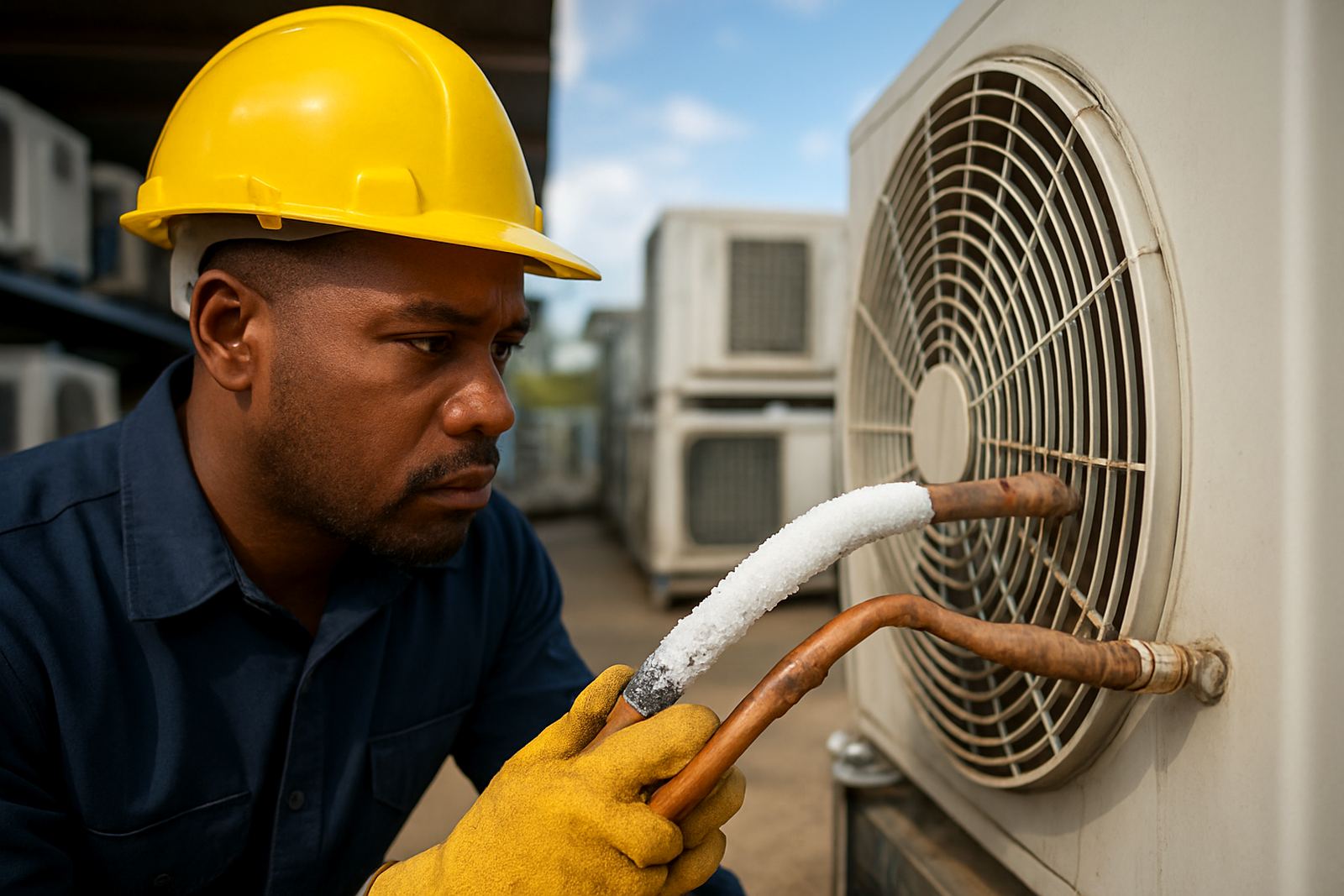
Another common symptom is ice forming on the indoor pipework, the outdoor valves or even on the indoor coil cover when you lift the front panel. This happens because low refrigerant can make the pressure inside the system drop too far. Instead of transferring heat properly, the system starts to freeze itself up. Once that happens, cooling drops off even more.
People sometimes mistake icing for good performance because the unit feels cold at first. But a frozen system is under strain. If left like that, it can lead to compressor damage, water dripping inside and extra wear on electrical parts. On the Highveld side, where dusty conditions and power interruptions are common, icing can get missed until the unit has already been damaged.
- Frost on copper pipes or service valves
- Water dripping after the ice melts
- Indoor unit blowing weak, chilly air only for a short time
- Outdoor unit sounding as if it is labouring
Long running times and higher bills tell their own story
When refrigerant is low, the unit has to work harder and for longer to try and reach the set temperature. That means more electricity use, more wear on the compressor and more heat dumped into the area outside. In practical terms, you may see a higher bill even though the room is less comfortable. In some cases the owner thinks the aircon is just old, but a check shows a leak or a badly fitted joint.
In Klerksdorp and Potchefstroom, we often hear the same complaint after a hot spell or load shedding. The unit restarts, struggles and then runs almost non-stop. That does not always mean gas loss on its own, but it is enough to justify a proper inspection before another part fails. A small gas issue can turn into a larger fault if the machine keeps trying to run under pressure, so to speak.
Noise changes, hissing and short cycling need attention
Refrigerant leaks can sometimes be heard, especially if the leak is near a joint, flare or valve. A faint hissing sound, a sudden change in the tone of the system, or short cycling where the unit switches on and off more than usual can all point to trouble. These signs are not proof on their own, but they are worth checking quickly.
Short cycling can also come from electrical faults, dirty coils or incorrect settings, so an experienced technician will look at the full picture. That is important because topping up gas without finding the leak is only a short term fix. The system may lose pressure again and the same complaint comes back, usually at the worst possible time.
- Faint hissing near the indoor or outdoor unit
- Compressor starts and stops too often
- Unusual vibration or a different operating sound
- Cooling improves briefly, then falls away again
Why prompt checking matters in the Lowveld and North West
Prompt checking matters because refrigerant loss affects more than comfort. It can increase running costs, shorten equipment life and, if the leak is left long enough, damage the compressor. In humid coastal-style conditions, moisture can also get into the system after a leak, which makes the repair more involved. In drier inland towns, dust and heat put extra pressure on the unit, especially when it is already low on gas.
A proper check usually includes pressure testing, looking for oil marks on joints, checking temperatures and testing the system under real operating conditions. If the problem is found early, the fix may be straightforward. If not, the job can become much bigger than it needed to be.
For homes and businesses in Mbombela, White River, Hazyview, Klerksdorp, Rustenburg and Potchefstroom, the practical advice is simple: do not wait until the unit stops completely. If cooling has dropped off, get it looked at while there is still time to save the system.
What a proper fault check should include
A refrigerant issue should be treated as a system problem, not only as a gas top-up job. The technician should inspect the full installation, check for leaks, confirm whether the unit is correctly sized and make sure the drain, coil and electrical parts are not part of the problem. That is especially important on older units, or where the pipework was extended during installation.
At Aircon Warehouse, our team handles site assessments, fault finding, gas top-ups, system commissioning and scheduled servicing across Mbombela and the North West. If a unit has stopped cooling properly, we look at the cause first, then advise on the right next step. Sometimes the issue is a leak, sometimes it is dirty coils or a fitting that was never tightened properly. Either way, the sooner it is checked the better.
- Pressure and temperature readings
- Leak checks on joints, valves and pipework
- Coil cleaning and airflow inspection
- Confirmation that the unit is set up for the room size
Do not wait for a total breakdown
Gas loss signs are often quiet at the start. A bit less cooling, a little more noise, ice where there should be none, and longer run times are all clues that should not be brushed aside. The earlier the system is checked, the more chance there is of keeping the repair controlled and avoiding a full breakdown during peak heat.
If your air-conditioner is showing any of these symptoms, arrange a proper inspection before the fault spreads. That is usually the cheapest way forward, and in our climate it saves a lot of unnecessary discomfort.