Start with access, keys and clear directions
The first job is simple: make sure the team can get to the unit, the DB board and any roof or ceiling space without delay. If the system is in a shop, clinic, guest house or office park, let reception or security know the arrival time and who will be meeting the technician.
In places like Mbombela, White River and Hazyview, access can be affected by gate codes, shared driveways and afternoon rain. In Klerksdorp, Potchefstroom and Rustenburg, some sites have generator rooms, secured roofs or tenant rules that need to be sorted out before the van arrives.
- Send gate codes and contact names in advance.
- Unlock plant rooms, service hatches and ceiling access points.
- Park customer vehicles away from outdoor units and ladders.
- Show the team where water can be safely drained if needed.
Give the technician a clean working area
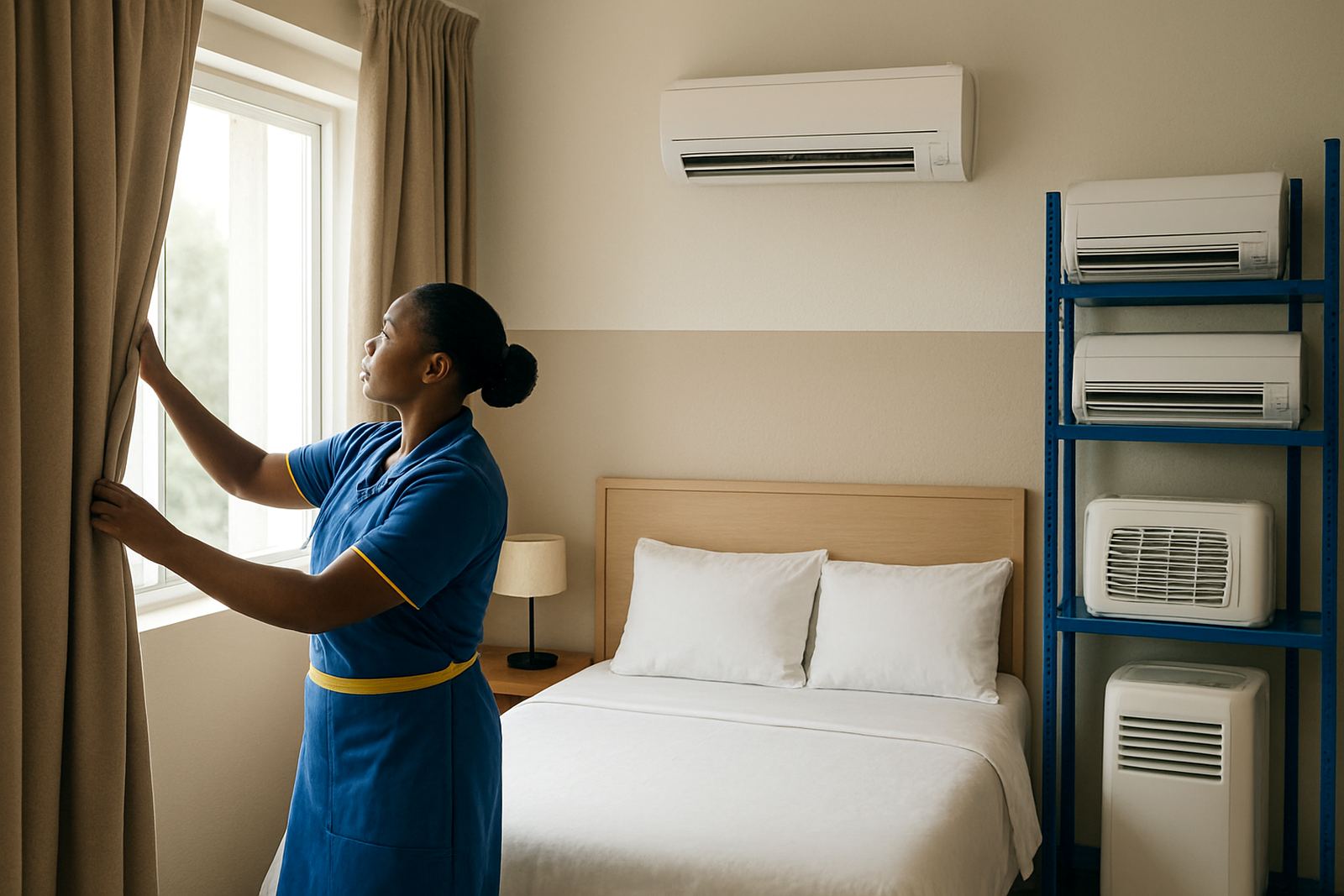
A service day runs better when the area around the air-conditioner is clear. Move boxes, stock, loose furniture and display stands away from the indoor unit. If there is a portable unit to be checked, place it near a power point and make sure the exhaust hose can be reached.
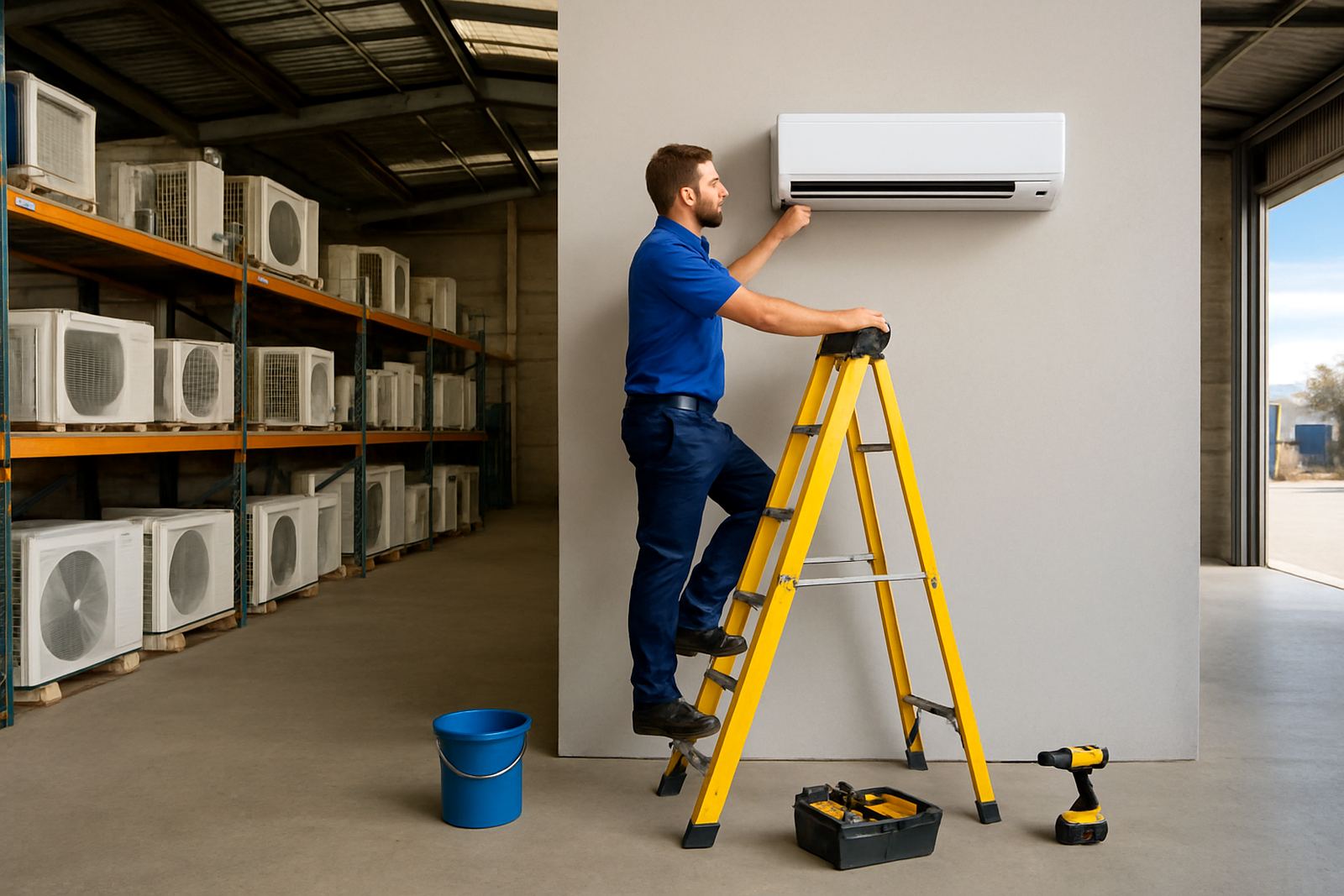
Technicians often need a ladder, step stool, vacuum equipment and test tools. If the area is crowded, they spend time shifting items instead of checking filters, drains and electrical connections. That is time you pay for, so a tidy work area helps everyone.
- Clear at least 1 to 1,5 metres around the indoor unit where possible.
- Move sensitive stock, paperwork and electronics away from dust and water.
- Protect floors and carpets if the unit has a history of blocked drains.
- Keep pets and small children out of the work zone.
Check power, breakers and load shedding plans
Air-conditioners cannot be tested properly if the power supply is unstable. Before the visit, check that the breaker is on and that no one has isolated the unit at the wall switch or isolator. If the site has solar, a generator or a changeover system, tell the team how it is wired and who is allowed to switch it over.
Load-shedding is part of daily life across the Lowveld and North West, and it can confuse fault finding if the unit is off when the technician arrives. A clear note about the last outage, trip or power surge gives the service team a better starting point, and avoids a wasted call-out.
- Test the isolator and confirm the unit has power.
- Note any recent tripping, flickering lights or burning smells.
- Tell the team if the site runs on inverter, generator or solar backup.
- Have the last date of the fault ready, even if it seems minor.
Make the symptoms easy to understand
When the technician arrives, explain what the unit is doing and when the problem started. A clear description helps with fault finding, especially if the issue only happens at certain times of day. For example, low cooling at 2 pm is different to a unit that trips only after a storm or when the temperature drops at night.
It helps to mention if the unit is leaking, blowing warm air, making noise, smelling damp or switching off on its own. If the site has more than one system, mark which room or area is affected. A small note stuck near the control panel can prevent confusion later.
If you have had previous repairs, keep the old invoice or service note close by. Even one line about a gas top-up, a deep cleaning or a part change can save a lot of time.
Prepare for cleaning, water and access around the drain
Many service jobs involve washing coils, clearing drain lines or checking for leaks. That means water, dust and sometimes a bit of grime. Before the appointment, move anything that cannot get wet and let people on site know there may be noise from the vacuum or cleaning equipment.
For wall splits in homes and small offices, make sure the drainage point is known and that no buckets, cabinets or files are sitting under the unit. In humid Lowveld towns, blocked drains often show up as dripping after a deep clean, so it is worth checking the outlet and making sure the route is open.
- Cover nearby IT equipment and stock if water spray is expected.
- Check that the drain runs to a safe discharge point.
- Keep towels or drip trays handy for minor spills.
- Warn staff about temporary noise and movement in passageways.
A simple local example saves time on site
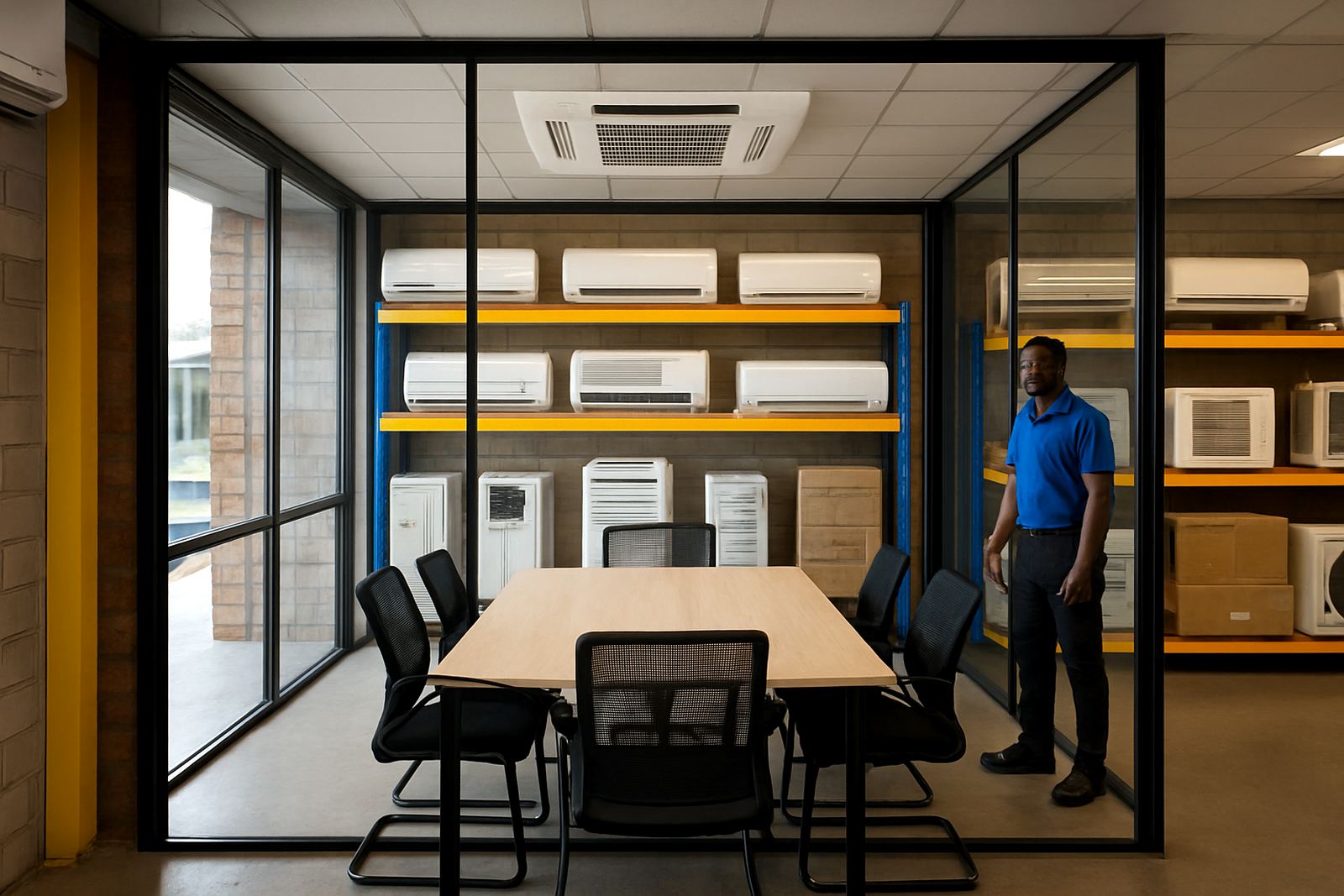
Take a small retail store in Mbombela with two wall splits and one portable unit. If the owner sends gate access, clears the stock from the indoor units, confirms the breaker position and tells the team the shop was hit by load-shedding the night before, the technician can start testing straight away. If the back office is locked, the ceiling trap is blocked and no one knows where the outdoor unit sits, the same visit can stretch out for no good reason.
That is why a service day checklist matters. It is not about making the site perfect, only about removing avoidable delays. At Aircon Warehouse, we see better results when the customer prepares the space, gives the fault history and keeps one person on site to answer questions. It keeps the job practical and the repair more accurate.
What to keep ready before the team leaves
Once the work is done, ask the technician what was cleaned, replaced or checked, and whether there are follow-up items to watch. That may include a filter change, a drain issue, a gas leak suspicion or a unit that needs replacement soon. Keep the report with your maintenance records so the next visit starts with better information.
If the site is a business with regular trading hours, schedule future servicing before the peak season. In places like Rustenburg and Potchefstroom, that can help avoid summer delays when everyone is calling at once.
- File the service note and any fault history in one place.
- Record the date, technician comments and next service interval.
- Replace filters on schedule and keep the outdoor area clear.
- Book ahead for seasonal servicing before the first heat wave.