Why room turnover puts extra strain on air-conditioning
In a guesthouse, an air-conditioner does not get one neat long run each day and then a quiet night. It gets short bursts, repeated starts, different thermostat settings and frequent cleaning around it. One guest may leave the unit on 18 degrees all night, the next may switch it off and then expect the room to cool in ten minutes. That pattern puts pressure on filters, fans and controls.
In Mbombela, White River and Hazyview the air carries more moisture for much of the year, so units are not only cooling the room they are also pulling water out of the air. In Klerksdorp and Potchefstroom the issue is often dust from roads, yards and windy days. Both conditions can clog a unit fast if the filter and indoor coil are not checked often enough.
For accommodation owners, the real aim is simple: the room must feel ready for the next guest without long waiting times, noisy start-up cycles or that stale smell that sometimes comes after a room has been closed up for a few hours.
Choosing units that suit short stays and quick resets
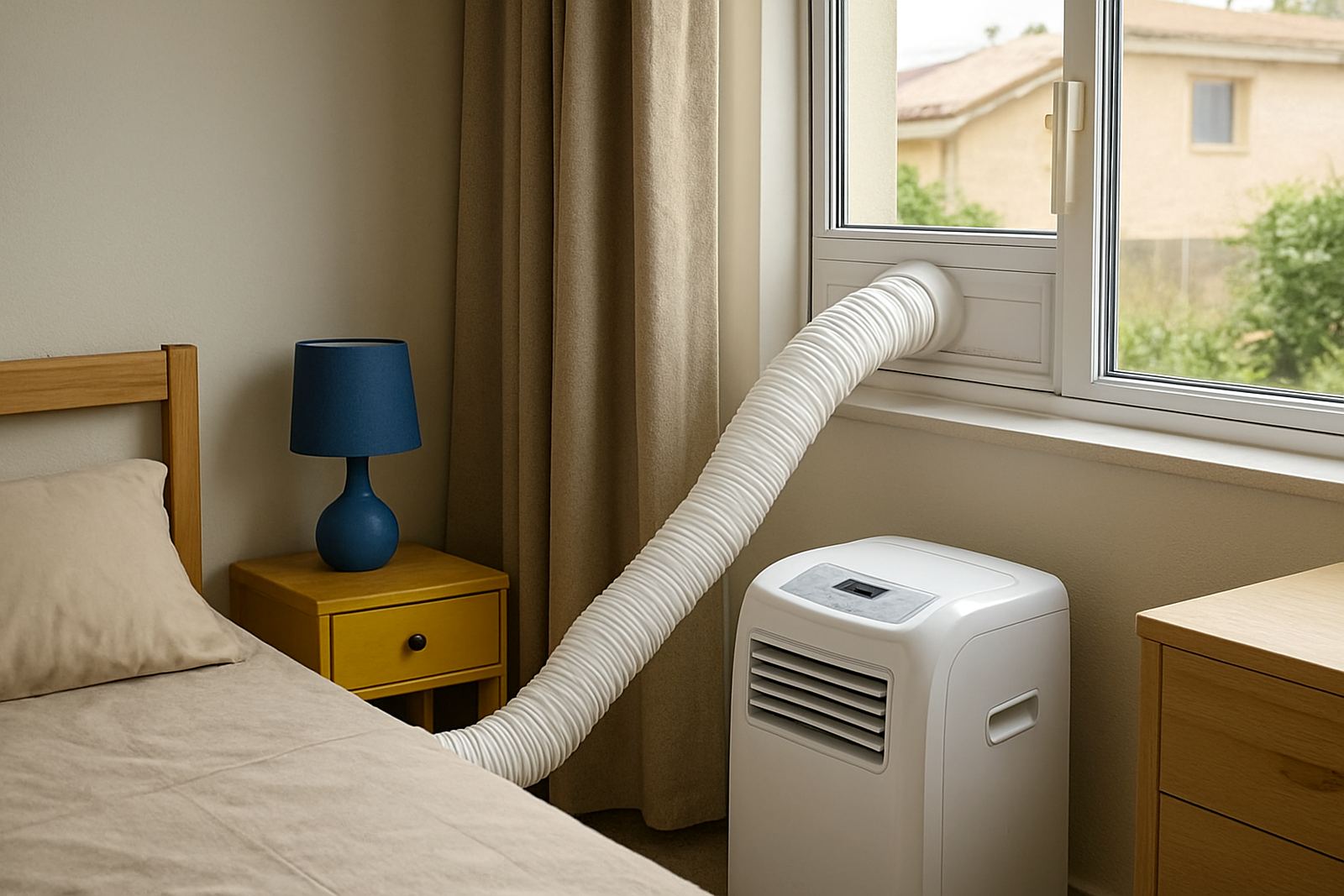
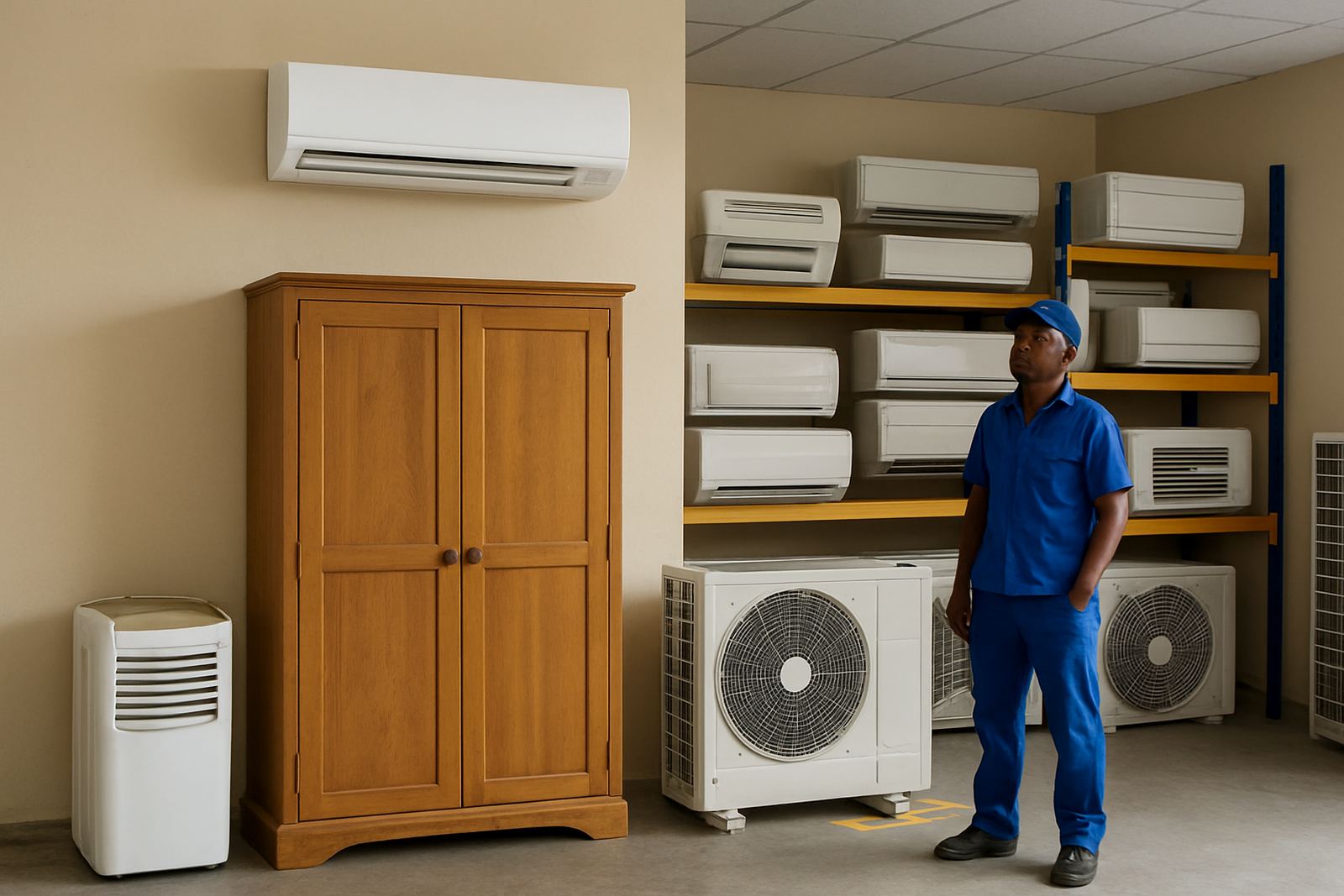
Guesthouse rooms usually do best with a straightforward wall split unit or a cassette where the room layout calls for ceiling mounting. Portable units can work for temporary rooms or overflow spaces, but they are not ideal for every bedroom because they take up floor space and need proper venting. For normal guest rooms, fixed units are generally easier to control and quicker to keep clean.
When choosing capacity, think about room size, ceiling height, sun load and whether the room gets afternoon heat through west-facing windows. A 12 000 BTU unit might be fine for a small room, while larger family rooms or rooms with big glass areas may need more. Undersizing leads to long running times and unhappy guests, oversizing can make the room cool fast but leave it damp and sticky, especially in humid weather.
- Match the unit size to the room, not just the bed count.
- Keep the indoor unit where it can move air across the full sleeping area.
- Allow space for safe cleaning around the filter and front cover.
- Use a power supply and isolator that suit the unit properly, especially where load-shedding backup is in place.
Cleaning cycles need to include the aircon, not only the linen
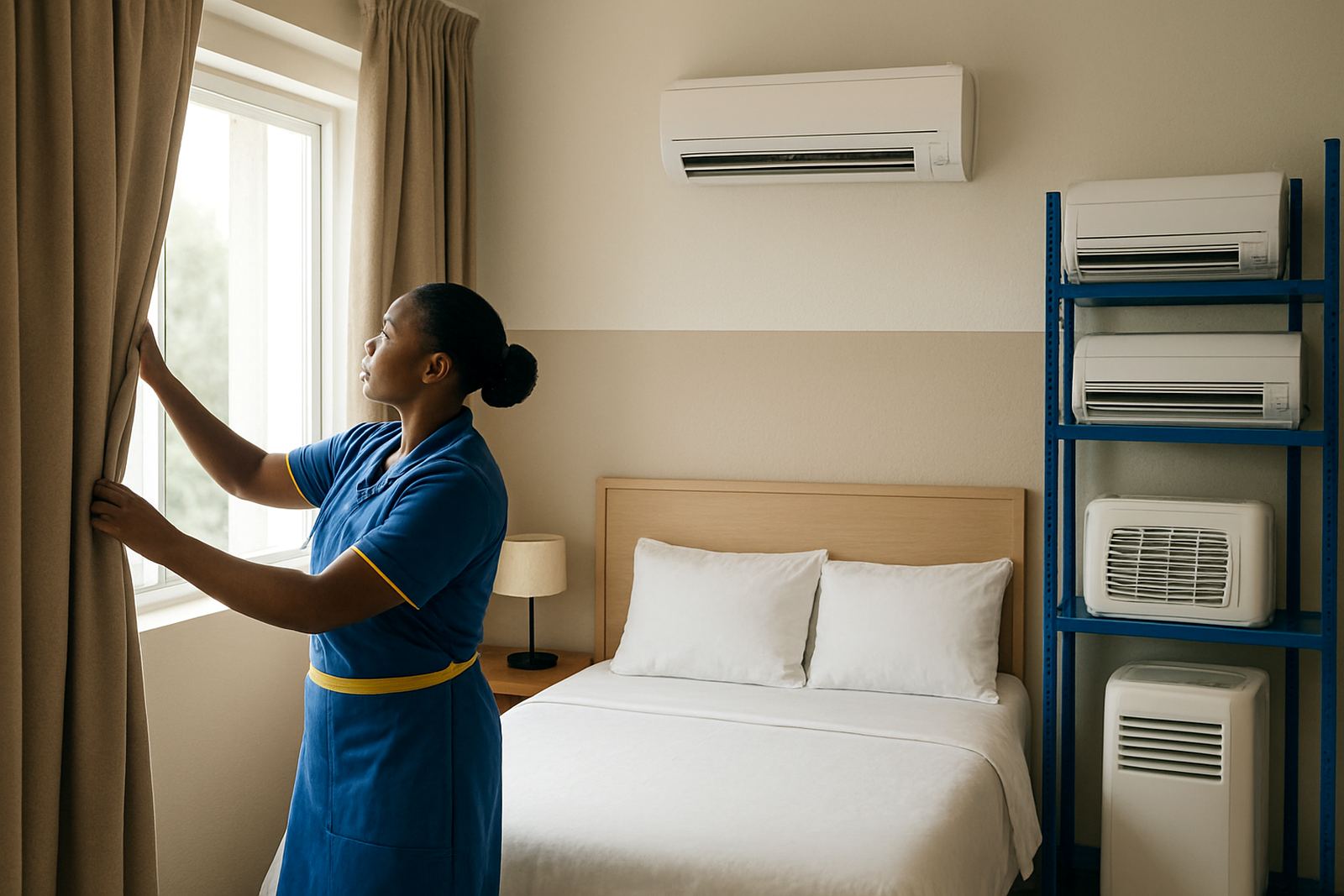
Most guesthouse teams are already working through linen changes, bathroom checks and floor cleaning between guests. The air-conditioner should be part of that same reset. If the unit is ignored, it can keep dust, moisture and odour from the previous stay and pass it to the next one as soon as the room is switched on.
A practical turnover routine should include checking the filter, looking for blocked drains, wiping the air outlet and confirming that the remote control batteries are working. If the condensate drain is slow, water can drip onto the wall or drip tray and create stains. In coastal or humid inland areas, mould can build up around the cover or inside the fan barrel if the system is never deep cleaned.
- Switch the unit on for a short test during room prep.
- Confirm the set temperature and fan mode are easy for guests to use.
- Look for water marks, rattles or unusual smells before the room is released.
- Log any faults right away so the maintenance team does not hear about them only after checkout.
How to manage guest comfort without wasting power
Accommodation owners often want cool rooms but do not want every unit running flat out for hours. The answer is usually good control, not constant adjustment. A clean room with closed curtains, sealed windows and a sensible set point cools faster than a room with hot air leaking in all afternoon. In summer, a target around 22 to 24 degrees is usually more practical than trying to make the room feel icy.
Clear guest instructions help too. Many guests are not sure how to use a remote, and some will keep pressing buttons until the unit behaves strangely. A short note in the room can explain the temperature setting, fan speed and what to do if the unit stops during a power interruption. That saves your front office calls and reduces avoidable complaints.
If your guesthouse has a generator or inverter backup, the aircon load must be checked before you promise guests that everything will run during outages. A room full of travellers in summer can quickly expose a weak backup system.
What fails first in busy guest rooms
Guesthouse units usually show the same problems again and again. Dirty filters are common, then blocked drains, tired capacitors, loose covers and remotes that go missing between rooms. In areas with dust or pollen, the indoor coil can also lose airflow, which makes the unit noisy and weak. If the filters are not washed often enough, the compressor works harder and the room takes longer to cool.
There is also a difference between a one-off fault and a pattern problem. If one room keeps tripping or leaking, there may be an installation issue, poor pipe fall or a drain route that was never correct from the start. That is why fault finding should be done properly, not by guessing and replacing parts until something works.
A good service record helps. It lets you see which room keeps giving trouble, which floors get the most dust and which units need a deeper clean before peak season.
A local example from Mbombela and the North West
Consider a guesthouse in Mbombela with eight rooms, all turning over on weekends and during school holiday periods. In summer the rooms are closed in the afternoon, then opened again for check-in after dark. The owner notices that two rooms stay cooler than the others while one room develops a musty smell after every clean. On inspection, the issue is not only the aircon itself but also a blocked drain, a filter that has not been washed often enough and a room that gets late sun through a large window.
The same pattern can happen in Klerksdorp or Rustenburg, where dust and heat can work together and the guesthouse team may only notice the fault when a guest complains. In both regions, the fix is usually a mix of proper assessment, scheduled servicing and a cleaning routine that includes the unit every time the room is turned around.
For owners with multiple rooms, the simplest plan is to keep a basic service calendar and assign one person to check each unit during room prep. That small step cuts down on surprises and keeps the accommodation looking cared for.
When to bring in a service team
Some jobs can be done by the guesthouse team, such as wiping filters and checking remotes. Others need trained hands, especially when there is gas loss, repeated tripping, weak cooling or water dripping inside the room. A proper assessment can show whether the unit needs a deep clean, a gas top-up, a part replacement or a full replacement because the system has simply reached the end of its working life.
Aircon Warehouse works with accommodation owners in Mbombela, White River, Hazyview, Klerksdorp, Potchefstroom and Rustenburg, with installations and servicing suited to guest rooms that change hands often. That includes site assessments, new installations, replacement units, cassette fitment, portable setup, system commissioning, scheduled servicing, fault finding, gas top-ups and deep cleaning.
For a guesthouse, the goal is not fancy equipment. It is a room that is ready on time, cools properly and does not give the team extra work between check-out and the next arrival.