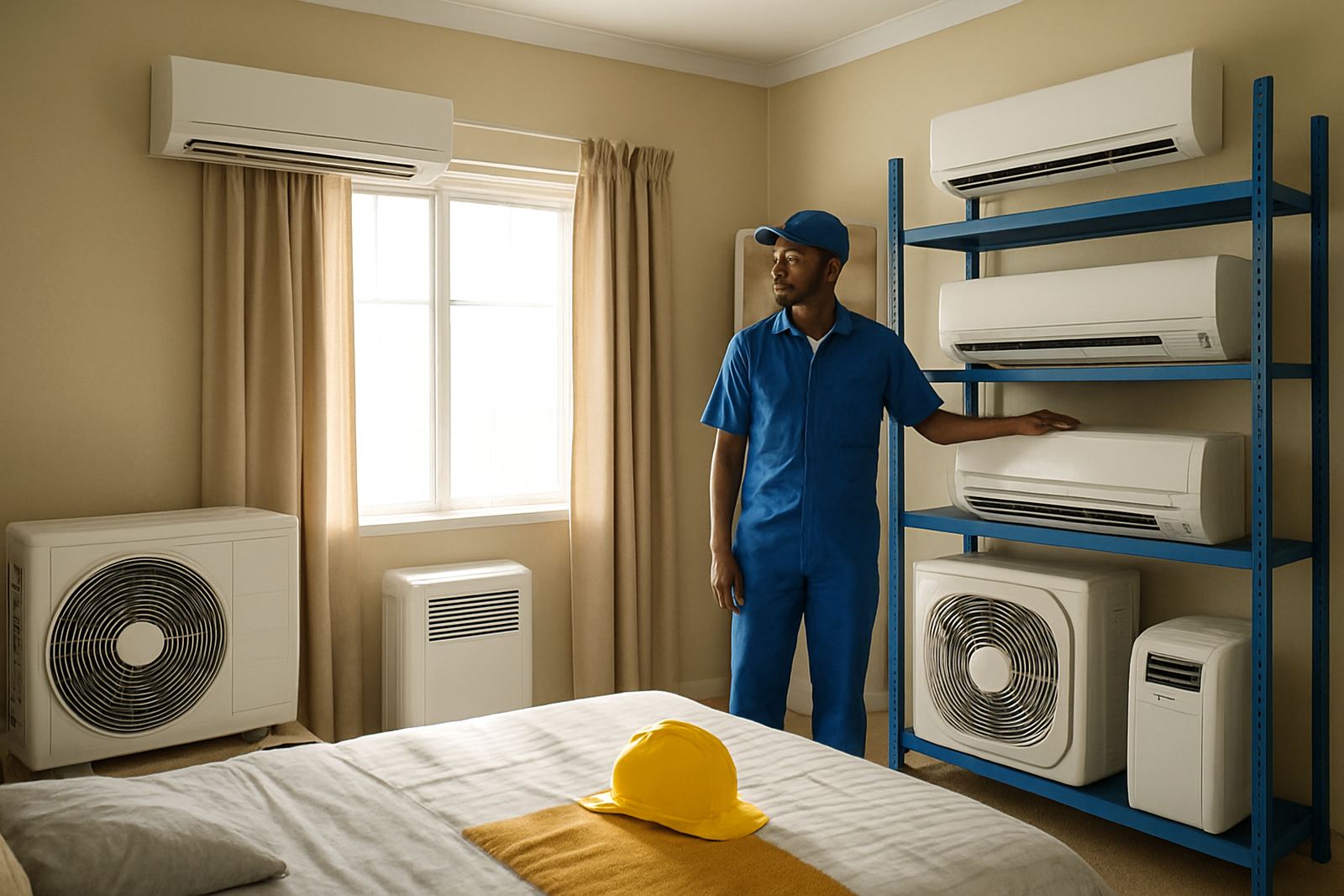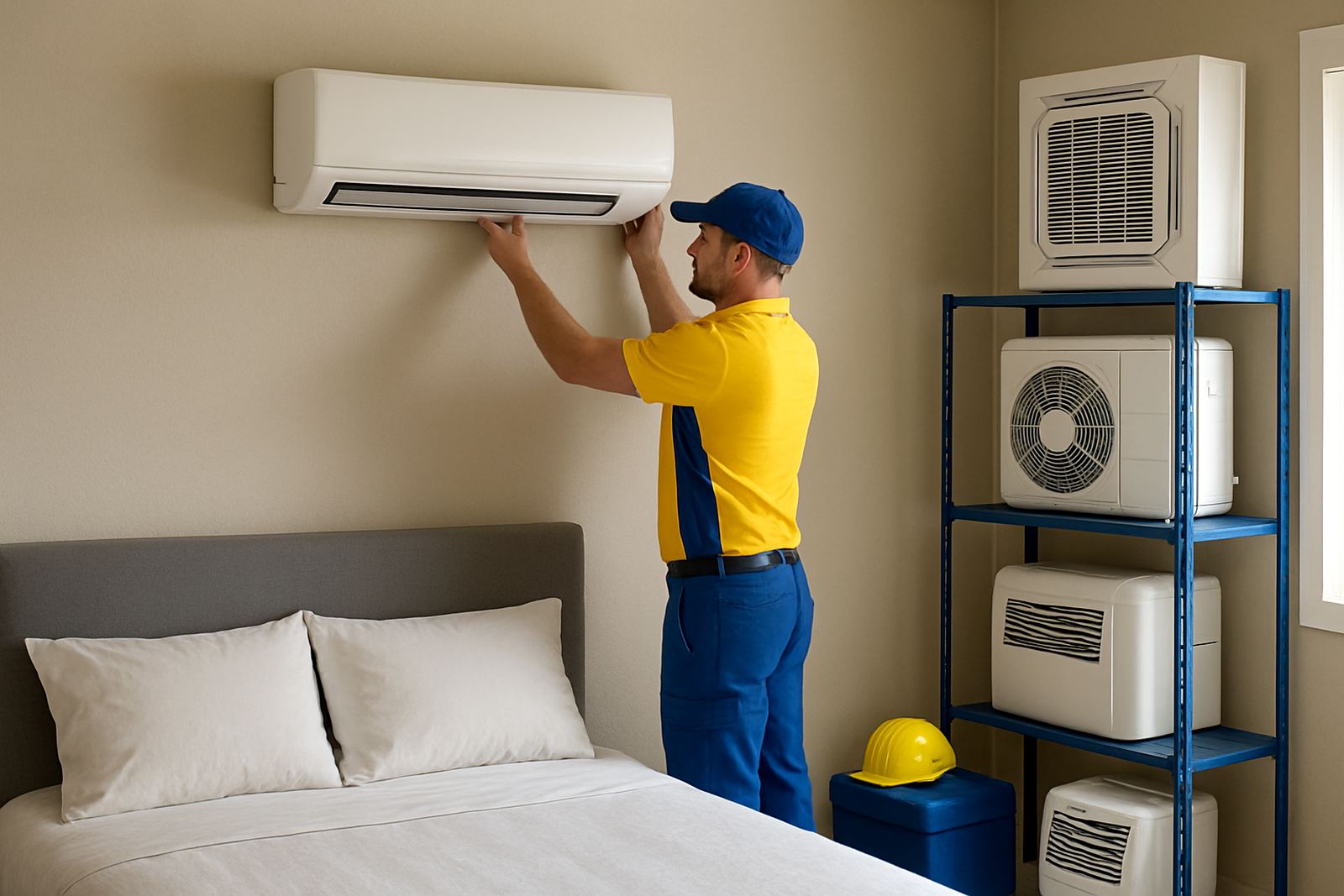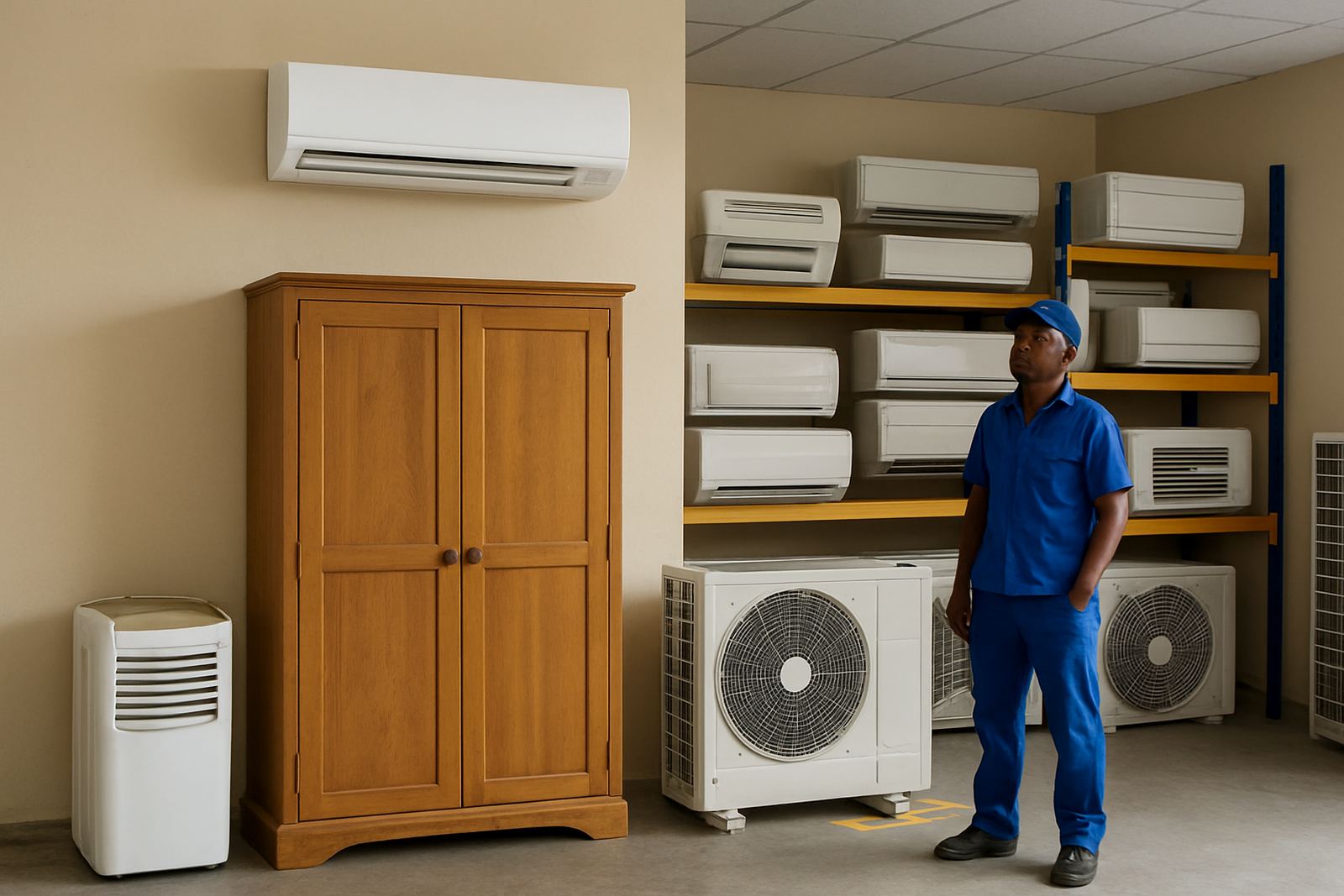
Why furniture changes how an aircon performs
An air-conditioner is not only about the unit on the wall or in the ceiling. It also depends on how air moves through the room. If a cupboard, sofa, filing cabinet or tall headboard sits too close to the indoor unit, the cold air cannot spread properly and the warm air cannot get back to the unit fast enough. The result is poor mixing, hot spots and a room that never settles at the right temperature.
We see this often in homes and small offices where people move in furniture first and only notice the cooling issue later. In a lounge in White River, for example, a tall bookcase placed under a wall split was stopping the return air from circulating. The unit ran longer, the room near the door stayed stuffy, and the energy use went up. Once the furniture was moved back, the change was immediate.
It is not only wall splits that suffer. Cassettes need clear floor space below them so the room air can move. Portable units also need space around the intake and exhaust hoses, otherwise the machine keeps recycling warm air back into the same corner.
Signs that furniture is blocking supply or return air
Blocked airflow usually shows up in small ways before the room feels fully uncomfortable. If you notice one side of the room is cold while the other side stays warm, the air may not be travelling past the furniture properly. Another clue is when the unit runs for long periods but the temperature hardly changes.
- Cold air blows straight into a cupboard, curtain or couch back
- The return grille feels starved of air or dust builds up quickly
- There is a weak throw from the indoor unit, even on high fan speed
- People sitting near the unit feel cold while others feel no cooling at all
- The compressor keeps cycling longer than usual on mild days
If the aircon is set correctly but the room still feels uneven, the layout should be checked before replacing parts. In many cases the unit is fine, the room arrangement is the issue.
What to keep clear around wall splits and cassettes
Each type of unit needs its own clear space. A wall split should not blow directly into the back of a tall couch, curtain pelmet or open cupboard door. The intake side must also stay open so the unit can draw room air without strain. For cassettes, the area below and around the room centre matters because the air must spread in all directions, not hit a shelf or partition first.
A practical rule is to treat the indoor unit like a working area, not wall decoration. Leave space in front of the airflow path and do not place tall furniture directly under it. In open-plan spaces around Mbombela and Hazyview, people often place a kitchen unit, shelf or partition too close to the cassette. That can create a dead zone where air simply sits and does not move.
- Keep tall furniture away from the line of throw from the indoor unit
- Do not place curtains, blinds or plants across the intake opening
- Avoid boxing the unit in with shelves or ceiling bulkheads
- Leave access for cleaning and routine service
- Check that furniture changes do not block doors where air should circulate
Load-shedding, humidity and room layout in the Lowveld
In the Lowveld, airflow matters even more because rooms often fight heat and humidity at the same time. When load-shedding comes and the unit stops, a room can warm up quickly. Once power returns, a blocked layout makes the recovery slower because the unit has to work harder to move trapped air around furniture.
We also see this in rooms with heavy moisture after rain or in homes close to the river areas around Mbombela and White River. If air cannot move past the furniture, the damp pockets stay longer. That can leave walls clammy, curtains musty and the room uncomfortable even after the unit has started cooling again.
Good layout helps the air-conditioner do less work. It also helps keep the room drier, which is useful for bedrooms, offices and waiting areas where people sit in one place for long periods.
A quick checklist before you call for a service
Before assuming the unit needs gas or a major repair, do a simple room check. Move any loose furniture out of the airflow path and see whether the room changes over the next hour. If it does, the issue is most likely circulation, not the machine itself.
- Check that the indoor unit is not blowing into a wall, cabinet or curtain
- Make sure the return side is not blocked by furniture or decor
- Open internal doors if the room layout is trapping air
- Look for dust streaks or condensation on nearby furniture, a sign of poor movement
- Test the room again after moving one item at a time so you can see the difference
If the room still struggles after the layout is corrected, a site assessment can show whether the unit size, placement or pipe run is part of the problem. In some Klerksdorp offices we find the unit was installed correctly but the furniture later changed, so the original airflow path no longer works.
Practical support for homes and businesses across our service areas
Aircon Warehouse works from Mbombela and covers the Lowveld and North West, including White River, Hazyview, Klerksdorp, Potchefstroom and Rustenburg. We handle site assessments, new installations, replacement units, cassette fitment, portable setup, system commissioning, scheduled servicing, fault finding, gas top-ups and deep cleaning. If a room feels uneven after a furniture move, that is often where we start.
For trade pricing and practical advice, it helps to speak to a team that sees these layout problems every day. Sipho Mandla Nkosi and the team can check whether the issue is blocked airflow, poor unit placement or something else that needs attention. Sometimes a small furniture shift saves a lot of power and frustration.
For enquiries, email trade@airconwarehouse.co.za.