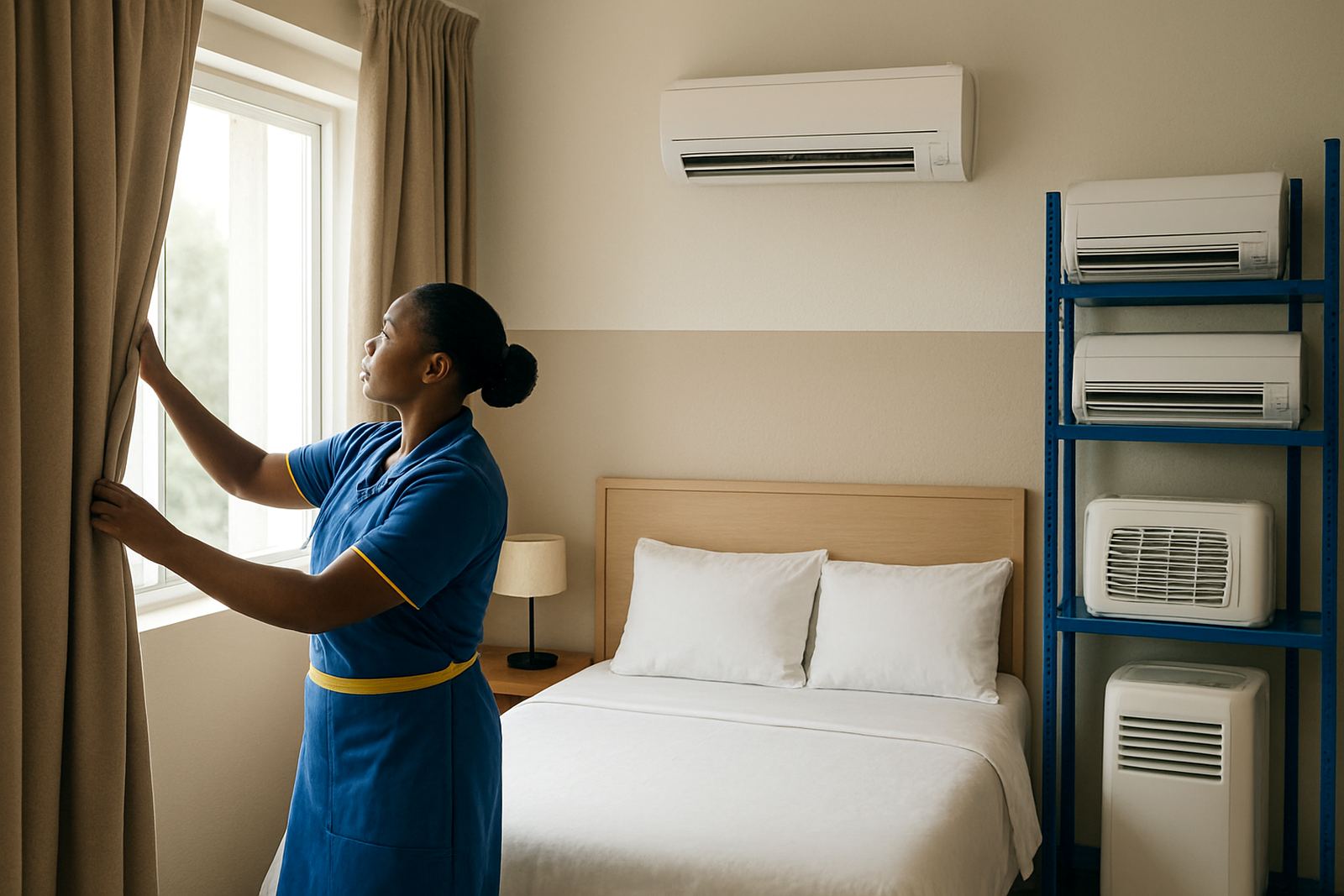
Start with the bed, not the wall
The first rule is simple: work out where the bed will sit before you decide where the unit goes. Many bedrooms have one wall that looks ideal for installation, but if that wall points the air straight at the pillow area, you will feel cold spots through the night. That is not comfortable, and it often leads people to switch the unit off too early or keep the temperature too high.
A better setup allows the cool air to travel across the room and mix before it reaches the bed. In a smaller room, even 2.5 m by 3 m, a badly placed unit can make one side chilly while the other side stays warm. In a larger main bedroom, the effect is even more noticeable because the air has more space to move around.
Choose a wall that throws air across open space
The best bedroom placement is usually on a wall that lets the unit blow across the length of the room, not directly down onto the sleeping area. Aim to place it above the bed line, but offset so the air path ends near a passage area, wardrobe front, or open floor space. That gives the room time to cool evenly before the air reaches you.
In Mbombela and White River, where warm nights and humidity are common, a unit often runs longer at lower fan speed. That works better if the airflow can move freely. If there is a beam, curtain pelmet, or high cupboard blocking the throw, the system may short cycle and leave the room unevenly cooled.
- Keep the outlet clear of heavy curtains.
- Do not place the unit directly above the headboard.
- Leave enough wall space for air to spread before it reaches the bed.
- Avoid pointing the louvres at the pillow area.
Give the unit room to breathe and service
A bedroom aircon needs good airflow around the indoor unit and enough space outside for the outdoor unit if it is a split system. Tight corners, blocked filters and cramped pipe routes all reduce performance. This becomes a bigger issue during heat waves or load-shedding recovery, when people switch units on and off more often than usual.
If the room is on an upper floor or has a small balcony area, the outdoor unit must still sit where it can move air freely and be reached for servicing. In coastal or humid inland areas, regular cleaning matters because dust and moisture can collect on coils faster than many owners expect. A unit that is hard to reach usually ends up not being cleaned often enough, and that affects sleep comfort and running costs.
- Leave access space for filter cleaning.
- Make sure the drain line can run off properly.
- Keep the outdoor unit out of direct splash from rainwater or roof runoff.
- Do not box the unit in tightly, it needs air movement.
Set the height and airflow for sleep, not for daytime cooling
Bedrooms are different from living rooms. In a bedroom you want a softer air pattern and a stable temperature, not a strong burst aimed at the centre of the room. That is why the mounting height matters. A well placed wall split usually sits high enough to spread air across the room, but not so high that it becomes difficult to maintain or clean.
Once the unit is mounted, the fan settings and louvre position should suit bedtime use. Many people in Potchefstroom or Rustenburg use the unit hard for the first hour, then reduce the fan once the room is cool. That helps avoid dry air blowing on the face through the night. If you prefer a cooler room, set the temperature a little higher and let the unit run steadier instead of chasing a very low setting.
Use the room layout to your advantage
Bedroom furniture can help or hurt air distribution. A tall wardrobe or chest of drawers can act as a barrier, while a clear walkway lets the cool air travel more evenly. If you have a counter, chest of drawers, or dressing table near the unit, check that it does not push airflow back toward the bed. Small changes in layout often solve comfort problems without moving the aircon at all.
For example, in a Klerksdorp townhouse a main bedroom may have the bed against one wall and a window on the opposite side. If the unit is fitted above the window and angled correctly, the air can move along the ceiling and settle gently across the room. That is better than placing it where the cold air falls straight onto the mattress. The goal is even cooling, not a cold patch over the sheets.
- Keep tall furniture away from the airflow path.
- Use light curtains that do not block the return of cool air.
- Check that the bed can be moved if needed before the install starts.
- Plan around windows, doors and built-in cupboards.
Think about noise, maintenance and night-time habits
A bedroom unit should be quiet enough for sleep and simple to maintain. If the indoor unit is too close to the bed, even a normal fan sound can become irritating at night. If it is mounted where you can reach the filters easily, routine cleaning gets done more often, which also helps the air smell cleaner and keeps airflow steady.
For families in Hazyview, Mbombela and nearby areas where nights can stay warm for long periods, a bedroom unit often runs for several hours. Scheduled servicing helps prevent drainage problems, blocked filters and poor cooling during the hottest months. It is also worth checking the installation after heavy dust or storm season, because small issues show up quickly in sleeping rooms.
If you are planning a new fitment, ask for a site assessment before the final decision is made. A proper look at the room, bed position, window layout and power supply can save you from an awkward placement later on. That is especially useful where load-shedding, older wiring, or a tight wall space might affect the installation.
A practical rule for better sleep
If you remember one thing, make it this: place the unit so the air moves past the bed, not onto it. That single choice improves comfort, reduces overcooling and helps the system run more even through the night. In the Lowveld and North West, where bedroom cooling is often needed for many months of the year, that detail makes a proper difference.
Aircon Warehouse supplies and installs wall splits, cassettes and portable units for homes and businesses in Mbombela, White River, Hazyview, Klerksdorp, Potchefstroom and Rustenburg. If you need a replacement unit, a new bedroom installation or advice on where the indoor unit should sit, speak to the team before the bracket goes up. It is easier to get the placement right on day one than to move it after the first week of sleeping under cold air.