Why boardrooms heat up so fast
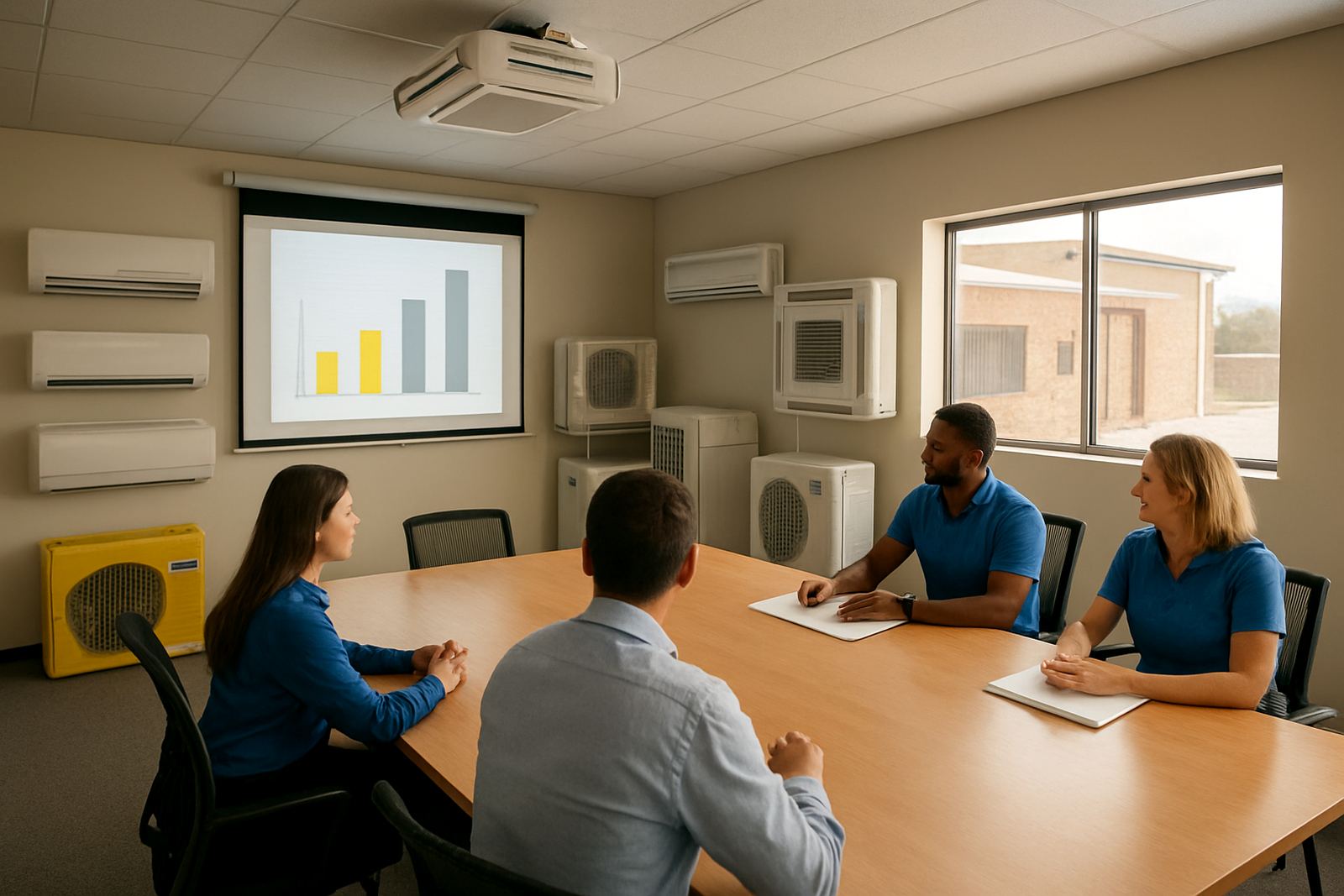
Meeting rooms are not like regular offices. A small group sitting still in chairs might look simple on paper, but the heat load changes quickly once the projector is on, the lights stay on and the room fills with people. Add laptops, charging phones and a few closed blinds and you can end up with a warm patch near the screen or around the table before the meeting is halfway through.
Glazing makes matters worse. A north or west-facing glass wall can pull in a lot of heat in the Lowveld, and in places like Rustenburg and Klerksdorp the afternoon sun can push the room well past what the aircon can handle if the unit was selected only by square metres. Occupancy is just as important. A room for 10 that is used by 16 people every week needs a different answer, not just a bigger fan speed.
The signs you are getting a hotspot problem
Most boardroom complaints start the same way. One person says the room is too hot at the table, another says it is cold near the door, and someone else opens the window to help, which usually makes the problem worse. If the projector area feels warm even after the unit has been running for a while, the room may have poor air throw or the return air may be short-cycling back to the unit.
- People sit closest to the windows and complain first.
- The projector or TV area feels stuffy even when the rest of the room is cool.
- Temperatures change a lot once the room reaches full occupancy.
- The unit runs hard but the room never settles.
- There is condensation on glass or a damp smell after meetings.
In some buildings the problem is not the aircon itself, it is the layout. A unit placed too close to the door, a bulkhead blocking airflow or a ceiling cassette positioned badly can leave one side of the room hot and the other side chilly.
What the right system needs to take into account
For a meeting room, we look beyond simple room size. We check window area, direction of sun, ceiling height, insulation, projector use, number of seats and how long the room is usually occupied. A boardroom used for quick staff meetings has a different demand from a client room where people sit for two hours with a presentation running.
A few practical items matter every time:
- Glazing and blinds, especially on west-facing walls.
- Occupancy patterns, not just maximum floor area.
- Heat from projectors, screens and charging points.
- Airflow path so cool air reaches the centre of the table.
- Noise level, because a loud indoor unit makes meetings harder to run.
- Drain route and service access, especially in ceilings with limited space.
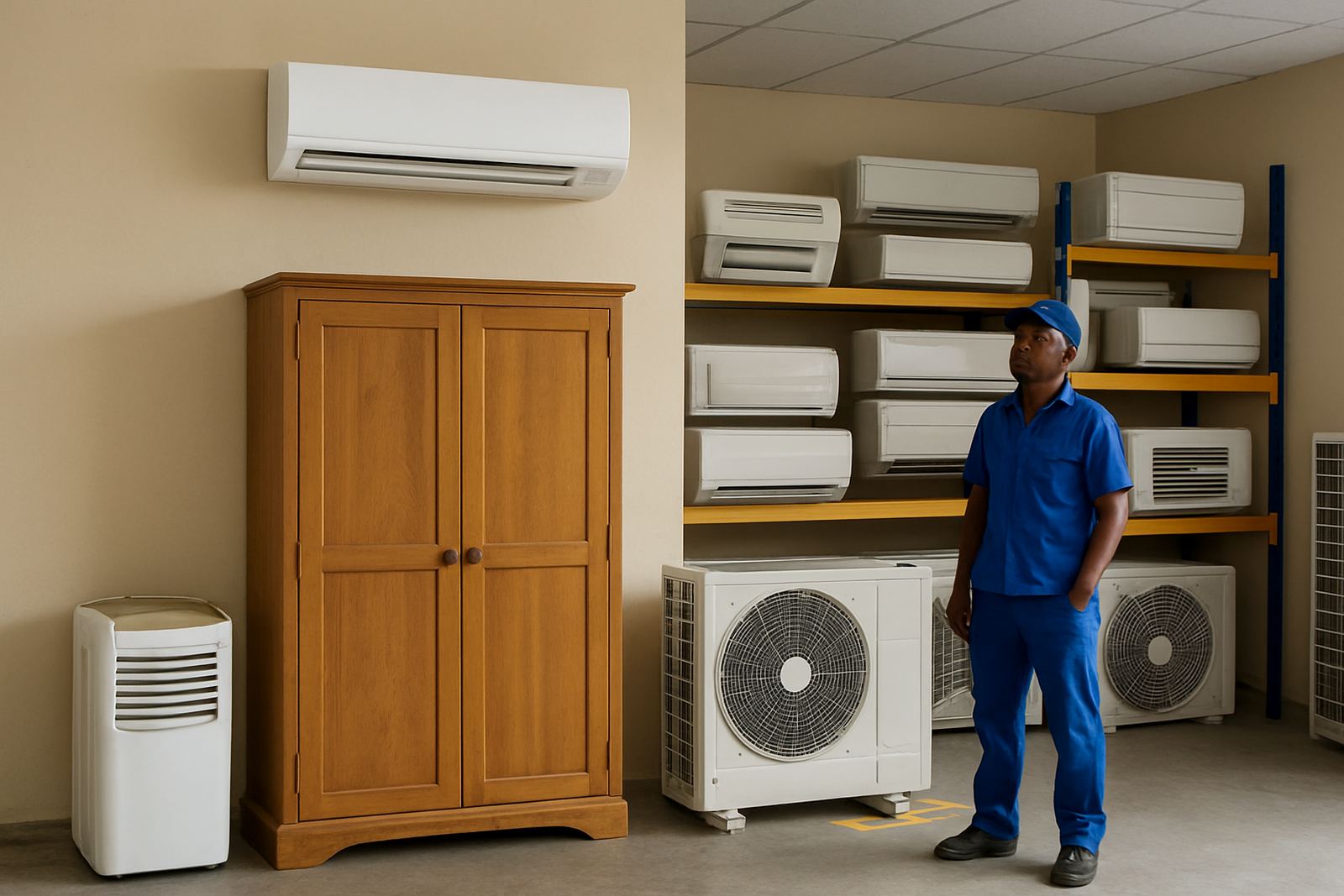
Sometimes a wall split is the best answer. In other rooms, a cassette gives better spread across the table and avoids blowing directly onto one person. The point is to match the unit to the room use, not just the name on the door.
A practical setup for Lowveld and inland boardrooms
In Mbombela and White River, meeting rooms often deal with strong sun, humidity and frequent use in offices that need to stay presentable for clients. We often find that a single undersized unit is working flat out all day, which leads to uneven cooling and higher power use. In those cases a better layout, or a replacement unit with proper capacity, gives a more stable result and less stress on the system.
In Klerksdorp and Potchefstroom, the challenge is often the mix of hot afternoons and long meetings in rooms with older ceilings or limited fresh air movement. A well-placed cassette can help spread air more evenly across the room, while a wall split may suit a smaller meeting space with one glass side. It depends on the room, not the town alone. We often recommend a site assessment before any replacement, so the new unit does not repeat the same mistake.
For rooms that are only used now and then, a portable unit can work as a short-term option, but it is usually not the best answer for a boardroom that hosts regular meetings. Portable units are useful where installation is difficult, yet they do not usually manage occupancy swings as cleanly as a properly installed fixed system.
How to stop the same hotspot coming back
Once a boardroom starts underperforming, quick fixes can hide the real issue. Lowering the temperature setting only makes the unit run longer. Closing a vent with cardboard or shifting furniture around may help for one meeting, but it does not solve the room balance. A better approach is to test the room under normal use, with the projector on and the usual number of people inside.
Good maintenance also matters. Dirty filters, blocked coils and low gas can all make the room feel warm at the far end, even if the system is still running. That is where scheduled servicing, gas top-ups when needed and deep cleaning make a real difference. In dusty inland conditions, and in places where the system runs through long workdays, airflow drops faster than many people expect.
- Book a proper site assessment before changing the unit.
- Check that the indoor unit is not fighting direct sun or blocked returns.
- Keep blinds, doors and ceiling access points in mind during meetings.
- Service the system before summer, not after the complaints start.
- Ask whether the room needs a better air distribution plan.
A local example from a busy office in Mbombela
A client in Mbombela had a boardroom that looked fine on plans, but every afternoon the far end of the table became uncomfortable once the projector was running. The room had a glass wall, 14 seats and a single wall unit that had been fitted years earlier. Staff kept lowering the set point, but the room only became colder near the door while the presentation area stayed warm.
After a site assessment, the room was reworked with a better unit position and a more suitable capacity for the actual occupancy. The result was not magic, just the right fit for the room. People at the table stopped moving chairs around, meetings ran on time and the aircon was no longer being blamed for a layout problem. That is usually the pattern with meeting room hotspots: the issue is there from the start, but it only shows once the room is full and the projector is on.
Aircon Warehouse is based in Mbombela and covers the Lowveld and North West, including Klerksdorp, Potchefstroom and Rustenburg. We handle site assessments, new installations, replacement units, cassette fitment, portable setup, system commissioning, scheduled servicing, fault finding, gas top-ups and deep cleaning. For boardrooms that need a practical answer, the first step is getting the room checked properly.