What our deep cleaning covers
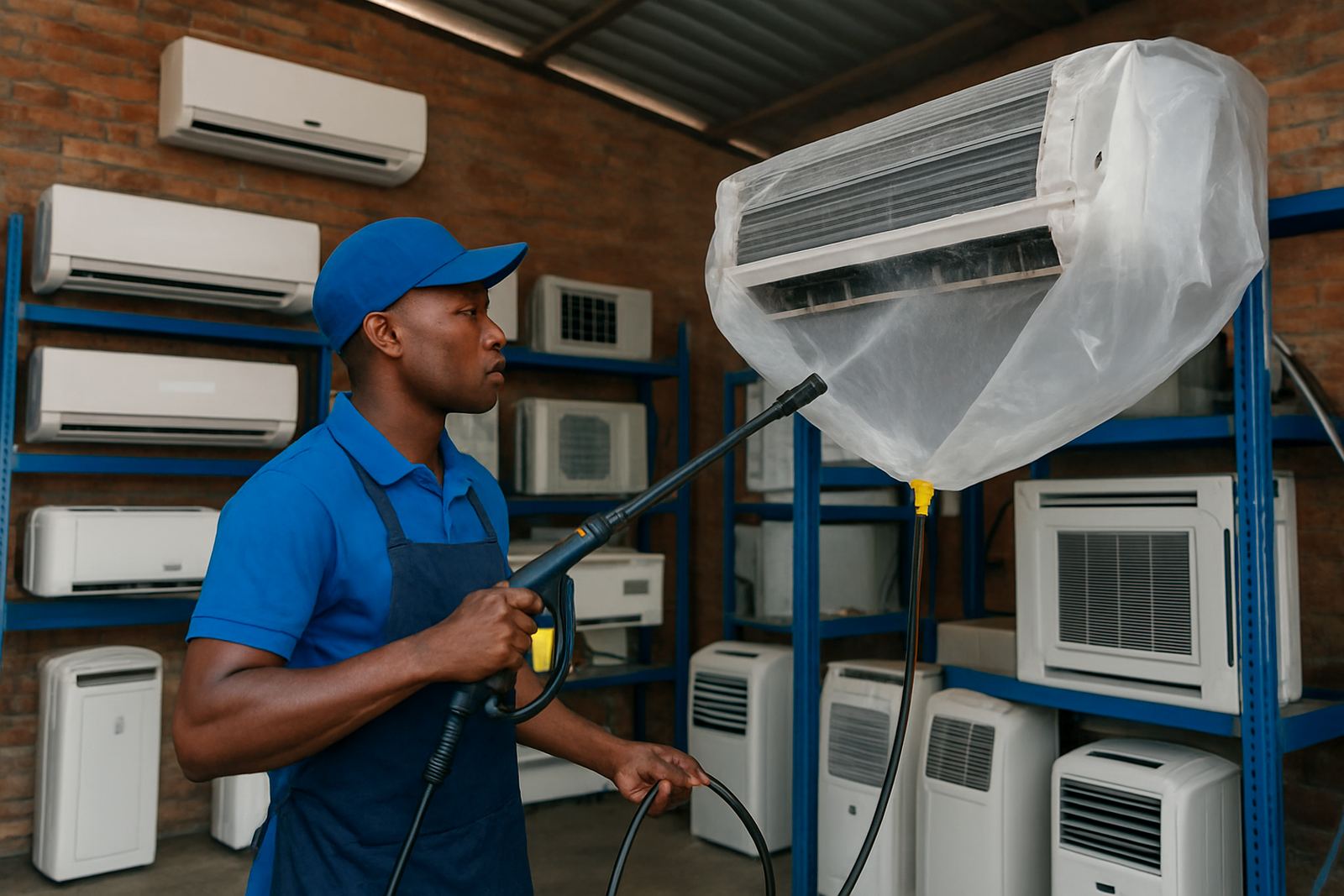
Deep cleaning is more than a quick wipe of the cover and filters. We open the unit, clean the coil packs, drain pan, fan section, air filters and the areas where dust, grease and moisture collect. On wall splits and cassettes, this helps clear the fine dirt that sits deep inside the unit and causes a musty smell or weak air delivery.
In the Lowveld, dust and humidity can build up fast. In Klerksdorp and the wider North West, dry dust and fine grit often clog the fins and filters, especially in shops and offices that run the aircon daily. A proper cleaning can improve airflow, reduce short cycling and help the unit pull heat out of the room as it should.
- Indoor unit casing, filters and return air path
- Evaporator coil, fan wheel and drip tray
- Drain line clearing and water flow check
- Outdoor condenser coil and surrounding service area
- Basic inspection for wear, leaks and loose fittings
When a unit needs more than routine servicing
If the air smells stale, the room takes longer to cool or the unit drips water indoors, a standard service may not be enough. Deep cleaning is often the right call when a unit has been running through summer, after building work, or where the filters are cleaned but performance stays poor. We also recommend it for units in kitchens, small factories, salons and retail spaces where airborne dust and lint are higher than normal.
Many faults start with blocked airflow. Once the coil is packed with dirt, the compressor works harder, the room cools unevenly and the unit can ice up. That leads to more wear, and sometimes unnecessary gas top-ups or parts replacement. Cleaning the system thoroughly can help avoid that spiral, and yes the difference is often obvious in the first hour.
- Reduced airflow from the indoor unit
- Unpleasant smell when the unit starts
- Water dripping from the front cover or casing
- Visible dust build-up on fins and fan blades
- Higher running time for the same room temperature
Our cleaning process, step by step
We start with a site assessment so the technician can see the unit type, its position and the level of contamination. The unit is isolated, opened carefully and protected areas around it are covered before cleaning starts. For wall splits we clean the removable filters, coil face, fan barrel and drainage path. For cassettes we open the ceiling section, clean the internal tray and check the condensate line. Portable units are stripped where practical and cleaned inside and out.
After the main clean, we flush the drain line, check for proper water fall and test operation in cooling mode. If the unit has a weak remote response, noisy fan motor or signs of icing, we note it for the client before we leave. Where access is tight, especially in older buildings and small offices, we plan the method around the safest way in and out. That keeps the job tidy and reduces downtime.
- Assess condition and isolate power
- Open unit and remove washable parts
- Clean coil, fan, tray and casing
- Flush drain and check for leaks
- Reassemble, test and confirm operation
Turnaround for homes, shops and offices
Most deep cleaning jobs take between 45 minutes and 2 hours per unit, depending on access, dirt level and unit size. A single wall split in a home may be done quite quickly, while a cassette in a ceiling void or a unit with heavy grease build-up will take longer. If multiple units need attention on the same site, we can schedule the work to reduce disruption during trading hours.
In Mbombela, White River and Hazyview, we often book morning slots so units can be ready for the hotter part of the day. In Klerksdorp, Potchefstroom and Rustenburg, we work around office and retail times where possible. If the unit has a serious blockage or a drainage issue, the technician will explain the extra time before continuing. We do not rush a dirty unit through and call it clean.
Pricing approach and what affects the quote
Pricing depends on the unit type, height of access, the level of dirt and whether one unit or several need cleaning. A ground-floor wall split in a house will usually cost less than a cassette in a commercial ceiling or a set of units in a busy shop. We quote fairly and keep the pricing tied to actual labour, access and materials used for the job.
Where a site has many units, we can usually offer better value per unit. We also make it clear when a deep clean is enough and when the system needs scheduled servicing, a gas leak check or fault finding. That helps you spend money where it matters instead of paying twice for the same issue.
- Unit type and size
- Access height and ceiling work
- Single unit or multiple units
- Level of grime, odour or blockage
- Any extra repairs identified on site
How often to book deep cleaning
For most homes, a deep clean every 12 to 18 months is a practical range, especially where the unit runs through summer and winter. In shops, clinics, offices and other busy spaces, every 6 to 12 months is better. Coastal humidity, dust from roads and nearby building work can shorten those intervals. In the Lowveld, a unit that looks fine on the outside can still be carrying a lot of dirt inside.
If the unit is in a dusty room, near a kitchen or in a building with regular load-shedding and power restarts, more frequent attention can help keep the system stable. The aim is not just cleaner air. It is also better airflow, less strain on the compressor and fewer callouts later on. A clean unit is simply easier to keep running well.
Key facts
| Service type | Deep internal cleaning for wall splits, cassettes and portable units |
|---|---|
| Coverage | Mbombela, White River, Hazyview, Klerksdorp, Potchefstroom, Rustenburg |
| Typical turnaround | 45 minutes to 2 hours per unit, depending on access and condition |
| Common problem signs | Odours, weak airflow, dripping water, dust build-up, poor cooling |
| Recommended interval | Every 12 to 18 months for homes, 6 to 12 months for busy sites |
| Booking contact | trade@airconwarehouse.co.za |