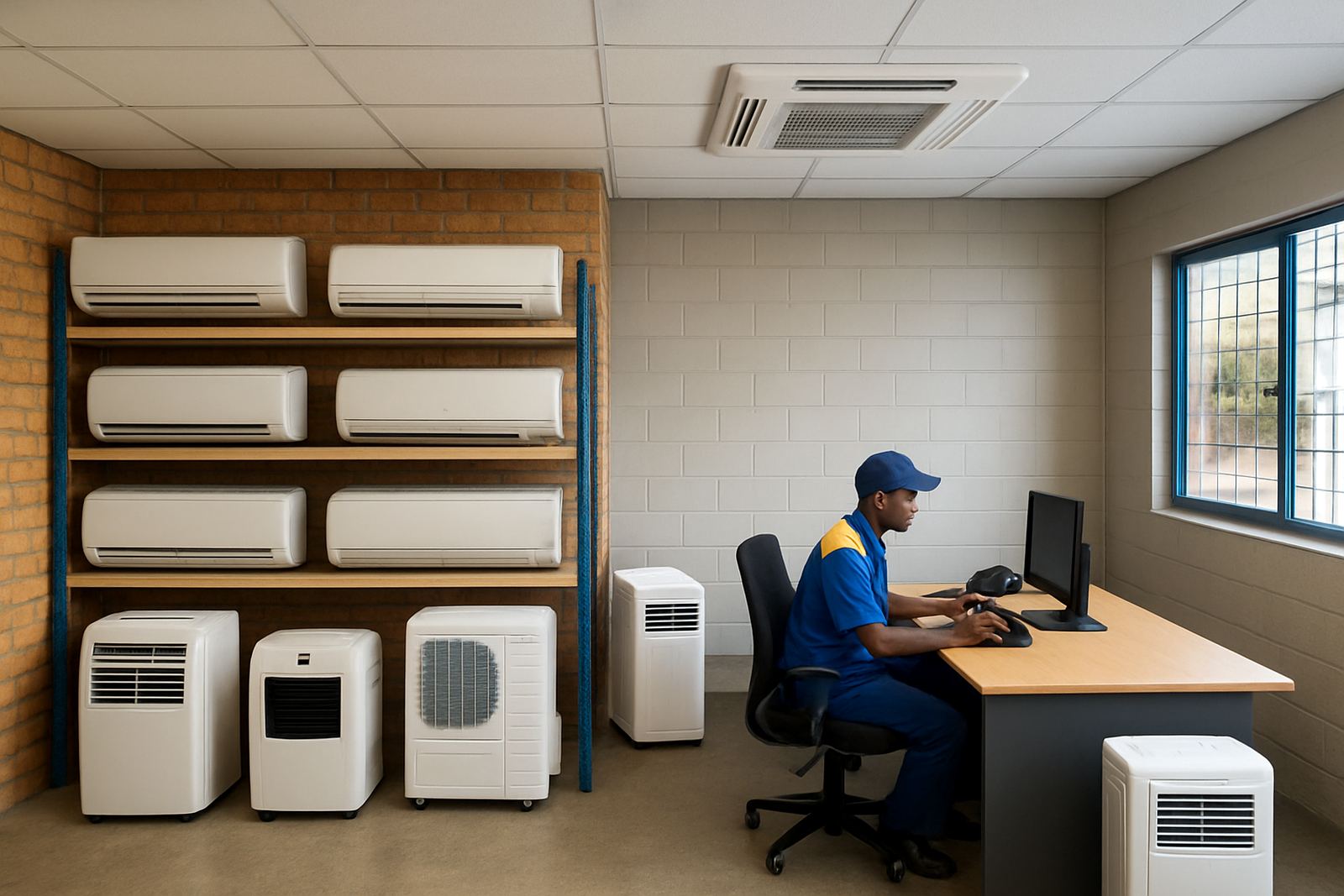
Start With The Room, Not The Unit
Before looking at price tags, measure the space and think about how people use it day to day. A small office with one glass front, a boardroom that fills at 10am, and a retail floor with doors opening often will not need the same solution. In the Lowveld heat, and during load-shedding recovery periods when premises warm up fast, the wrong unit can struggle from the start.
A wall split is usually mounted high on a wall and throws air across a room. A cassette sits in the ceiling and spreads air in more directions. Both can cool well, but they suit different buildings. If the room has low ceilings, a lot of bulkheads, or no false ceiling at all, that decision becomes clear very quickly.
When A Wall Split Makes More Sense
Wall splits are often the practical choice for small to medium offices, consulting rooms, back offices, guard rooms and smaller retail spaces. They are simpler to install, easy to reach for day-to-day cleaning, and generally cost less upfront than a cassette setup. In places like White River or Hazyview where many sites have straightforward room layouts, a wall unit can do the job well without changing the building structure.
They are also useful where the team wants direct cooling to one area and not the full floor. If the room is closed off most of the day, that focused air delivery works in your favour.
- Lower installation cost in many cases
- Works well in rooms without a ceiling void
- Easy to access for filter cleaning
- Good for one office, one shop section or one treatment room
That said, wall splits can feel more noticeable in a finished space because the indoor unit is visible on the wall. If the room has several workstations under one open plan, air may not spread evenly and some people sit in the cold while others stay warm.
Where A Cassette Unit Earns Its Place
Cassette units suit open-plan areas, boardrooms, showrooms, restaurants and offices with a suitable ceiling space. Because they sit in the ceiling and distribute air from multiple sides, the airflow feels more even across the room. For commercial premises in Potchefstroom or Rustenburg with larger floor plates, that often matters more than the purchase price.
They also keep wall space open for shelves, notices, cabinets or display fittings. In a customer-facing area, that can help the room feel neater and less cramped. A cassette does need proper ceiling access, a sound structure above the ceiling line and correct drainage planning. If that is missing, the unit becomes a headache later.
- Better fit for open-plan areas
- Cleaner look in customer-facing spaces
- Even air distribution from the centre of the room
- Useful where wall space is limited
We often find that businesses choose a cassette for the look, then discover too late that the ceiling cannot take it or the maintenance access is poor. That is why a site assessment matters before anyone signs off on equipment.
What The Trade Price Really Includes
A lot of buyers compare only the unit price, but the real cost includes fitment, copper line length, electrical work, drainage, mounting, commissioning and future servicing access. A cheaper unit can become expensive if the install needs extra pipe runs or if the ceiling access is awkward. In Mbombela, where humidity is high and summer demand is hard on equipment, you want the installation done properly from the first day.
For a wall split, the install usually needs a solid wall bracket, correct line routing and a place where condensate can drain freely. For a cassette, the crew must allow for suspension points, ceiling opening size, service panel access and safe maintenance space. That affects labour time and materials, so it should be quoted clearly.
When comparing options, ask these questions:
- Does the room allow the unit to work without overloading it?
- Is there proper access for future servicing?
- Will the airflow suit the furniture or stock layout?
- Is the electrical supply ready for the load?
Servicing And Downtime In Commercial Sites
For a business, the easier a unit is to service, the less downtime you face. Wall splits are often quicker to clean because the filters and indoor unit are easier to reach. Cassettes can be very manageable too, but only if the ceiling access has been planned properly. If a technician has to remove panels, shift ceiling tiles and work around cramped services, a routine clean takes longer.
In dusty or coastal conditions, and on sites with doors opening often, regular scheduled servicing helps keep airflow up and power use down. Gas top-ups, deep cleaning and fault finding should not be left until the unit stops cooling. A neglected system will often show it through poor airflow, water leaks or a sharp rise in power use.
For businesses in Klerksdorp, where offices and shops often need cooling through long hot spells, planning servicing around trading hours also matters. The wrong choice is not only about comfort, it is about keeping the site operational.
A Mbombela Example: One Office, Two Possible Answers
Take a professional office in Mbombela with a reception area, one enclosed manager’s office and an open work area for six staff. If the ceiling is low and there is no false ceiling above reception, a wall split can handle the manager’s office and the smaller enclosed room very well. If the open work area has a proper ceiling void and needs even cooling across several counters, a cassette may be the better fit for the shared space.
That is why a mixed approach can also make sense. Some premises use wall splits in private rooms and a cassette in the open-plan section. It is not about choosing one type for every room, but matching the unit to the way the building is used.
In practice, the best result comes from a site visit, room measurements and a proper look at airflow, drainage and power supply. A quick recommendation over the phone is rarely enough for a commercial site.
Choose For Layout, Budget And Long-Term Running Costs
Wall splits suit smaller rooms, simpler layouts and sites where lower upfront cost matters. Cassettes suit open-plan commercial spaces, better ceiling access and a cleaner finish. Both can work well in the Lowveld and North West, but the right choice depends on how the building functions, not just the size of the room.
When you compare the two, look at install cost, ease of servicing, ceiling structure, airflow and future power use. If those factors are checked early, you avoid unnecessary changes later and the system is far easier to manage through summer, load-shedding and busy trading periods.
For trade pricing, site assessments and installations in Mbombela, White River, Hazyview, Klerksdorp, Potchefstroom and Rustenburg, it helps to deal with a team that knows both the product and the local conditions.