Why ceiling height changes the cooling load
Most people look at floor area first, but the height of the room matters just as much. A room that is 5 m by 4 m with a 2,4 m ceiling has far less air to cool than the same floor space with a 3,6 m ceiling. That extra volume adds heat load, and warm air collects higher up first.
In Mbombela, White River and Hazyview, many homes and guest units use open living areas with raked ceilings or exposed trusses. In Klerksdorp and Rustenburg, shops and offices often have taller roof spaces too. A unit that works well in a standard lounge can struggle in these spaces, especially in summer when the roof cavity gets hot. The result is that the room feels cool at head height but never fully settles.
What happens when the unit is too small
An undersized unit runs longer, works harder and still may not pull the room down to a steady temperature. That means more wear on the compressor and more complaints about the room being stuffy. On a hot Lowveld afternoon, you will notice it quickly.
- Long run times with little improvement in comfort
- Uneven cooling between the floor and upper part of the room
- Higher electricity use during peak summer months
- More strain if doors open often or the room faces direct sun
If a business in Potchefstroom or a home in Rustenburg has tall ceilings plus large windows, the sizing issue becomes even more important. Shade, glass area and insulation all change the final selection, so one quick guess is often not enough.
Airflow matters just as much as capacity
A bigger unit is not always the answer. What matters is getting the cool air to where people are actually sitting or working. In a tall room, the cold air can drop while warm air stays trapped above. That is why installation position, fan throw and the direction of the louvers count.
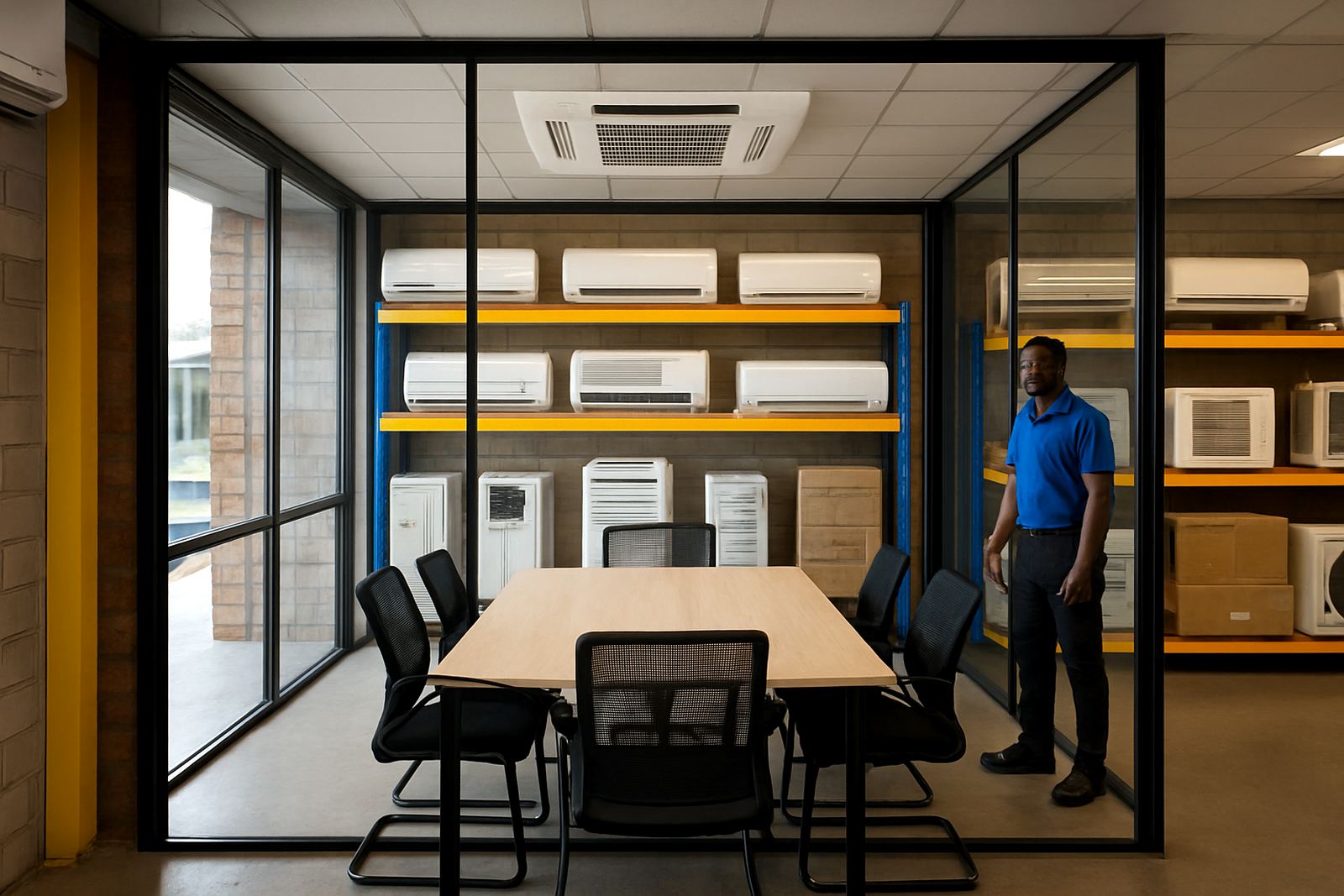
For some high-ceiling rooms, a cassette unit makes sense because it can spread air more evenly across a wide area. In other rooms, two smaller wall splits placed correctly may perform better than one large unit. The wrong choice can leave cold spots near the unit and warm patches on the far side of the room, which is frustrating in an office or reception area.
- Keep return and supply air paths clear
- Avoid placing the unit where furniture blocks airflow
- Use the right fan setting for room size and ceiling height
- Consider air movement from ceiling fans where suitable
Local examples from the Lowveld and North West
A family in Mbombela may have a double-volume lounge with a mezzanine floor and afternoon sun on the western wall. That room needs a proper site assessment because the ceiling height, glass, and roof heat all work together. In that case, a standard estimate based on floor area alone would be short on cooling.
In Klerksdorp, we often see offices in older buildings with high interior roofs and enclosed meeting rooms. The space looks small from the outside, but the extra air volume inside changes everything. A practical commissioning job there might include checking actual running temperature, airflow direction and whether the room needs a second unit or just a better set point. On some jobs a deep clean and gas top-up is needed, but if the sizing is wrong, servicing alone will not fix comfort.
How we assess a high-ceiling space
At Aircon Warehouse, a proper site assessment starts with room dimensions, ceiling height, window direction, roof type and how the space is used. A shop that opens its doors all day is different from a bedroom or boardroom. We also look at occupancy, heat from appliances and whether the building is coastal or inland, because humidity and outside temperatures change performance.
For installations in Mbombela, White River, Hazyview, Klerksdorp, Potchefstroom and Rustenburg, the final unit choice may be a wall split, cassette or portable unit depending on the room and access. If the roof space is awkward or the ceiling is very high, fitment details matter just as much as the unit itself.
- Measure floor area and ceiling height together
- Check insulation and roof heat gain
- Look at sun exposure and window size
- Match the unit type to the room shape
The practical rule for buyers and building managers
If the ceiling is higher than standard, do not buy on room size alone. Ask how the extra air volume changes the load, and whether air movement needs help from the installation layout. That small step can save time, money and repeat call-outs later.
For trade buyers and property owners, the goal is simple: choose a unit that cools the whole room, not just the strip of air nearest the outlet. When the ceiling is high, the detail in the sizing and placement makes the difference between decent cooling and a system that never quite keeps up.