Why storm season causes real damage to air-conditioners
In the Lowveld and North West, summer storms often arrive fast and leave just as quickly. One hard burst of rain, a lightning strike nearby or a power flicker during load-shedding recovery can upset an outdoor unit, trip the system, or damage control parts.
Most problems are not from the rain alone. It is the mix of water, unstable supply, dust, high heat and strong wind that creates the trouble. Outdoor equipment is built to live outside, but it still needs correct installation and a little care, especially where thunderstorms roll through Mbombela, White River, Hazyview, Klerksdorp and Rustenburg.
For commercial sites and homes alike, the first rule is simple: protect the unit before storm season starts, not after the fault call. That means checking mounting, drainage, electrical protection and the space around the condenser or cassette outdoor section.
Start with the power supply and surge protection
Storms often show up as a power problem before you see rain. A nearby strike can send a surge through the supply, while repeated interruptions can stress boards and compressors. If the unit trips often, or the breaker is old, get it checked before the worst weather arrives.
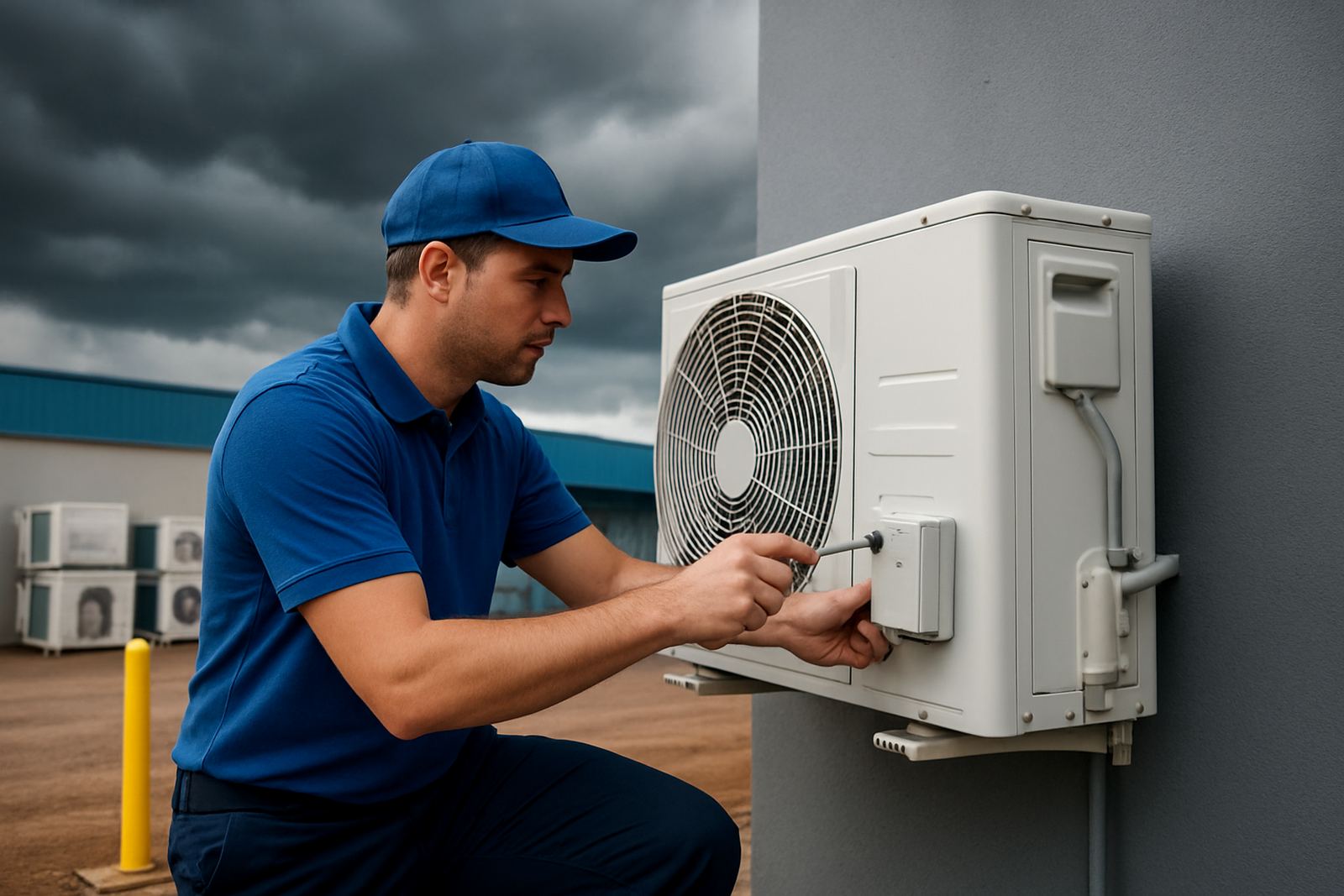
Good surge protection should be fitted by a qualified technician and sized correctly for the load. It is not only for the main house board. Where possible, the air-conditioner should have proper isolation, sound earthing and wiring that matches the unit size. Loose terminations are a common cause of heat and failure after a storm, so a quick tighten-up can prevent a long repair.
- Check that the outdoor isolator closes properly and is not cracked.
- Confirm the breaker rating matches the unit and cable size.
- Ask for surge protection where the area has frequent thunderstorms.
- Make sure the earth connection is secure, clean and tested.
Keep the outdoor unit clear, dry and securely mounted
Wind-driven leaves, sand and branches can block the coil and push the system to work harder. In places with sandy soil or open erven, like parts of the North West, dust can build up fast. On the Lowveld side, strong rain can splash mud into the fins and base tray. Both are a problem if the unit sits too low or too close to a wall.
Give the outdoor unit enough space for air movement and service access. If it is wall mounted, the brackets must be firm and level. If it is on a slab, the base should drain away from the unit and not sit in pooling water. Rust starts quicker than many people expect near the coast or in humid inland weather, so any damaged paint or exposed metal should be treated early.
A unit that moves in the wind is not safe. Even a small shift can crack pipework, loosen flares or put strain on the fan motor. If you hear rattling during a storm, arrange a proper inspection once the weather clears.
How to protect the indoor side when lightning and rain are heavy
The outdoor unit gets the weather, but the indoor side can still suffer if the supply goes unstable or water gets into a roof space. During very heavy rain, check for any roof leaks above the unit, especially in offices, shops and older homes where ceiling space is tight.
If lightning is close, it helps to switch off the air-conditioner at the isolator and leave it off until the storm has passed. This is not a guarantee against damage, yet it reduces strain when the power comes back in a rough state. After the storm, wait a few minutes before restarting the unit so the system can stabilise.
- Switch off at the isolator during severe lightning activity.
- Look for water stains near indoor heads and ceiling routes.
- Do not reset a tripping unit over and over.
- If there is a burnt smell, stop using it and call for fault finding.
A simple storm checklist for homes, shops and small offices
Many storm-season breakdowns can be prevented with a short inspection before the first proper rain. In Mbombela, where afternoon thunderclouds can build fast after a hot day, this is worth doing before December is in full swing. The same applies in Potchefstroom and Klerksdorp, where wind and dust can be just as hard on the system as rain.
Use this checklist before the season turns nasty:
- Clear leaves, paper and plastic from around the outdoor unit.
- Check the unit is standing level and not rocking on its base.
- Make sure cables are tidy and protected from direct water spray.
- Confirm the drain path is open and not blocked by soil or weeds.
- Test that the system starts and stops normally after a brief power cut.
- Arrange scheduled servicing if the filters, fins or gas levels are overdue.
A bit of planning now is cheaper than emergency work after a storm. It also helps the system run better through the hottest weeks, when everyone in the building wants cooling at the same time.
Local example: a retail unit in Klerksdorp after a night storm
A small retail site in Klerksdorp recently lost cooling after a storm rolled through late at night. The outdoor unit had taken a surge, the isolator was weak, and water had gathered around the base because the slab did not shed water properly. By the next morning the shop floor was already uncomfortable and stock near the front counter was getting warm.
After inspection, the team fitted proper surge protection, corrected the drainage around the slab, cleaned the condenser fins and replaced a damaged contactor. The unit was back in service the same day. The owner later said the real fix was not only the repair, but the prevention work that kept the next storm from causing the same mess.
That is the point of storm protection: it keeps small problems from turning into shutdowns. In summer, when storms, load-shedding and long operating hours all arrive together, even a minor fault can become a full trading issue.
When to call for assessment, servicing or replacement
Some signs mean the unit needs a technician without delay. If the system trips after rain, blows warm air, shows a fault light, or makes a harsh buzzing sound at start-up, do not keep cycling it on and off. That can do more damage.
Ask for help if you notice any of these:
- Water inside the room near the indoor unit.
- Corrosion on outdoor fittings or cabinet panels.
- Repeated breaker tripping after a storm.
- Fan noise, vibration or a unit that struggles to start.
- Cooling that is weak after a power interruption.
In Mbombela and across the North West, proper site assessments, new installations, commissioning and scheduled servicing help keep equipment ready for storm season. A well-looked-after unit copes better with wet weather, heat and supply issues, and it gives you fewer surprises when the clouds arrive.