Why neat cooling work matters at accommodation sites
At a lodge, visible air-conditioning is part of the overall presentation. A wall split with straight copper lines, clipped trunking and a tidy outdoor unit tells guests the property is maintained, not patched together after the last busy season. That matters in places like Mbombela, White River and Hazyview where guests often notice the small things before they mention the bed or breakfast.
Good neatness also saves time for the maintenance team. When pipe routes are planned properly, the technician can trace faults quicker, isolate a leak faster and service the unit without pulling off half the cover work. That can make a real difference during peak bookings, when one room out of action can throw off the whole week.
Start with the route before the drill breaks out
The cleanest install starts on paper or at least with a proper walkaround. Before any holes are drilled, check where the indoor head, outdoor unit and drain line will sit. On chalets, reception blocks and family rooms the route should keep pipework out of direct guest view where possible, while still allowing easy access for cleaning and future repairs.
It helps to think about heat, rain and sun exposure too. On a west-facing wall in the Lowveld, trunking can take a lot of heat, so short direct runs are better than long, awkward bends. On the other hand, in Klerksdorp or Potchefstroom, dust and strong winds can collect around poorly supported pipe covers if the line is left loose.
- Keep indoor to outdoor distances as short as practical.
- Use straight trunking lines and avoid random turns.
- Allow clear access to the outdoor unit for gas checks and cleaning.
- Plan condensate drainage so it does not drip onto walkways or steps.
Hide pipework without trapping heat or moisture
There is a big difference between hiding pipework and burying it badly. Cable trunking, painted to match the wall, usually gives the neatest finish for guest-facing areas. In some cases the lines can be taken through roof space or service areas, but that should only be done where maintenance access stays simple and the pipe insulation remains protected.
On coastal or humid inland sites, moisture protection becomes important. Insulation that is left exposed can sweat, stain walls and drip onto plaster or paving. A tidy wrap and proper sealing at entry points helps keep the finish cleaner for longer, and it cuts down on that tired, patched look that shows up after one summer season.
- Use full-length insulation on suction lines.
- Seal wall penetrations to stop water and insects entering.
- Paint trunking if the wall colour needs it.
- Keep joins straight and supported instead of sagging between clips.
Outdoor units should look deliberate, not dumped
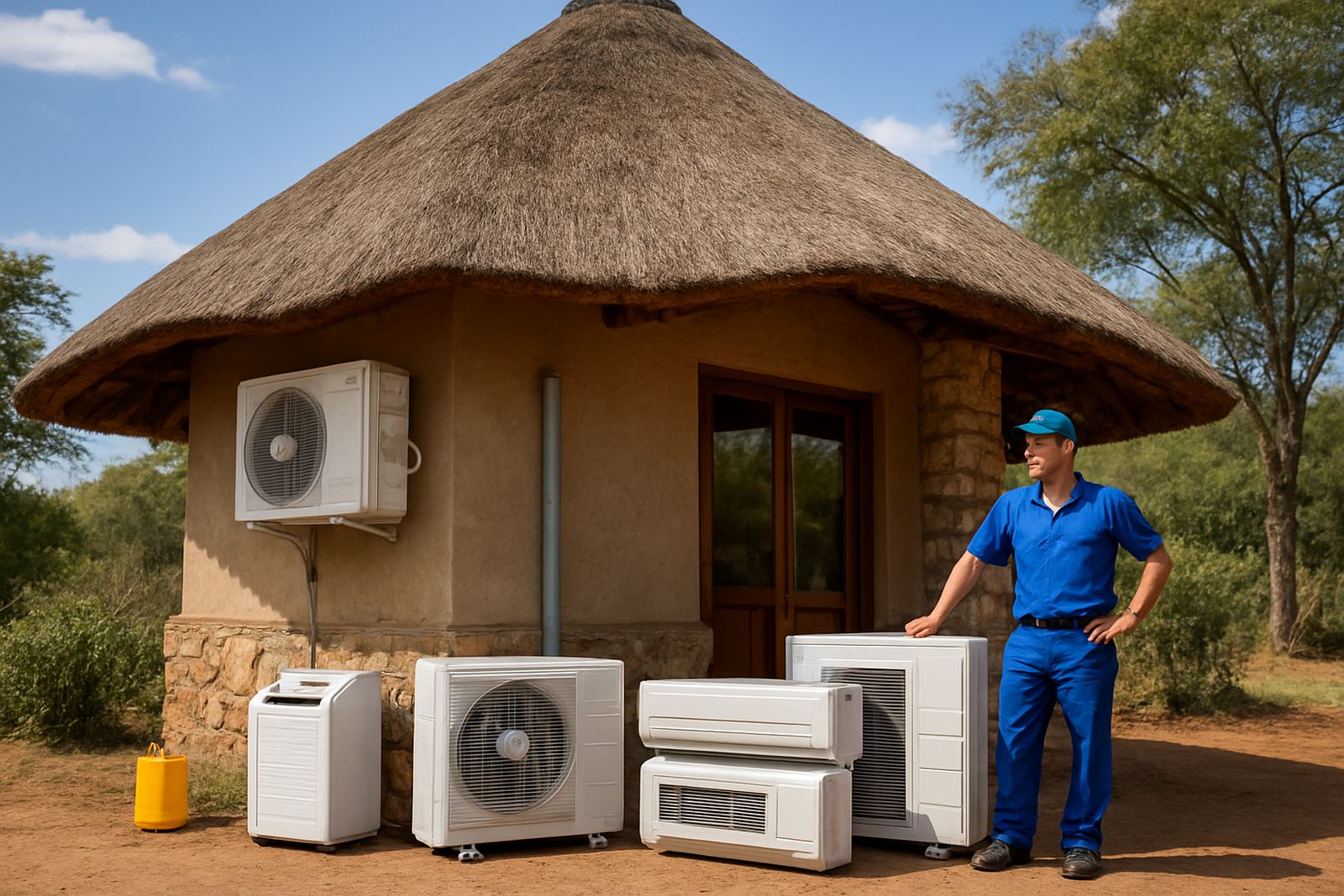
Outdoor units are often the most visible part of the system, especially near parking areas, lapa spaces or passage walls. If they sit on uneven paving, lean against a wall or block a service path, the whole installation looks hurried. A level wall bracket or a proper concrete base makes a big difference to the final appearance.
At lodge sites it is also worth thinking about noise and vibration. A unit fixed too lightly can rattle against a wall at night, which is not ideal when guests are trying to sleep. Correct mounting, rubber isolation where needed and enough space around the unit for airflow all help keep the site quieter and neater.
- Set the unit level so the casing does not twist over time.
- Keep the front and sides clear for airflow.
- Mount away from bedroom windows where possible.
- Use a stand or bracket that suits the wall type and load.
Make servicing easy before the busy season
Many accommodation sites only notice their cooling system once the heat arrives and bookings are full. That is when a blocked filter, dirty coil or weak gas charge becomes a problem. If access is cramped, every service takes longer and the site ends up with ladders, tools and open covers in guest areas. Planning for scheduled servicing from the start keeps the look neater and the work faster.
A proper maintenance routine should include deep cleaning, drain checks, fault finding and regular gas top ups when required. For lodges in the Lowveld, where units work hard through the hotter months, this is not just about comfort. It keeps the plant room, roofline and guest-facing areas from filling up with stop-start repair work.
- Keep a clear path to each indoor and outdoor unit.
- Label rooms or units so the right system is serviced quickly.
- Replace cracked trunking and faded clips before they become visible eyesores.
- Book scheduled servicing before peak holiday periods.
A Mbombela lodge example that makes the point
A small lodge on the Mbombela side of the Lowveld had a row of guest chalets where the aircons were working fine, but the pipework looked untidy and the outdoor units were sitting in mixed positions along the passage wall. Guests were seeing loose trunking, uneven mounting and one drain line that dripped close to the walkway. The units were functional, but the finish sent the wrong message.
The fix was simple enough: the pipe routes were shortened where possible, covers were replaced with straighter trunking, the outdoor units were lifted onto matching supports and the drainage was redirected. The site looked cleaner the same week, and the maintenance team said the next service was quicker because the lines were easier to follow. That is the real value of neatness at accomodation sites, it keeps the property presentable and makes ongoing work easier.
When to bring in a proper installation team
Some tidy-up work can wait for a maintenance day, but if the lines are long, the wall finish is patchy or the outdoor units are badly placed, it is usually better to correct it properly. That is especially true for cassettes in reception areas, upgraded rooms or conference spaces where the equipment is more visible. A clean installation from the start is usually cheaper than fixing a poor one bit by bit.
For sites in Mbombela, White River, Hazyview, Klerksdorp, Potchefstroom and Rustenburg, the best approach is to assess the room layout, the guest traffic, the wall type and the service access before choosing the unit position. When that is done properly, the cooling works better and the property looks more organised at the same time.