Why a proper shutdown matters in the Lowveld and North West
Holiday homes and seasonal accommodation in Mbombela, White River, Hazyview, Klerksdorp and Potchefstroom face two common problems: long periods of no use and harsh weather in between. In the Lowveld, humidity can sit high for months, while in the North West fine dust and summer storms can work their way into units that are not running. If an air-conditioner is simply switched off and forgotten, the result can be stale smells, blocked drains, corroded terminals or a system that trips the first time power comes back after load-shedding.
A proper shutdown is not only about saving electricity. It is about protecting the equipment, the property and the people who will open the house later. For owners, that means fewer call-outs and less chance of finding water damage in ceilings or mould around the indoor unit. For guest houses and seasonal cottages, it also means the first guest is not greeted by a noisy fan motor or a musty room.
Start with a clean system before you switch off
If an aircon is being left unused for more than a few weeks, clean it before shutdown. A unit that is already carrying dust and moisture will only hold on to those problems while it sits. Filters should be removed, washed and dried fully before they go back in. The indoor casing and air outlet fins also need a wipe-down so there is less grime to attract damp air.
For properties near the coast would do this anyway, but inland homes benefit too because closed rooms trap smells quickly. If the unit has had a long stretch of daily use, ask for a deep clean and gas check before the property closes up. That is especially important in houses used only during holidays, where the same machine may be idle for six to eight months at a time.
- Switch the unit off at the remote first, then at the isolator if the installation has one.
- Clean or replace filters and let them dry properly.
- Check that the drain line is clear and not dripping inside the wall.
- Wipe the outdoor unit housing and clear leaves, grass cuttings or spider webs.
Protect the outdoor unit from heat, dust and weather
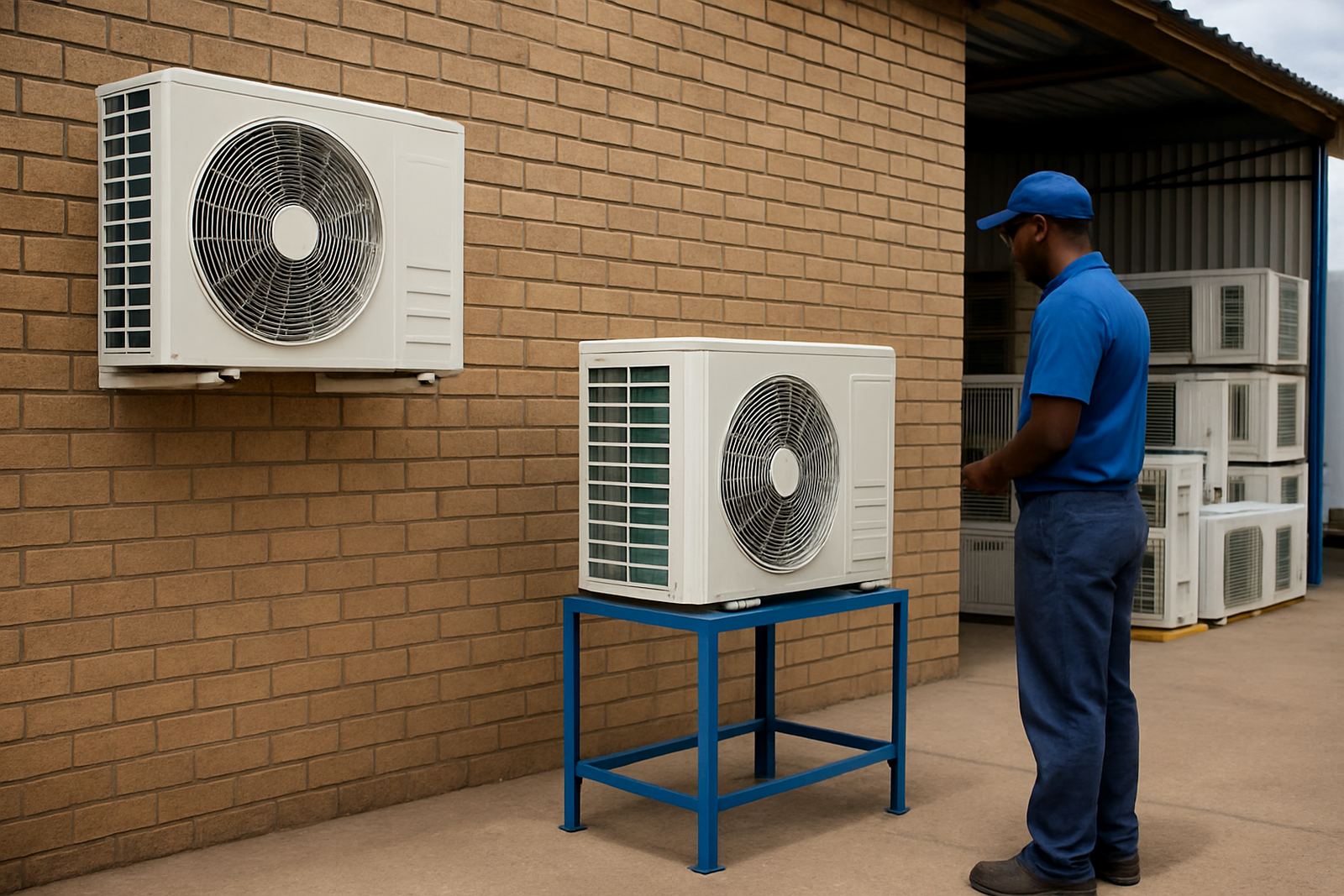
The outdoor section often gets neglected because it is out of sight. On a holiday home that sits empty, this is the part most exposed to sun, rain and windblown debris. In Rustenburg or Klerksdorp, dust can collect in the coil fins and block airflow. In Mbombela and Hazyview, summer rain and humidity can leave the casing damp for days. If the unit is mounted where garden work happens nearby, grass and trimmings can also clog the base.
Before shutdown, clear at least a metre around the outdoor unit so it can breathe when someone returns to start it again. Do not wrap it in plastic if moisture can get trapped inside. A light, breathable cover is better if the area is dusty or exposed, but it must not touch the fan blades or press dirt into the grille. If the unit is in a holiday cottage with a thatched or corrugated roof, it is worth checking that stormwater cannot splash directly onto the electrical connections.
- Trim back plants and remove loose debris around the condenser.
- Check for rust, bent fins or signs of vibration.
- Make sure brackets and wall mounts are still firm.
- Keep the isolator area dry and accessible for the next start-up.
Set the property up for power cuts and long idle periods
Many holiday homes in the North West and Lowveld are left unattended through load-shedding schedules and occasional outages. If power returns while nobody is there, some systems restart badly or keep settings that are not suited to an empty house. Before closing up, set the aircon to off at the main supply and remove batteries from the remote control. That prevents weak batteries leaking in the holder while the house is shut.
Where a property has several rooms, label the isolators clearly so the caretaker or cleaner knows which unit is which. This is a small step but it saves time when somebody has to open the house for a quick check or a booking change. It also helps if one unit needs to stay off because of a known fault. If there are repeated power trips, the problem should be sorted before the house is left empty for long, because a tripping supply can damage a board or compressor over time.
In older holiday homes, it is also wise to check for loose electrical covers and cracked conduits. Dust and insects find their way into gaps very quickly, and once the property has been locked up there may be nobody to notice until the next season.
What to do with portable units and guest room systems
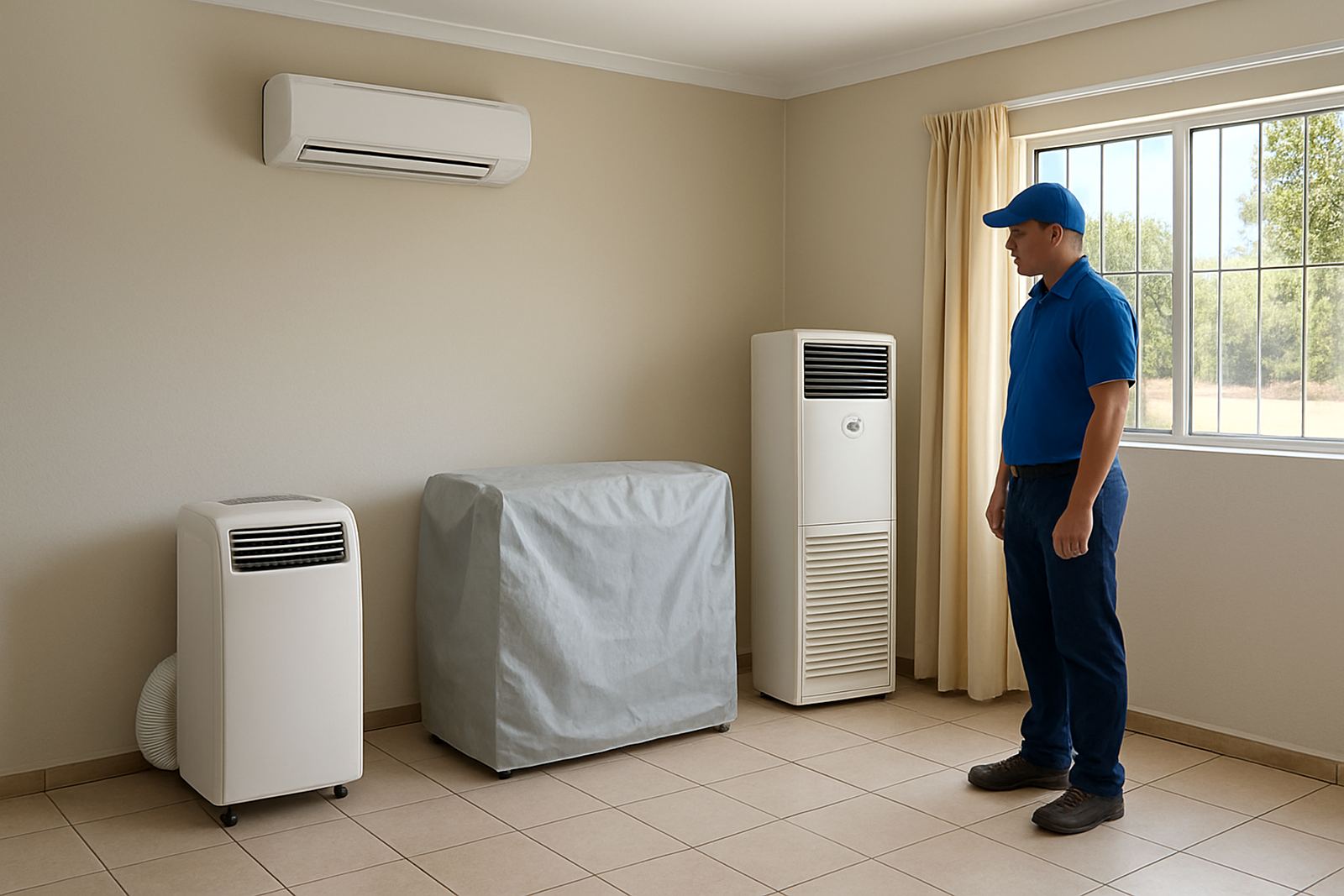
Portable units need their own shutdown routine because they often sit in cupboards, storerooms or outside rooms until the next booking. Empty the water tray, clean the filter, and coil the hose without bending it sharply. If the unit uses a window kit, store all pieces together so nobody has to hunt for parts later. In holiday flats and self-catering units, portable systems are often moved between rooms and they pick up a lot of dust at floor level, so a good clean before storage makes a real difference.
Wall splits and cassettes should be tested briefly before shutdown to confirm they are cooling properly, draining correctly and not making unusual noise. If the fan speed is uneven or the unit is struggling to start, that fault is best handled before the property is closed. A small repair now is easier than a call-out in peak season when contractors are booked up and the guests have already arrived.
- Empty and dry portable unit water trays before packing away.
- Store remotes, batteries and manuals in one marked pouch.
- Run the unit for a few minutes after cleaning to confirm normal operation.
- Note any faults on a property log for the next opening.
A practical shutdown checklist for caretakers and owners
For owners who manage several holiday homes or cabins, a simple checklist keeps everyone on the same page. It also helps when different people handle cleaning, key handover and maintenance. A property in White River may sit empty through winter, while a house in Potchefstroom may be used only on weekends. The shutdown routine should stay the same even if the occupancy pattern changes.
Use this order: clean the unit, confirm drain flow, switch it off correctly, secure the isolator, remove batteries, check the outdoor unit, then record the date and any issues. If a caretaker is responsible, leave a contact number and a note on where the switches are. That matters when power is restored after an outage and someone has to confirm that the system is still off. It also helps if the property is sold, rented out or handed to a new manager later on.
A local example is a guest cottage outside Hazyview that is used mainly in school holidays. The owners shut down all rooms in May, but one bedroom unit was left with a dirty filter and a blocked drain. By September the indoor wall had a damp mark and the first start-up sent a bad smell through the room. A cleaner shutdown and a quick service would have avoided the repair and the complaint. Small habits like that save money over the long term, and they make the first warm day of the season much easier to handle.
When to book service before lock-up
If the property is going to stand empty for more than a month or two, a pre-shutdown service is worth considering. This is especially true for houses close to the river, bushveld lodges, farm stays and coastal-facing properties where humidity stays high. Scheduled servicing can include fault finding, gas top-ups if needed, deep cleaning and a check on electrical terminals. It is better to deal with weak cooling now than discover it after guests have unpacked.
For owners in Mbombela and the surrounding Lowveld, as well as Klerksdorp, Rustenburg and Potchefstroom, the main goal is to keep the unit dry, clean and ready. A shutdown done properly gives the equipment a better chance of starting up normally after a long break. It also makes property inspections easier because there is one less system causing trouble while the house is unattended.
If you are managing holiday accommodation or a seldom-used home, plan the shutdown as part of the close-up routine, not as an afterthought. That one decision can prevent a lot of nuisance later on.