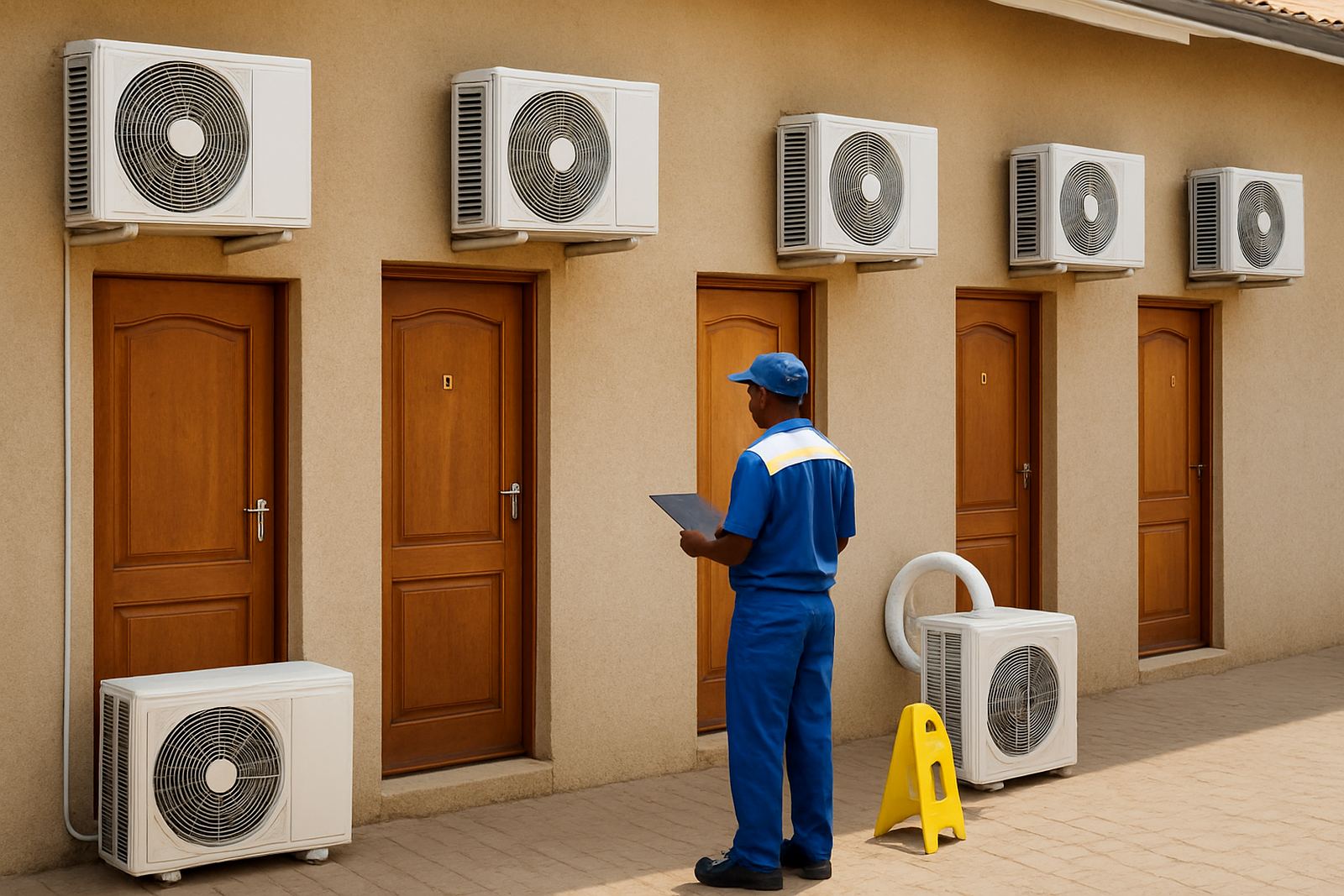
Start with a full unit register, room by room
Begin with a simple list of every unit on the property. Record the room, unit type, capacity, date installed, and who uses the space. A small office in Mbombela with six wall splits will need a different plan to a lodge near Hazyview with cassettes in public areas and portable units in back-up rooms.
Include the easy-to-miss details as well, like whether the outdoor unit sits in direct sun, near coastal air, or above a shopfront where dust builds up fast. If the site has more than one building, note each one seperately so nothing gets missed during a service round.
- Unit location and reference number
- Type: wall split, cassette, or portable
- Approximate capacity in BTU or kW
- Last service date and next due date
- Access notes, key holder, and after-hours contact
Set service intervals by usage and site conditions
Not every air-conditioner needs the same attention. A boardroom unit that runs for a few hours a day can often follow a twice-yearly plan, while a retail shop, clinic, or lodge kitchen area may need quarterly checks. Heavy use, dust, coastal humidity, and power interruptions all shorten the time between services.
For properties in the Lowveld and North West, the hot season usually means units run harder for longer. That makes it worth bringing forward filter cleaning and gas checks before the first heat wave hits, rather than waiting until the first breakdown.
- Monthly: filter inspection in high-use areas
- Quarterly: full service for busy sites or dusty areas
- Twice a year: standard offices and homes with multiple units
- Before summer: system checks, drain inspection, and test run
Group units into service zones for less disruption
Once the list is done, split the property into zones. For example, reception, private offices, meeting rooms, storerooms, and public areas can each have their own service day. This saves time and helps you keep staff and customers comfortable while work is done. It also helps when you need to plan around trading hours or tenant access.
On larger sites, one zone can be serviced while another keeps running. That matters when a property depends on cooling for stock rooms, call centres, or patient waiting areas. It also makes it easier to track which unit was cleaned, which drain was cleared, and which one needs a follow-up. Use a wall chart or spreadsheet, anything that stays up to date.
Build a checklist for each visit
A service plan works best when every visit follows the same checklist. That way, faults are caught early and the team does not rely on memory. At Aircon Warehouse, our installations and servicing teams in Mbombela, White River, Klerksdorp, Potchefstroom and Rustenburg use this kind of structure to keep multi-unit sites on track.
- Clean or replace filters
- Check airflow at the indoor unit
- Inspect drain lines and trays for blockages
- Test temperatures and running noise
- Check electrical connections and isolation points
- Look for gas leaks, ice build-up, or oil staining
- Clean the outdoor coil and clear debris around it
- Confirm remote controls and timers are working
Plan for faults, spares and load-shedding recovery
Even a good schedule needs room for faults. Keep a simple fault log so repeated issues can be traced, like a unit that trips after every power cut or a drain that blocks every few weeks. If a building often loses power, ask how the systems behave when power returns. Some units need time to reset properly before they are switched back on.
It helps to keep common spares on hand, especially filters, batteries for remotes, and basic fixings. For properties with older units, it may be more practical to budget for replacement units than to keep repairing the same machine every few months. Gas top-ups should only be done after checking for leaks and confirming the system is sound, not as a quick fix.
Use one simple calendar and review it every season
The best service plan is the one that gets used. Put all due dates into one calendar, then review it at the start of autumn and again before summer. That is the point where you can move units forward, add new rooms, or pull a problem area into a more frequent cycle. If the property expands, update the plan straight away rather than trying to fit new units into old records.
For landlords, facility managers, and business owners, a seasonal review also helps with budgeting. You can see which units need deep cleaning, which ones are due for commissioning after replacement, and which areas are costing more because of poor airflow or overworked systems.
- Confirm next service dates for every unit
- Update contact details for access and approvals
- Check whether any units need fault finding
- Review cleaning, gas, and repair spend for the quarter