Start with the room count, sun load and guest patterns
Guesthouse cooling starts with how each room is used, not just the floor area. A north-facing room with afternoon sun, a top-floor suite under a metal roof, or a family room that holds four people will need more cooling than a small shaded room with one bed. In the Lowveld and parts of North West, heat build-up can be heavy from late morning and most guests want a room that cools quickly after check-in.
Walk the property and note the room size, ceiling height, window size, curtain cover and whether the room has external shading. Also note which rooms face the parking area, the garden or a noisy street, because outdoor unit position matters for both comfort and guest privacy. If power cuts are common, ask what the guest expects during load-shedding and whether there is backup power for essential circuits.
- Count sleeping spaces per room, not only square metres.
- Mark west and north-facing rooms for higher heat gain.
- Check ceiling height, roof insulation and window seal condition.
- Note which rooms are near kitchens, laundries or hot water plant areas.
Match each room type to the right cooling option
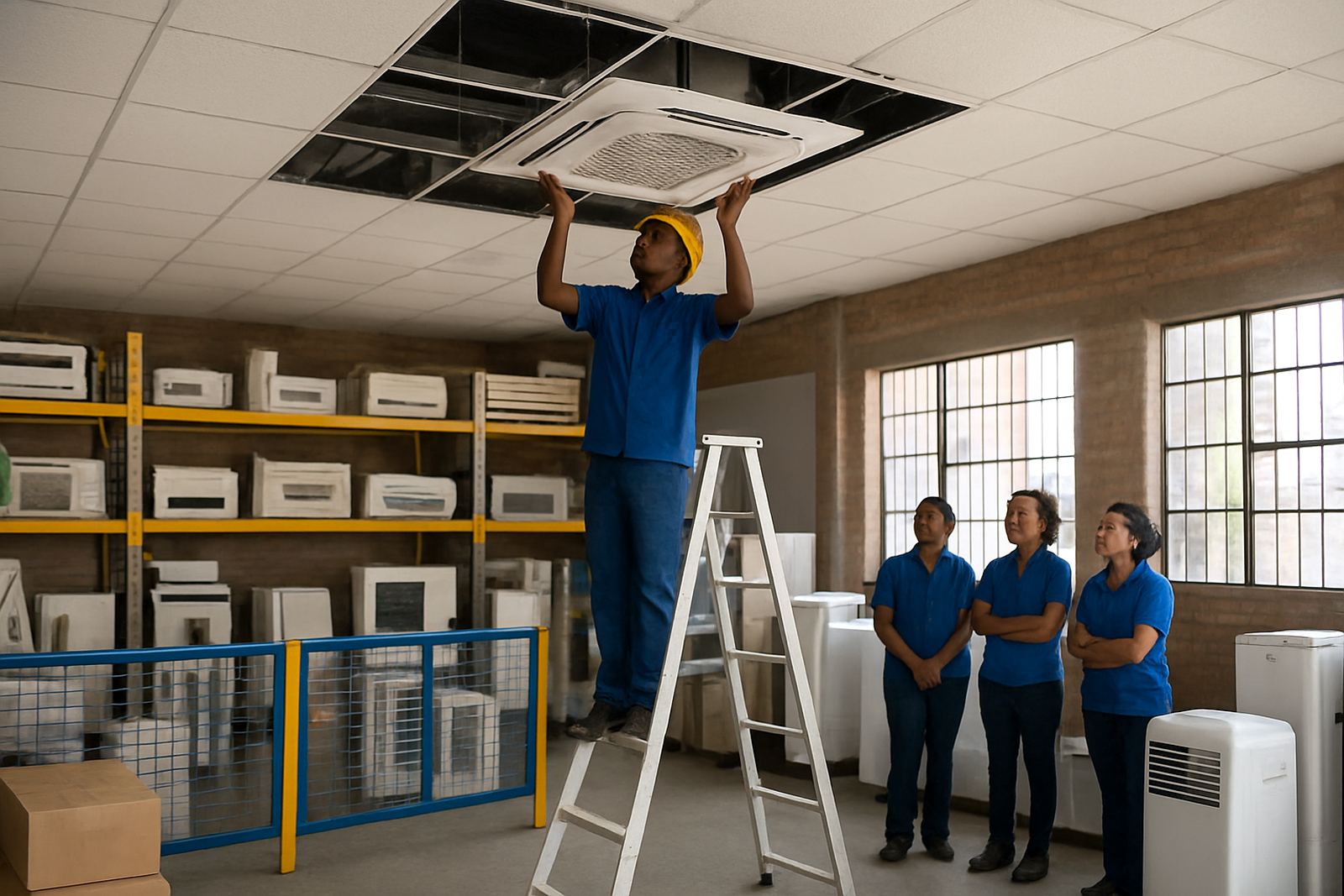
Not every area needs the same type of unit. Standard guest rooms usually suit wall split units because they are quiet and efficient for overnight use. Larger lounges, breakfast rooms and conference areas often suit cassette fitment where the ceiling allows it, especially if you want even airflow across a wider space. Portable units can help in short-term overflow rooms, staff areas or spaces that cannot be modified right away, but they are not ideal for long stays or very hot rooms.
Think about how guests move through the property. A quiet bedroom should not have air blowing directly onto the bed. A family room may need stronger airflow and better controls. Bathrooms normally do not need aircon, but enclosed passage areas and reception waiting spaces can benefit from ventilation and careful cooling. If you are upgrading an older guesthouse, replacement units can often improve comfort without changing every bracket or pipe run.
- Wall splits for bedrooms and smaller private spaces.
- Cassettes for dining rooms, lounges and larger open areas.
- Portable units for temporary use or light-duty overflow rooms.
- Replacement units where an existing system is old, noisy or costly to run.
Place indoor and outdoor units where guests will not notice them
Good placement makes a bigger difference than many owners expect. The indoor unit should cool the whole room without blowing straight onto the pillow or seating area. Fit it high enough for proper air circulation, but not so high that servicing becomes difficult. Avoid placing it above curtains that can block airflow or next to a TV where guests may complain about noise or draughts.
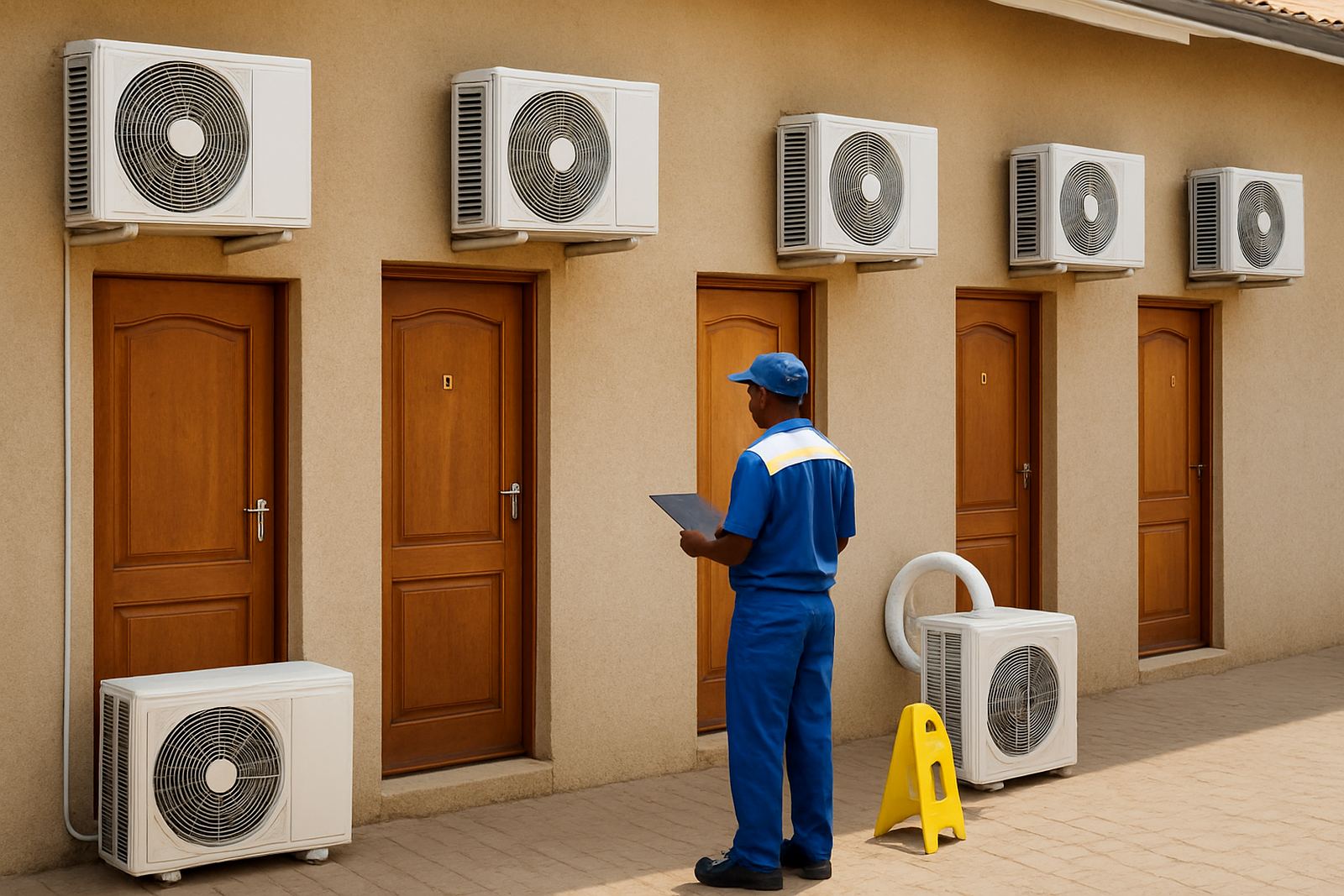
Outdoor units need fresh air, safe drainage and enough clearance for maintenance. In coastal humidity or wet Lowveld conditions, poor drainage can lead to corrosion and bad smells. Keep the unit away from bedroom windows, neighbouring guests and public walkways if possible. On guesthouses with limited yard space, plan the route carefully so the installation stays neat and easy to maintain later. A messy install becomes expensive to fix.
For heritage buildings, sectional walls or tiled roofs, check the structure before drilling. Mountings must suit the wall type and the pipe route should be short enough to limit gas loss and noise. Thabo and the installations team often look at these details during site assessments, because a neat layout saves call-outs later.
Build comfort around housekeeping, noise and guest turnover
Guesthouse cooling is not just about temperature. It is also about how quickly rooms can be reset between departures and arrivals. Units should be simple for housekeeping to understand, with clear remote settings and visible filters. If the control is too complex, staff will leave units on the wrong mode or at very low temperatures, which increases running costs and complaints.
Night-time comfort matters most in guest rooms. Set up systems so they start cooling early in the evening and maintain a steady temperature rather than cycling on and off too often. Quiet operation is important in small guesthouses where one noisy unit can disturb the whole passage. For shared areas, choose settings that avoid cold spots near tables and warm spots near the entrance.
- Standardise the temperature range for all rooms.
- Label remotes and make a short housekeeping guide.
- Check filters weekly in high-turnover seasons.
- Keep curtains, bedheads and furniture clear of airflow.
Plan for power cuts, voltage swings and high-season pressure
In Mbombela, White River, Hazyview, Klerksdorp and Potchefstroom, cooling needs to keep working through real South African conditions. Load-shedding, low voltage and storm-related interruptions can all affect guest comfort. Units should be commissioned properly so they start and run within the correct operating range. If you have backup power, confirm which rooms and shared spaces can carry on during an outage and which ones must be switched off.
Do not overload one circuit with too many rooms. Spread the load carefully and check that cable runs, breakers and isolators suit the actual equipment. During busy holiday periods, guesthouses often run units for longer hours and this can expose weak wiring or blocked filters fast. A scheduled servicing plan helps prevent the small faults that become emergency call-outs when the property is full.
- Test every unit after power interruption or tripping.
- Keep spare remotes and batteries in one labelled place.
- Record fault codes, odd noises and drainage problems immediately.
- Book gas top-ups and deep cleaning before peak season.
Use a simple maintenance checklist to protect reviews and running costs
A clean, well-maintained aircon system gives better reviews and lower call-out costs. Dust, blocked filters and weak gas levels make rooms slow to cool, which guests notice quickly. In a guesthouse, that can turn into a complaint before breakfast. Scheduled servicing should include filter cleaning, drain checks, coil cleaning, electrical inspection and a check for leaks or unusual vibration.
Deep cleaning is especially useful after pollen season, building work or a long summer. It helps with smell control and keeps airflow strong. If a room is not cooling properly, fault finding should come before replacement where possible, because a small control issue or blocked drain can look like a bigger fault. Keep a simple service record for each room so you know when the last clean, repair or gas top-up was done.
- Weekly: clean visible filters and check remotes.
- Monthly: inspect drainage and listen for unusual noise.
- Seasonally: schedule full servicing before peak occupancy.
- As needed: call for fault finding, gas top-ups or replacement units.
When to call in a local team for site checks and installation
If you are opening a new guesthouse, upgrading older rooms or adding more suites, a proper site assessment saves time and avoids costly rework. It helps determine the right unit sizes, the best pipe routes and where the outdoor equipment should go. For properties in Mbombela, the Lowveld and North West, local conditions like heat, humidity, dust and municipal drainage rules all affect the final layout.
Aircon Warehouse works from Mbombela with North West coverage, so we can assist with site assessments, new installations, replacement units, cassette fitment, portable setup, system commissioning, scheduled servicing, fault finding, gas top-ups and deep cleaning. Sipho Mandla Nkosi and the team handle trade supply and practical installation planning for guesthouses in White River, Hazyview, Klerksdorp, Potchefstroom and Rustenburg. The goal is simple: rooms that cool properly, run quietly and stay easy to maintain.