Start with a simple monthly check
Most call-outs begin with something small: a dirty filter, blocked drain, loose remote batteries or a unit that has not had a proper clean in months. In Mbombela, White River, Hazyview, Klerksdorp, Potchefstroom and Rustenburg, dust and pollen build up faster than many people expect, especially where windows stay open and units run daily.
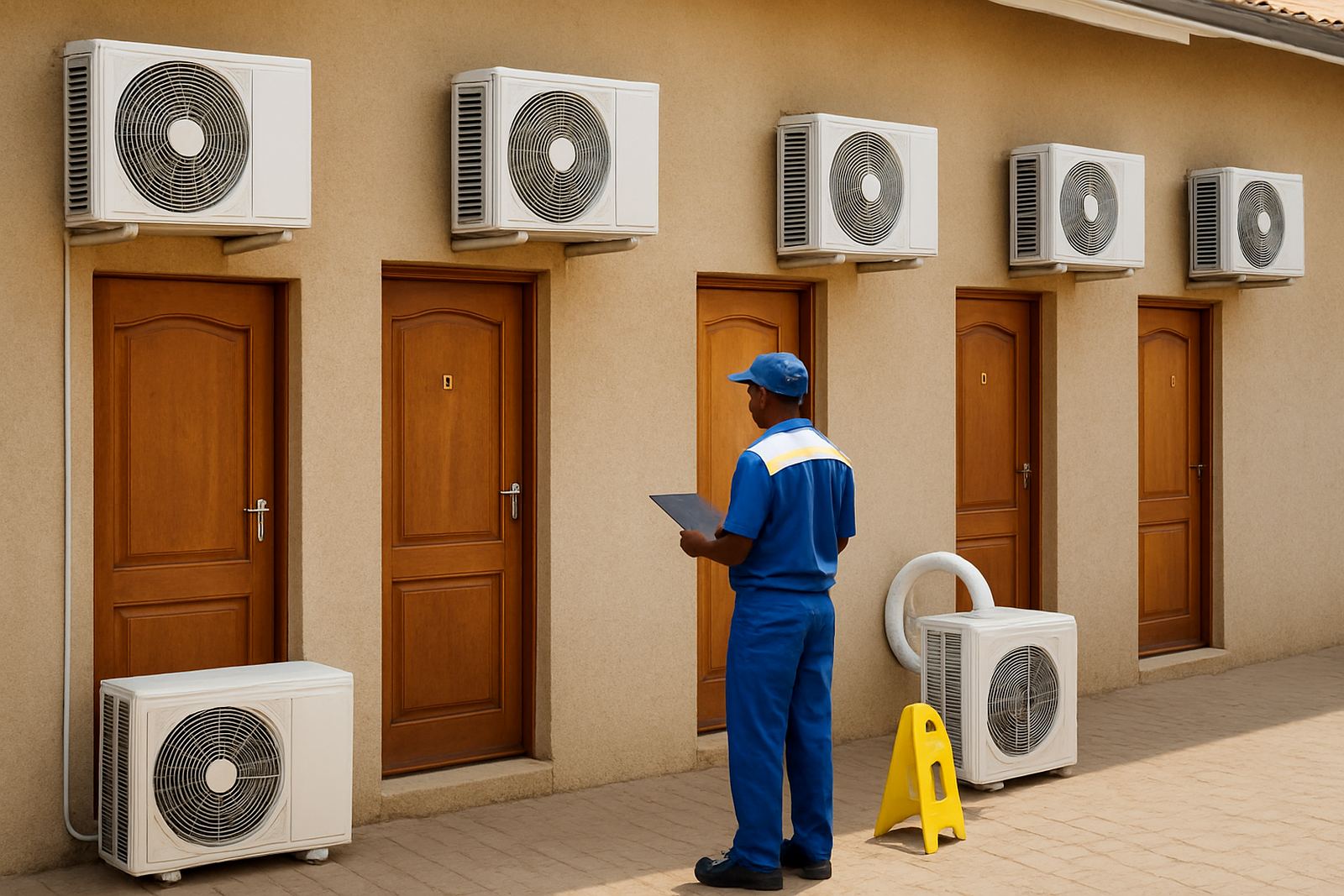
Switch the system off before you inspect it. Check that the indoor unit is blowing evenly, the display is normal, and there are no unusual noises, smells or water marks on the wall. Outside, make sure the condenser has clear space around it so hot air can move away. If grass, leaves or building dust are packed against the coil, performance drops and power use usually goes up.
- Wash or replace filters every 3 to 6 weeks in heavy use.
- Check for dripping water inside the room.
- Look for dust on the outdoor coil and clear away rubbish.
- Confirm the remote has working batteries and the set temperature is sensible.
Clean filters the right way
Filters do the first job in the air path, so they should not be left to clog up. A blocked filter makes the unit work harder, which can lead to weak cooling, poor air circulation and ice forming on parts that should stay dry. In coastal-humidity pockets and during humid Lowveld afternoons, this can show up quickly.
Take filters out carefully and rinse them with clean water. Let them dry fully before refitting, because damp filters can carry a smell back into the room. Do not use harsh chemicals, and do not force bent filters back into place. If a filter is torn, warped or badly stained, replace it. For businesses and clinics that run units long hours, set a fixed cleaning day each month so it does not get missed.
- Turn power off at the isolator first.
- Vacuum loose dust before rinsing.
- Dry filters in the shade, not direct sun.
- Fit them back the correct way round.
Keep the outdoor unit breathing freely
The outdoor unit needs clear airflow to reject heat. If it is boxed in by a wall, palisade fence, overgrown plants or stock stored too close, the system works under pressure. That can shorten compressor life and make the room take longer to cool. In many North West towns, fine dust is also a problem after windy days and road works.
Check that the unit is level and firmly mounted. Loose brackets can cause noise and vibration, especially on tiled walls or steel stands. Remove leaves, paper, plastic and grass cuttings from the base area. Give the coil a gentle clean with the correct method, not a pressure washer that can bend fins. If the unit is on a roof or in a hard-to-reach place, arrange proper access rather than risk a fall.
- Keep at least 300 mm to 500 mm of clear space around the unit where possible.
- Trim plants back regularly.
- Check mounting bolts and feet for movement.
- Make sure water drains away from the base after rain.
Watch the drain line before it blocks
Water that cannot leave the system properly often ends up inside the room. A blocked drain line can stain ceilings, damage paint and soak walls. It is one of the most common avoidable faults, and it usually starts with dust slime or insect nests in the pipe. Small homes, offices and retail spaces all get this problem if the unit is left untouched.
During a routine check, confirm that the drain outlet is flowing when the unit runs. If the tray overflows, or you can hear water sloshing, the line may need clearing. A slight smell from the indoor unit can also point to standing water inside. For installations in older buildings, extra care may be needed because the drain slope is not always correct. If the line keeps blocking, have it inspected properly instead of pouring random chemicals into it.
Signs the drain needs attention are easy to spot:
- Water dripping from the front panel or onto the floor.
- Damp patches on the wall below the unit.
- Gurgling sounds after switch-off.
- A musty smell when the fan starts.
Plan servicing before peak heat arrives
Waiting for the first hot spell is often too late. By then, service providers are booked out and faults become more expensive to fix. A scheduled service before summer gives time to check gas pressure, electrical connections, fans, sensors and coil condition. It also helps confirm that the system is sized and set correctly for the room it is cooling.
For homes and businesses in Mbombela and the Lowveld, it makes sense to book servicing before the worst heat and before long holiday periods. In Klerksdorp, Potchefstroom and Rustenburg, dust and voltage dips can make weak systems show problems sooner than expected. A service visit can include deep cleaning, fault finding, gas top-ups where needed, and commissioning checks after repairs or replacement units. If the system is tripping often, do not keep resetting it. That can hide a bigger problem.
Handle power cuts and voltage swings carefully
Load-shedding and unstable supply can affect air-conditioners in a few different ways. After power returns, a unit may need a few minutes before it starts again. If the supply is poor, repeated restarts can stress the board, compressor and capacitors. This is why good shutdown habits matter, especially for offices and shops that run equipment hard.
When power is off for a long time, switch the air-conditioner off at the isolator too. Once power returns, wait a short while before restarting. If the unit is connected to other equipment on the same circuit, make sure the circuit is not overloaded. For premises that use multiple rooms or have older wiring, a qualified check can help prevent nuisance tripping and uneven performance.
- After an outage, wait 3 to 5 minutes before restarting.
- Do not keep switching the unit on and off quickly.
- Check that the isolator, plug and breaker stay cool.
- Report repeated tripping, burning smells or flashing fault lights straight away.
Know when to call for a proper inspection
Some maintenance can be done by the owner, but not every problem should be handled as a quick fix. If cooling drops sharply, ice keeps forming, the unit makes a grinding noise, or the breaker trips again after reset, it is time for a proper inspection. The same applies if there is an oily patch on pipework, because that can point to a refrigerant leak.
Good maintenance is not only about cleaning. It is also about catching small faults before they turn into a full shutdown. Keep a note of service dates, error codes, water leaks and unusual behaviour. That record helps the technician work faster and can save time on site. If you manage several units across a property, use the same checklist for every room so nothing gets missed.