What Coastal Guard Coating does on a coil
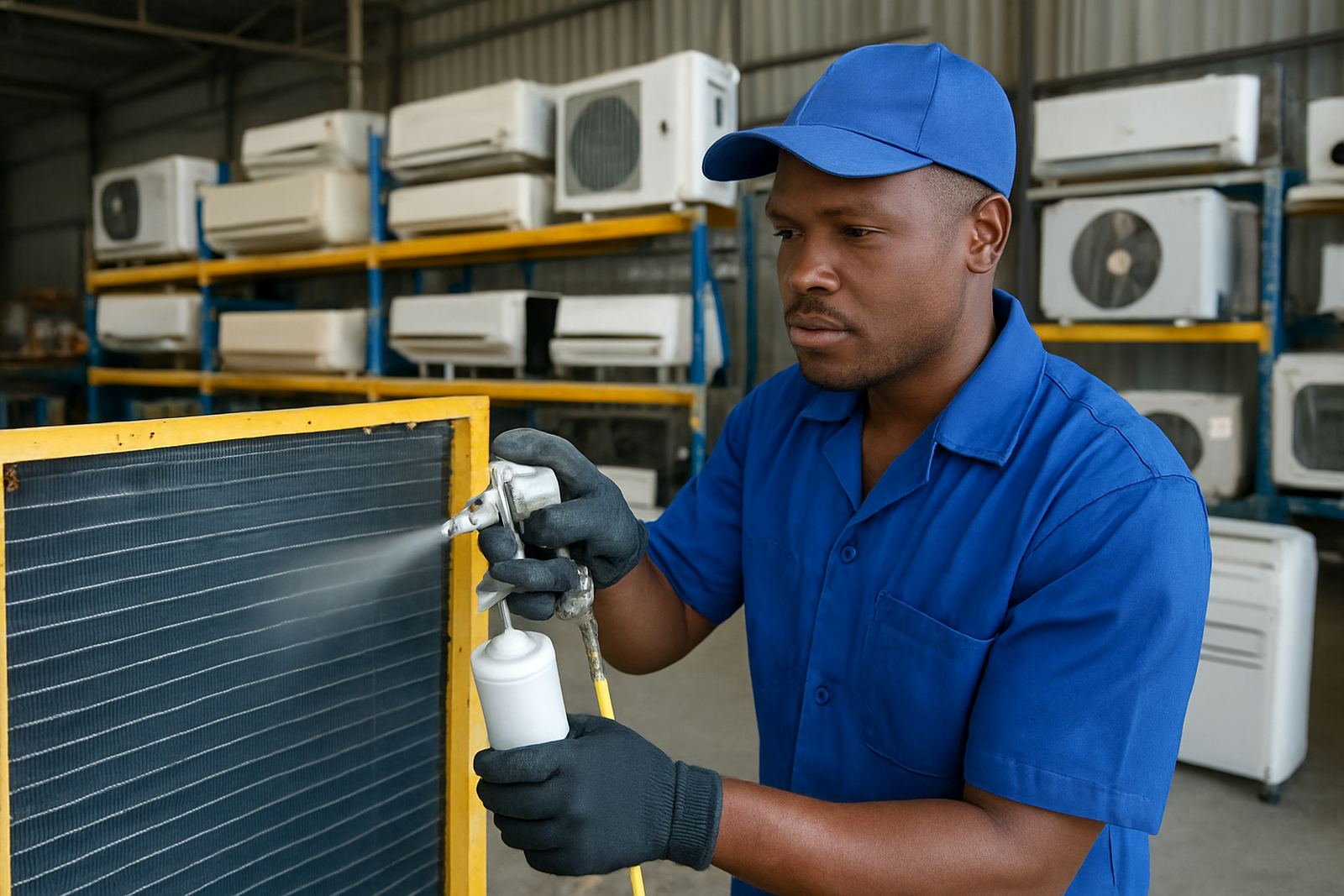
Coastal Guard Coating is applied to the heat exchange coil so the fins and tubing have added protection against corrosion. It is mainly used on outdoor units, but can also be specified for other coil sections where the environment is tough and the customer wants better long term protection.
The coating helps slow down the damage caused by salt air, damp mornings, industrial pollution and airborne grit. It does not make an air-conditioner maintenance free, but it gives the system a better chance in places where normal paint or standard factory finish gets tired quickly.
- Protects coils in salty or damp air
- Helps reduce corrosion on the aluminium fins and copper tubing
- Suitable for homes, shops, offices and small industrial sites
- Can be requested on selected new units before installation
Where this coating suits best in the Lowveld and North West
This option suits Mbombela, White River and Hazyview where humidity and summer rain can be hard on outdoor plant. It also makes sense in Klerksdorp, Potchefstroom and Rustenburg where dust, heat and polluted air can shorten coil life. Near the coast it is often considered on units that face salt in the air, even when the site is inland and not on the shoreline.
It is worth considering for restaurants, guesthouses, clinics, warehouses and residential homes close to busy roads or open yards. If the condenser sits under an eave, against a wall or in a spot with poor air flow, the coating can be a good add on, but good siting still matters more than any finish on its own.
- Coastal towns and humid inland areas
- Dusty industrial yards and workshop areas
- Buildings with high running hours through summer
- Sites where replacement cost would be higher than basic protection
Sizes, fitment options and unit types
The coating is usually specified to suit the size and model of the outdoor coil, so there is no single one size fits all answer. It can be ordered on wall split systems, cassette systems and selected portable or packaged arrangements where a coil is exposed. The finish must match the coil geometry and the unit voltage, and that is checked before order or fitment.
Trade customers often ask for it on smaller domestic units from about 9 000 to 24 000 BTU, as well as larger commercial sizes. On bigger systems, the coating is generally requested with the full installation package so the coil is handled correctly from the start. If a unit has already been fitted, the exact option available will depend on access, coil condition and whether the system can be safely stripped and reworked.
- Wall split air-cons
- Cassette units
- Selected portable and packaged cooling setups
- New installations and certain replacement units
Installation needs and what power or gas is involved
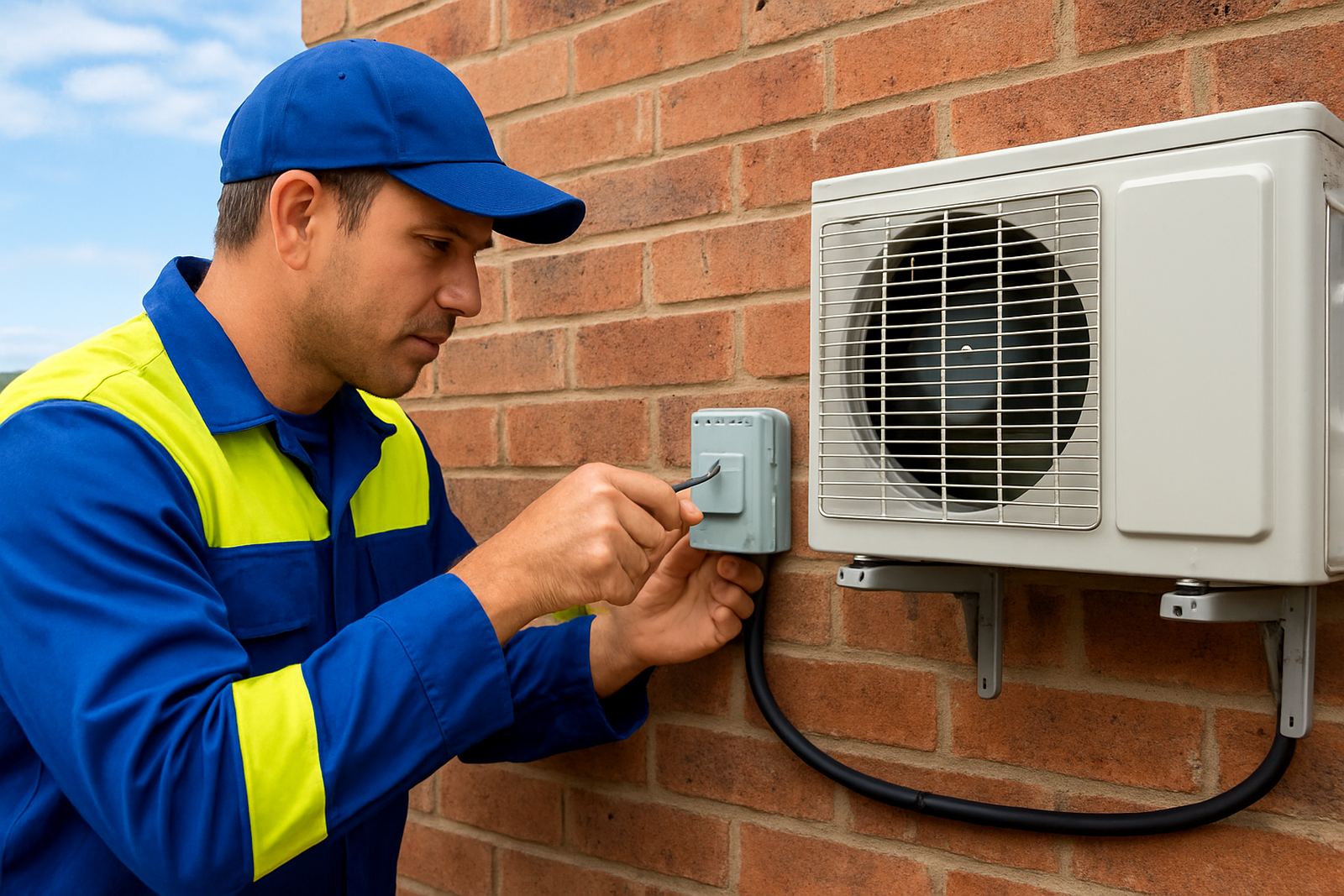
Coastal Guard Coating itself does not need extra electrical power or refrigerant gas, because it is a protective finish rather than a working component. It is normally handled as part of the installation process before the system is commissioned. Where an existing unit is being treated, the installer may need to isolate the power, remove covers and work carefully around the coil, so proper site access is important.
If the coating is ordered with a new unit, the installation team will still confirm the standard requirements for the air-conditioner, including correct breaker size, isolator position and cable run. Refrigerant type and charge remain the same as the unit specification, and the coating does not change the gas side of the system. It is a simple point, but customers sometimes expect it to alter performance, which it does not directly do.
- No separate power supply needed for the coating
- No extra refrigerant charge required because of the coating
- Best fitted before commissioning on new units
- Safe access and clear working space are needed on site
Care, cleaning and servicing after fitment
Even with protective coating, the outdoor unit still needs regular care. Dust, grass cuttings, lint, leaves and insect build up can block airflow and make the unit work harder. In lowveld heat that extra strain shows quickly on electricity use and cooling output. A coated coil should still be cleaned with proper methods so the finish is not damaged by harsh brushes or strong chemicals.
For most sites we advise scheduled servicing at least once a year, and more often where there is heavy dust, cooking grease or coastal air. During service, the technician should check for bent fins, blocked drain paths, loose covers and signs of corrosion at the frame or pipe work. The coating helps, but it does not replace basic maintenance.
- Use approved coil cleaning methods only
- Keep plants, papers and loose dust away from the condenser
- Check drain points and mounting brackets during service
- Arrange earlier cleaning if cooling drops off or the fan sounds strained
What to check before you order Coastal Guard Coating
Before ordering, check the exact model, capacity and application because the coating must suit the unit and the site. Ask whether the system is new or already installed, and whether the outdoor coil is easy to access. If the unit is on a roof, against a wall or in a tight alley, the fitment method may change. You should also confirm whether the job is for a home, guesthouse, shop or workshop, as that affects the expected running hours.
It helps to have the site address, power supply details and any photos of the outdoor unit ready. For trade orders, we also check whether the customer wants the coating only, or coating with installation, commissioning and future service support. That avoids delays and helps us plan the work properly, instead of guessing on the day.
- Unit type and capacity
- New installation or existing unit
- Site access and mounting position
- Service plan and cleaning frequency
Key facts
| Product type | Protective coil coating option |
|---|---|
| Main use | Extra corrosion resistance for exposed aircon coils |
| Suitable for | Wall splits, cassette units and selected portable or packaged systems |
| Typical environments | Coastal air, humid Lowveld sites, dusty industrial areas |
| Electrical requirement | None for the coating itself |
| Refrigerant requirement | No change to standard unit gas charge |