Cooling schools without disrupting the school day
School cooling is different from a home or a small office. You are working around timetables, learners moving between classes, assemblies, exam periods and limited access after hours. Our usual approach starts with a site assessment, then a room by room plan for classrooms, admin offices, libraries, staff rooms and sick bays. We look at heat gain from windows, roof exposure, wall size, class sizes and whether the building faces harsh afternoon sun. In Mbombela, White River and Hazyview, humidity matters as much as temperature. In Klerksdorp and Rustenburg, dust and dry heat can change the service schedule and filter needs.
For schools, the goal is not just cold air. It is stable comfort, low noise, sensible power use and equipment that will still work when load-shedding or voltage dips make life difficult. We help you match the system to the room so you do not overspend on capacity you will never use. That means fewer complaints from teachers, better concentration for learners and less strain on the school's maintenance team.
Typical equipment for classrooms, offices and halls
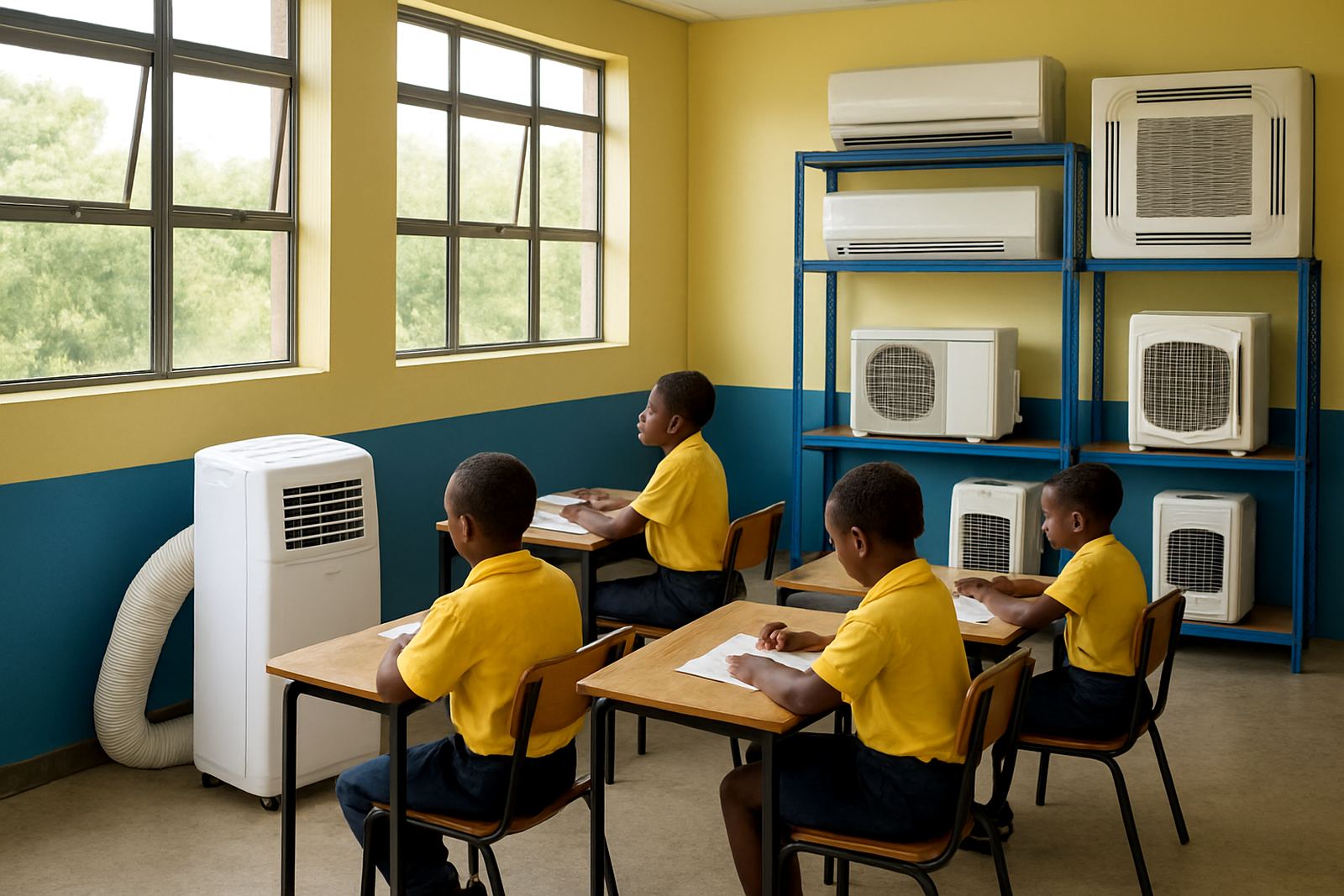
Most schools do best with wall split units in standard classrooms and admin rooms. They are straightforward to use, quick to service and suitable for smaller enclosed spaces. Cassettes work well where you want air distributed more evenly across a broader room, such as a library, boardroom, media centre or larger meeting space. Portable units can assist in temporary offices, exam rooms or rooms where wall mounting is not possible, but they are usually a short term answer rather than a full school solution.
- Wall split units for classrooms, principal's offices and small admin rooms
- Cassettes for larger rooms, libraries and shared spaces
- Portable units for temporary or flexible use
- Proper brackets, isolators, pipe runs and drainage for neat fitment
- Commissioning and testing after installation so each unit runs correctly
We also advise on replacement units where older systems are expensive to repair or no longer worth keeping in service. In many schools, a phased replacement plan works better than changing every room at once. It spreads cost and allows work to happen during holidays or weekends when the grounds are quieter and classrooms are empty.
Planning by room size, occupancy and power supply
The right layout starts with the room, not the machine. A classroom with thirty learners, a projector and direct afternoon sun will need a different unit to a small admin office with shaded windows. Ceiling height, roof insulation, door use and the number of occupants all affect the choice. We also check where the outdoor unit can be mounted so it is safe, well ventilated and less exposed to vandalism.
Schools in South Africa also have to think about supply side issues. If the electrical board is already carrying lighting, computers, photocopiers and security systems, the aircons may need to be staggered or grouped wisely. For bigger sites, it can help to plan a few rooms at a time instead of trying to cool every single block at once. That keeps the load manageable and avoids nuisance tripping when several units start together. It is worth planning drainage too, especially in coastal or humid areas where poor drainage can lead to damp patchs and damage to finishes.
- Measure each room before choosing capacity
- Check roof heat and window sun exposure
- Confirm the power supply can handle the load
- Choose outdoor positions that allow safe servicing
- Plan installs for weekends, holidays or after hours where needed
Common mistakes schools should avoid
One of the biggest mistakes is choosing units by room count only and not by actual conditions. A north facing classroom in the Lowveld is not the same as a shaded room in Potchefstroom. Another common problem is undersizing the system, which makes the unit run hard all day and still leaves the room warm. That usually leads to higher bills, more wear and early faults.
Schools also get caught out by poor maintenance planning. Filters fill up with dust, indoor coils clog and the units lose performance quietly over time. In many cases the aircon is blamed when the real issue is simply lack of scheduled servicing. Poor pipework and bad drainage are also frequent issues. If the condensation has nowhere proper to go, you end up with drips, stained ceilings or nuisance complaints from teachers. A proper installation should avoid that from day one.
Another mistake is waiting until late summer to act. By then suppliers are busy, lead times are longer and everyone wants work done at once. Schools that plan early have more choice and fewer interruptions. It also gives time to budget properly rather than rushing an emergency replacement before exams.
Budget ranges for school aircon projects in Rand
Budgets depend on room size, brand class, mounting conditions and how many rooms are being done in one visit. For a typical classroom wall split supply and install, schools should allow roughly R9 500 to R18 000 per room for smaller to mid sized units, with larger rooms and more complex fitment costing more. Cassettes usually sit higher, often from around R16 000 to R35 000 or more depending on capacity and ceiling work. Portable units are the lowest entry cost, but they do not suit every room and are often best used as a temporary measure.
For multi room school projects, the total budget can move quickly because you are not only paying for the machine. There is pipework, cabling, brackets, drains, commissioning and sometimes upgrades to the electrical supply. A small package of three to five classrooms may land anywhere from about R35 000 to R120 000 depending on the mix of units and site conditions. Larger school blocks, halls or admin areas can go well above that. The cleanest approach is to start with the rooms that need it most, then build the rest into a phased plan.
Service support across Mbombela, the Lowveld and North West
Aircon Warehouse is based in Mbombela and works across the Lowveld and North West, including White River, Hazyview, Klerksdorp, Potchefstroom and Rustenburg. Our team handles site assessments, new installations, replacement units, cassette fitment, portable setup, system commissioning, scheduled servicing, fault finding, gas top-ups and deep cleaning. Schools often prefer scheduled maintenance in the long holidays or on weekends, which helps keep disruption down and gives time to sort problems before the term starts.
If your school needs cooling for classrooms, admin offices or shared spaces, the first step is a site visit and a practical plan. We will look at the rooms, the power setup and the likely use pattern, then give you a budget that makes sense for the site. Trade pricing helps keep the numbers under control, and a good installation now can save a lot of repair spend later.
For quotes or school planning, contact trade@airconwarehouse.co.za.