Why salons struggle with heat and stale air
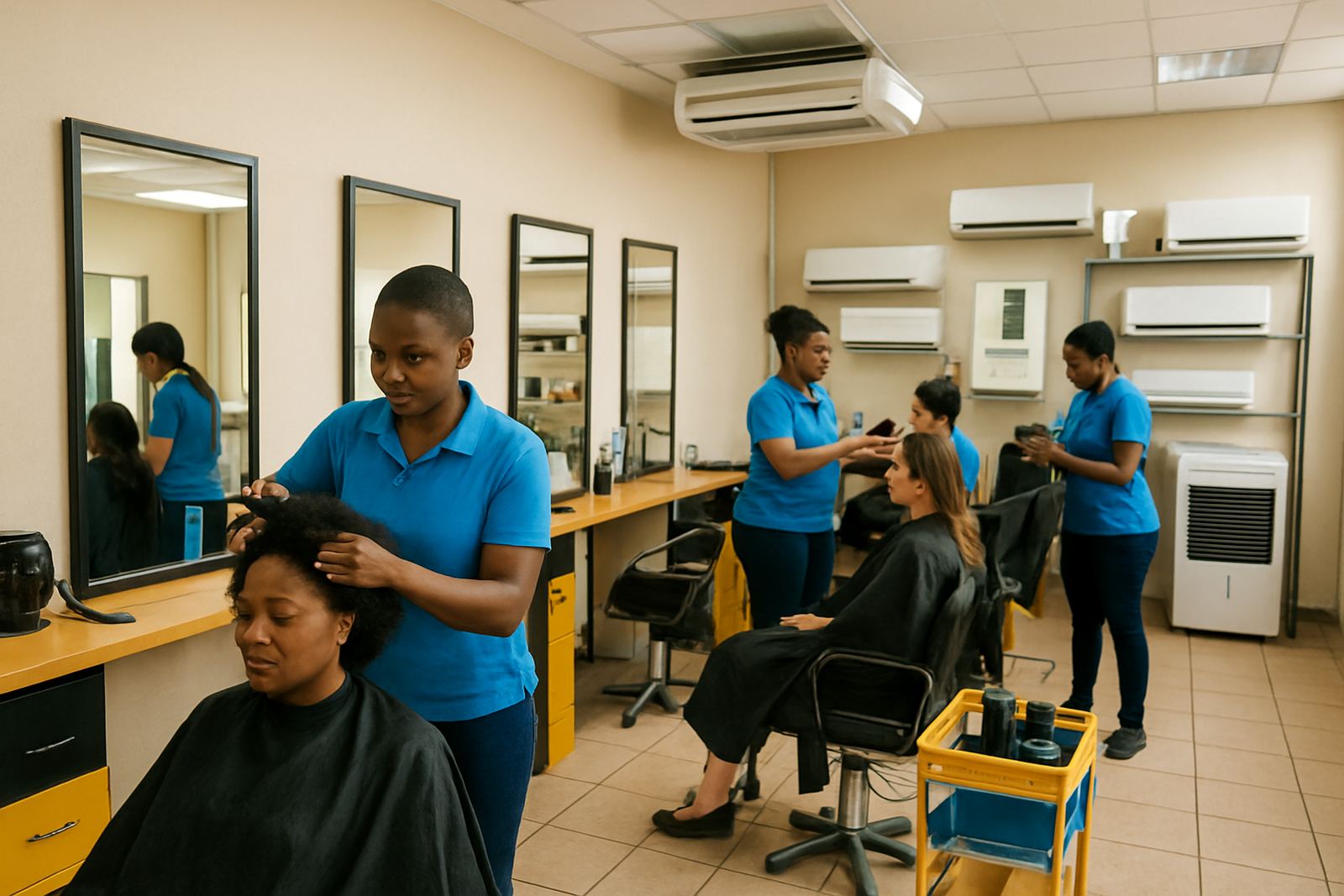
A salon is not like a normal office. You have people sitting under dryers, running hot styling tools, moving between wash basins and colour stations, then waiting in a warm room for their turn. Even a small floor can feel muggy by mid-morning, and by afternoon the temperature climbs quickly if the unit is too small or the air is not moving properly.
In Mbombela, White River, Hazyview, Klerksdorp, Potchefstroom and Rustenburg, we see the same problem: a system fitted for the room size on paper, but not for the actual heat load. Large windows, west-facing walls, doors opening often and product areas packed close together all add strain. If the salon has a treatment room, nail room or brow room at the back, those spaces often need quieter cooling than the main floor.
Good cooling keeps clients comfortable and helps staff work better through the day. It also matters for colour products, wax, skincare stock and electrical equipment that do not like hot, damp air.
Typical air-con set-up for a salon
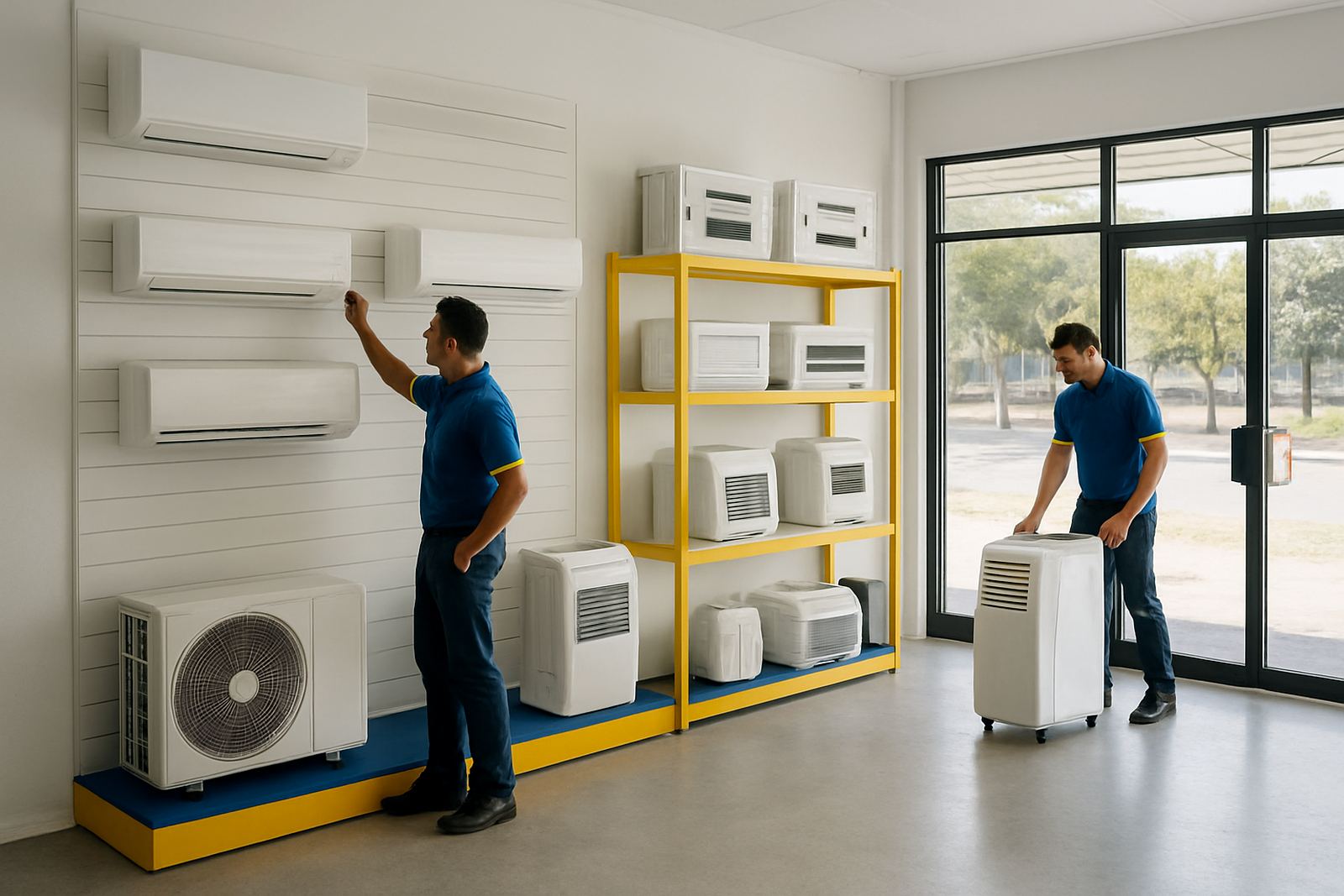
Most salons work well with a mix of wall splits and, in some layouts, cassette units. A single wall split can suit a treatment room, office or wash room. A larger open salon floor may need one bigger wall split or a cassette unit set into the ceiling so the air spreads more evenly across the room.
Portable units can help in rented premises or as a short-term fix, but they are usually not the best answer for a busy salon floor. They take up space, make more noise and often struggle when doors are opening all day. If you are running several styling stations and a reception area, proper fixed cooling is usually the better choice.
- Wall split units for treatment rooms, offices and smaller salon areas
- Cassette units for open plan floors with more even air distribution
- Portable units for temporary use or light-duty cooling only
- Backup planning for load-shedding, where the salon must stay usable after power returns
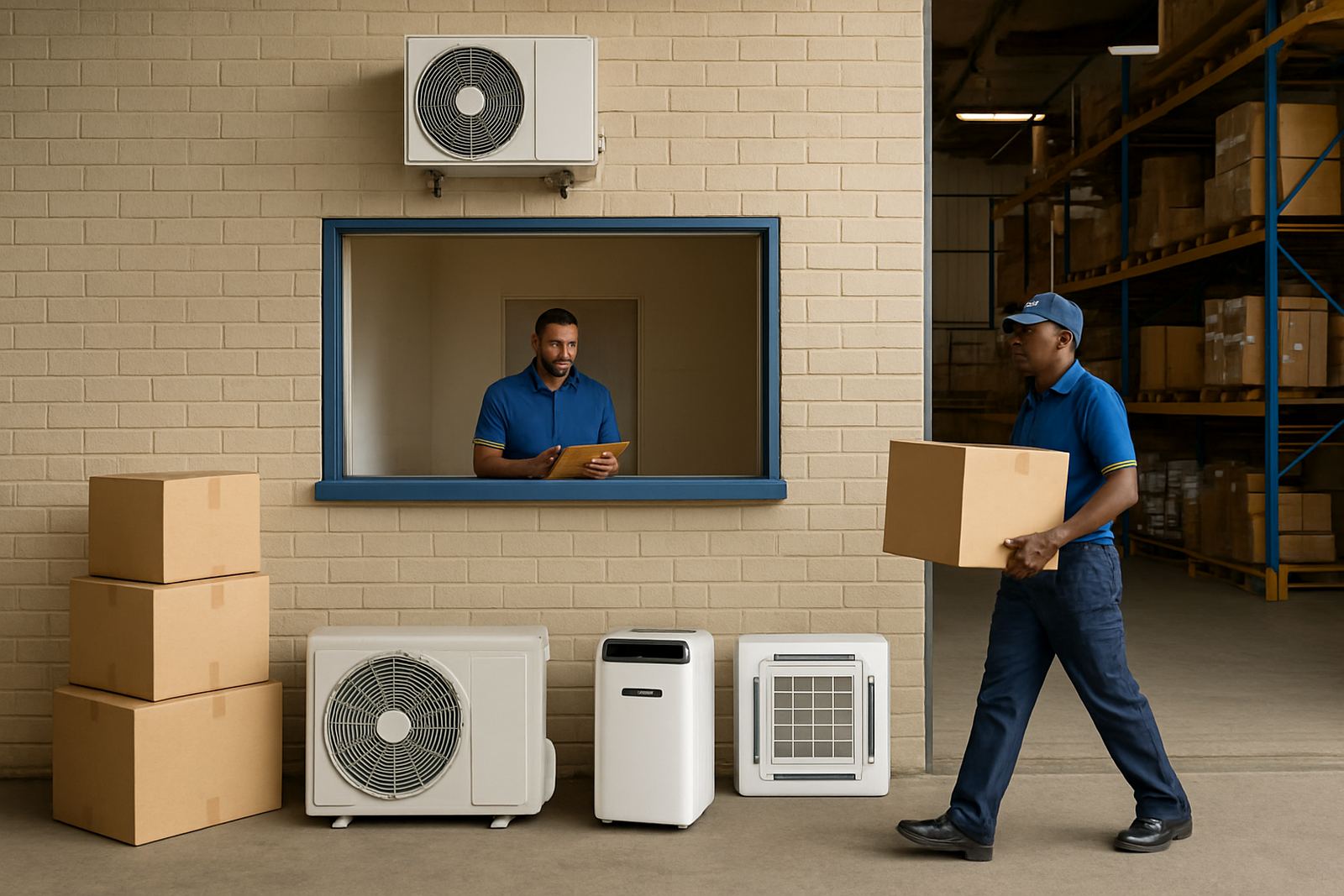
We can supply trade-priced units and handle installation in the Lowveld and North West, including setup for new premises, replacement units and system commissioning.
Planning the layout before you buy equipment
Before you choose a unit, map out where heat is building up. Count the number of styling chairs, wash stations, dryers, colour points and people in the room at the busiest time. A salon with six chairs and two dryers will need a different solution from a treatment suite with one therapist and a small reception area. The room shape matters too. Long narrow rooms, open shopfronts and rooms with bulkheads can all affect airflow.
We usually advise placing indoor units so the air moves across the room without blowing straight onto clients for long periods. That means avoiding a direct blast over the reception couch or onto a colour client sitting still for 45 minutes. In treatment rooms, quieter operation is important. In open areas, even cooling across the whole floor usually works better than trying to over-cool one corner and hoping the rest follows.
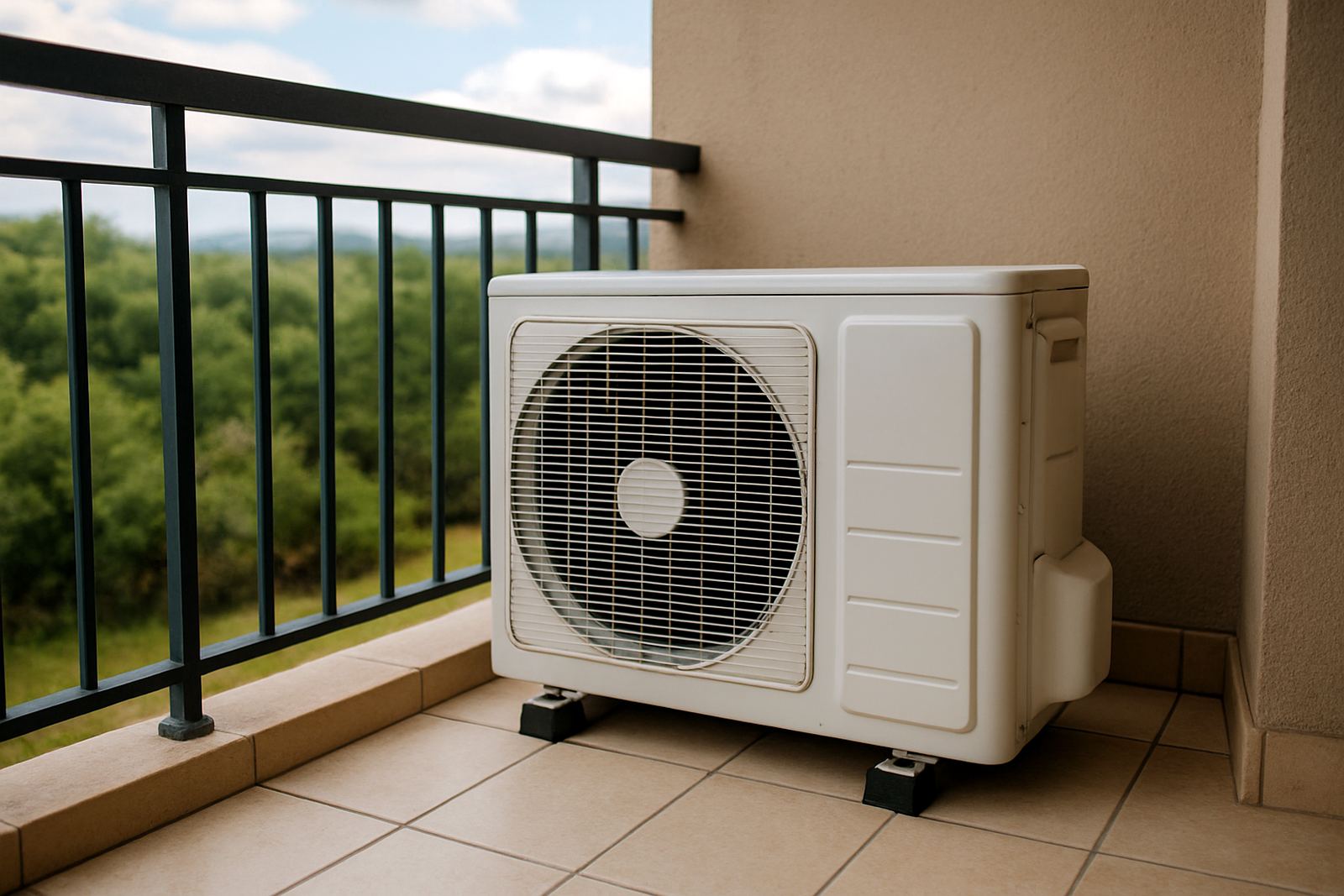
If the premises are in a shopping centre or a multi-tenant building, there may be municipal or body corporate rules on where the outdoor unit can go, how condensate is drained and how noise is managed. It is better to plan that properly at the start than to move equipment later.
Common mistakes we see in salons
Many salon owners choose a unit only by room size and ignore the working heat load. That often leads to poor cooling, higher running costs and a machine that never seems to catch up. Another common mistake is placing one small unit in a large open floor and expecting it to cool every corner. It may cool the front end of the room while the back stays warm and still.
We also see units installed too close to mirrors, curtains or product shelves, which can cause draughts, blocked airflow or dirt build-up. In coastal humidity, or even during rainy season inland, drainage and regular cleaning are important. If the filter is clogged, the unit works harder and the room can start to smell musty. That is the kind of issue that gets ignored until it becomes expensive.
- Choosing a unit that is too small for the actual heat load
- Putting the indoor unit where air is blocked by furniture or shelving
- Ignoring drainage and condensate routing
- Skipping scheduled servicing until the unit stops cooling properly
A salon cannot afford a long downtime on a Friday afternoon when the books are full, so maintenance should be part of the plan from day one.
Budget ranges for salon air conditioning
Budget depends on the room size, the number of indoor units, the wall build, cable runs and whether the site needs extra work for drainage or mounting. For a small treatment room, a basic wall split supply and install can start from about R9 500 to R14 000. A larger salon floor with a stronger wall split or a cassette unit may sit in the R16 000 to R35 000 range, depending on the layout and pipe run.
If you are fitting more than one room, it often makes sense to plan the full site together so the installation is done once. That can save on labour and give you a cleaner finish. For portable units, the entry cost is lower, but they are usually best as a temporary solution, not a long-term answer for a busy salon.
We can also quote on scheduled servicing, deep cleaning, fault finding and gas top-ups where needed. That helps keep the system working through the summer months in Mbombela and through busy trade periods in Klerksdorp and Rustenburg.
What our Lowveld and North West team can handle
Aircon Warehouse is based in Mbombela and covers the Lowveld and North West, including White River, Hazyview, Klerksdorp, Potchefstroom and Rustenburg. Our team handles site assessments, new installations, replacement units, cassette fitment, portable setup, system commissioning, scheduled servicing, fault finding, gas top-ups and deep cleaning.
For salons, that means we can look at the room, the daily running pattern and the heat coming from the equipment before recommending the right setup. Sipho Mandla Nkosi leads the business, with Annelie van Wyk managing sales, Thabo Mokoena on installations, Lerato Molefe coordinating service, Johan Steyn in the warehouse and Nokuthula Dlamini handling accounts and admin. If you need trade pricing or a site visit, you can contact us on trade@airconwarehouse.co.za.
Salon work is all about timing and presentation. Your cooling should support both, not fight them.