Why clinics need better temperature control
A clinic works differently from a home or retail shop. Patients may sit for 10 minutes or an hour, staff move between rooms all day, and doors open often. If one room is too warm, people get uncomfortable fast. If the unit blows straight onto a chair or treatment bed, it becomes a problem just as quickly. The aim is even cooling, low noise and simple control.
In Mbombela, White River, Hazyview, Klerksdorp, Potchefstroom and Rustenburg, clinics also deal with heat, dust and power cuts. Units must cope with load-shedding recoveries, high summer temperatures and in some areas coastal-style humidity brought inland by weather patterns. That means proper sizing, safe electrical work and a layout that suits the room, not just the wall space.
Typical equipment for waiting rooms and consulting areas
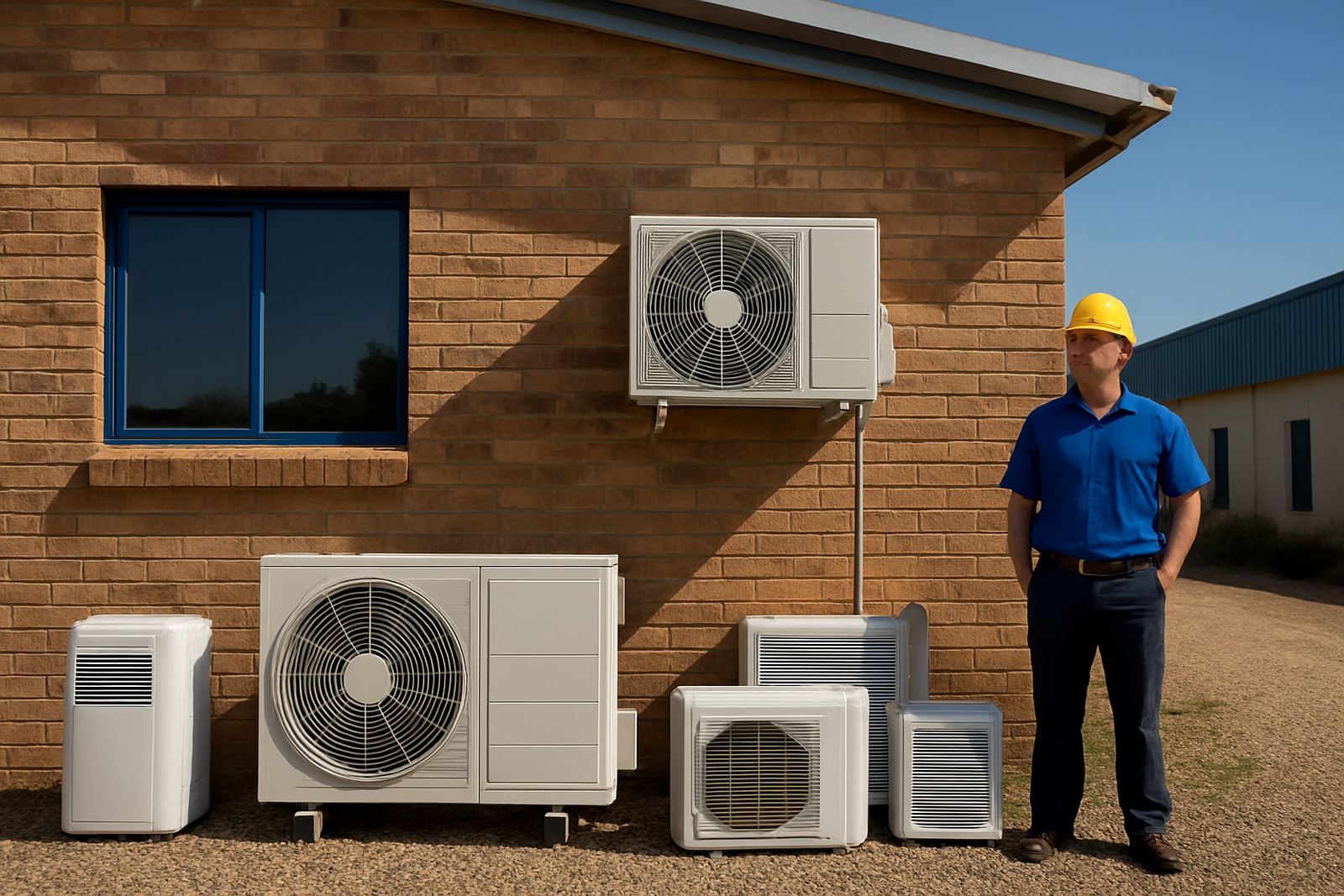
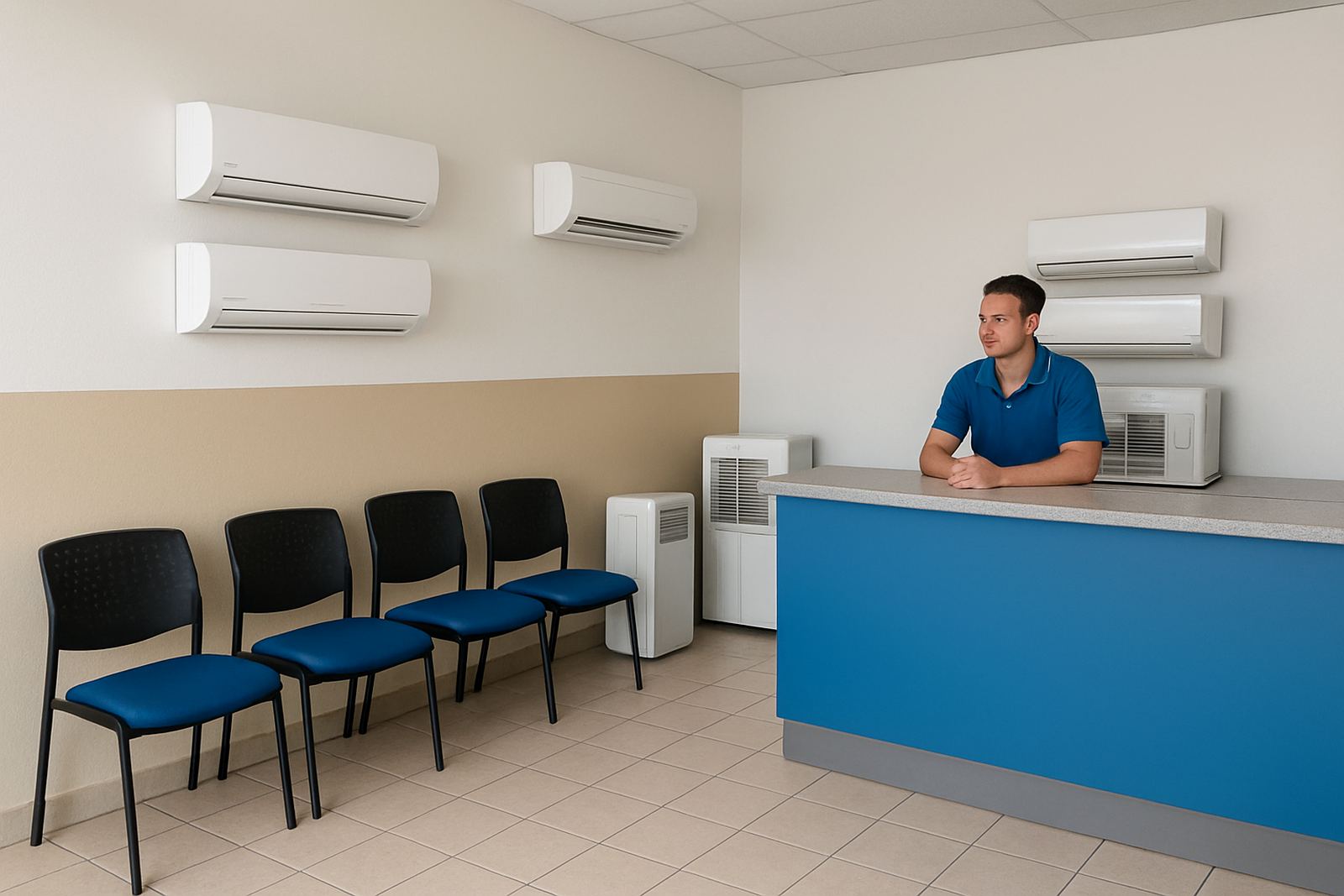
Most clinics use a mix of wall splits and cassettes, depending on ceiling height, room size and how the space is used. A small consulting room may only need a compact wall split, while a larger waiting area often works better with a cassette unit centred in the ceiling. Portable units can help in short-term overflow spaces or where a room is being used before a permanent fitment goes in.
- Wall split units for consulting rooms, admin rooms and small offices
- Cassette units for larger waiting areas or open-plan reception spaces
- Portable units for temporary rooms, triage overflow or back-up use
- Proper condensate drainage, especially where finishes must stay clean and dry
- Dedicated isolators and correct cable sizing for safe starts after outages
For clinics with separate vaccine storage, records rooms or pharmacy areas, we always advise checking the exact temperature requirement before choosing a system. Not every space needs the same output, and overcooling can be just as troublesome as undercooling.
Planning the layout before any unit goes up
The best clinic installations start with a site assessment. We look at room dimensions, ceiling type, glass areas, patient flow, staff movement and where the unit can drain properly. In a waiting room, the goal is to keep air moving across the full space without creating a cold spot on one bench. In a consulting room, the aim is quieter operation and a position that does not interfere with the doctor or patient.
A small mistake in placement can lead to years of complaints. Units fitted too close to a door short-cycle, while units set above a direct seating line cause draughts. If the building has multiple rooms, it is often better to split the load across two or three correctly sized systems instead of one big unit trying to cool everything.
- Measure each room separately, do not guess from floor area alone
- Check sun-facing walls and glass that add heat through the day
- Allow access for filter cleaning and future service work
- Keep condensate lines away from patient walkways and sensitive stock
- Plan for backup operation after outages and voltage swings
Common mistakes we see in clinic aircon jobs
One common mistake is buying the cheapest unit without checking the room size or usage pattern. Another is fitting a unit where it looks neat, but the airflow is all wrong. In clinics, that often leads to complaints about noise, temperature swings or moisture drip marks on walls and ceilings. We also see systems fitted without proper commissioning, which means the gas levels, drainage and controls were never checked correctly.
Another issue is skipping maintenance. Clinic units pull in dust from foot traffic, traffic roads and open doors. If filters and coils are not cleaned, airflow drops and the units work harder. That pushes up electricity use and shortens lifespan. A missed service can become a bigger bill later, so regular checks pay off. A lot of the trouble we attend could have been avoided with basic planning and one or two service visits a year.
Budget ranges for clinics in Rand
Clinic budgets depend on the number of rooms, the size of each space and whether power upgrades are needed. A single wall split for a small consulting room will sit in a different bracket to a multi-room practice with a larger waiting area and back office. Installation complexity also matters, especially if pipe runs are long, ceilings are closed, or drainage needs extra work.
As a practical guide, small clinic room installations often start from about R12 000 to R18 000 per room for supply and fitment, depending on capacity and layout. Mid-sized waiting areas with better-spec units or cassette fitments can move into the R20 000 to R45 000 range. Multi-room clinics with several units, electrical adjustments and commissioning can sit from R50 000 upwards. Replacement units may cost less than a full new install if the existing pipework and power are suitable.
We can also stage the work, starting with the busiest rooms first and adding the rest later. That helps when a practice needs to keep trading and cannot close all consult rooms at once.
Servicing that keeps the practice open
Once the system is in, scheduled servicing matters just as much as the original fitment. Clinics cannot afford a waiting room that overheats on a Friday afternoon or a consulting room that smells musty after a wet week. Our service work covers scheduled servicing, fault finding, gas top-ups, deep cleaning and replacement units where the existing equipment is beyond repair.
We keep clinics moving by planning service visits around opening hours where possible. In the Lowveld, where heat builds fast, and in North West towns where dust and summer storms are part of daily life, regular maintenance helps the system recover faster after load-shedding and keeps temperatures more stable through the day. It also reduces breakdowns at the worst time, like during flu season or month-end peaks.
- Filter and coil cleaning to maintain airflow
- Drain checks to prevent leaks into ceilings and floors
- Fault tracing on units that trip after power returns
- Gas top-ups where loss has affected cooling performance
- Replacement recommendations when repair is no longer worthwhile
Where we work and who handles the job
Aircon Warehouse is based in Mbombela and covers clinics in White River, Hazyview, Klerksdorp, Potchefstroom and Rustenburg, with installations and support across the Lowveld and North West. Our team includes Sipho Mandla Nkosi, Annelie van Wyk, Thabo Mokoena, Lerato Molefe, Johan Steyn and Nokuthula Dlamini, so the office, warehouse and installation side are all handled under one roof.
That matters when a clinic needs fast stock, a clear quotation and a proper handover. We supply trade-priced wall splits, cassettes and portable units, then match the system to the room and the schedule. If the job is straightforward, it moves quickly. If it needs careful phasing around patients and staff, we plan it that way from the start. No fuss, just the right unit in the right place, with the paperwork and after-care sorted.