Start With What a Portable Unit Can and Cannot Do
A portable air-conditioner is best for a single room, a short-term setup, or a place where a wall split is not practical. It gives you local cooling, not whole-house cooling, so it should be chosen for the room you want to sit, sleep or work in. If you expect it to cool an open plan lounge and passage at the same time, you will likely be disappointed.
Think of it as a practical answer for rented rooms, granny flats, small offices, guard rooms and temporary use during hot spells. In hot inland areas like White River, Hazyview, Rustenburg and Potchefstroom, the right expectation matters just as much as the unit size. A well-chosen portable unit can make a big difference, but it cannot overcome poor venting or constant door opening.
- Best for one enclosed room
- Useful where wall-mounted installation is not possible
- Needs correct venting to work properly
- Needs enough socket capacity and safe cabling
Measure the Room Before You Buy
Room size is the first number to get right. Measure the length and width in metres and multiply them to get the floor area. A small bedroom, for example 3 m x 3.5 m, is very different from a 6 m x 5 m office. Ceiling height, west-facing windows and tin roofs can increase the cooling load quite a bit.
As a rough check, a compact room with normal insulation may suit a smaller portable unit, while larger or hotter rooms need more capacity. If the room gets late afternoon sun, has glass doors, or is upstairs under a hot roof, choose carefully. In the Lowveld summer heat, undersizing is the most common mistake and it means the unit runs flat out without reaching a comfortable result.
- Measure length x width in metres
- Note ceiling height if it is higher than normal
- Count windows and direct sun exposure
- Check whether the door stays closed most of the time
If you are unsure, compare the room to a usual bedroom, small office, or medium open area and ask for guidance before buying. One wrong assumption can leave you with a unit that never quite keeps up, even though it is working constantly.
Check Venting Before You Look at Features
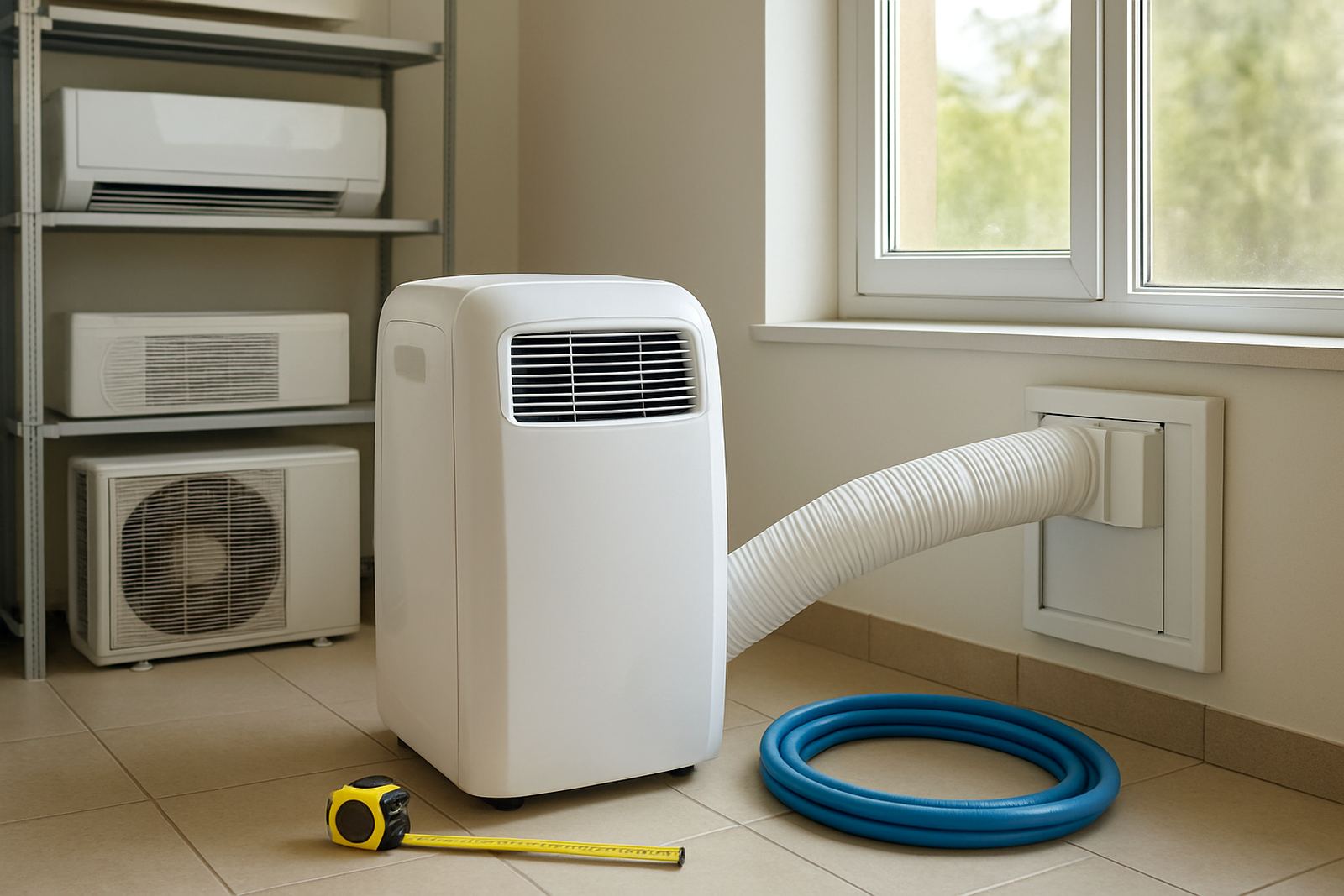
Every portable air-conditioner needs to dump hot air outside. If the hot air comes back into the room, the unit fights itself and the room stays sticky. That is why venting matters more than extras like remote functions or display lights. A proper outlet through a window, sliding door gap or wall opening is part of the plan.
Before buying, look at where the hose will go and how far the unit will sit from the opening. Long, bent or crushed hoses reduce performance. If the room has aluminium windows or a tight frame, check whether a suitable panel or temporary seal can be fitted. In coastal humidity or during summer rains, a poor seal also lets warm moist air creep back in.
- Plan the hose route before purchase
- Keep the hose as short and straight as possible
- Seal the opening around the hose
- Make sure the unit has space to breathe at the back and sides
If the venting point is awkward, it may be better to place the unit in another room or choose a different cooling option. A portable unit can do a good job, but it dosen't forgive bad airflow.
Match the Power Supply to the Unit
Portable units still draw real power, and in South Africa that matters when load-shedding, fluctuating supply and overloaded plugs are part of daily life. Before buying, check whether the room has a proper wall socket on a circuit that can handle the load. Avoid extension leads where possible, especially thin domestic ones that heat up under use.
Also think about where the unit will start up. Some homes and small businesses in Mbombela and the North West run backup systems, but not every backup can support a cooling appliance at the same time as kettles, printers or fridges. If the unit will be used through the day, the socket and wiring should be in good condition and accessible without running cables across walkways.
- Use a proper wall socket where possible
- Avoid cheap extension leads and multi-plugs
- Check that backup power can support the starting load
- Keep cables clear of doorways and wet floors
If you are setting up in a shop, small office or site office, ask about the full electrical picture first. A portable unit should cool the room, not trip the supply every time it switches on.
Think About Noise, Drainage and Daily Use
Portable units are handy, but they are not silent. Because the compressor and fan are in the room, you will hear them. That is fine for a storeroom or workshop office, but less pleasant in a bedroom if you are a light sleeper. Ask how noisy the unit feels in a closed room, not just on a brochure number.
Drainage is another practical point. Some units collect moisture that must be emptied or routed away. In humid areas like Hazyview and the hotter Lowveld towns, the unit may remove a fair amount of water from the air. If you need the room cool overnight, check how the drainage works so you do not wake up to a full tank alert or a puddle.
- Ask how the water is drained or emptied
- Check the noise level for sleeping or meeting rooms
- Consider where the unit will be moved and stored
- Make sure the castors and handle suit the room layout
Portable units are for convenience, so day to day handling should be part of the decision. If it will need to be moved between rooms, watch the weight and make sure there is a clear route.
A Quick Buying Checklist for Home or Office
Before you pay, go through a simple checklist. It helps you avoid buying on price alone, and it keeps the room and the unit matched from the start. This is especially useful for landlords, small businesses and families who need a fast cooling solution without a full fixed install.
- Room size measured in metres
- Windows or doors suitable for venting
- Socket and circuit checked
- Noise acceptable for the room use
- Drainage understood
- Unit size manageable for moving and storage
- Expected use realistic for one room only
It also helps to think about where the unit will sit. Leave space around it for air flow and avoid pushing it into a tight corner. In hot North West afternoons or Mbombela humidity, a cramped position can reduce the cooling effect more than people expect.
When a Portable Unit Is the Right Answer
A portable unit is a good answer when you need cooling now, without committing to a fixed installation. It suits rentals, temporary offices, guest rooms, and places where the landlord will not allow wall work. It can also help while you are waiting for a larger air-conditioning project to be planned and installed.
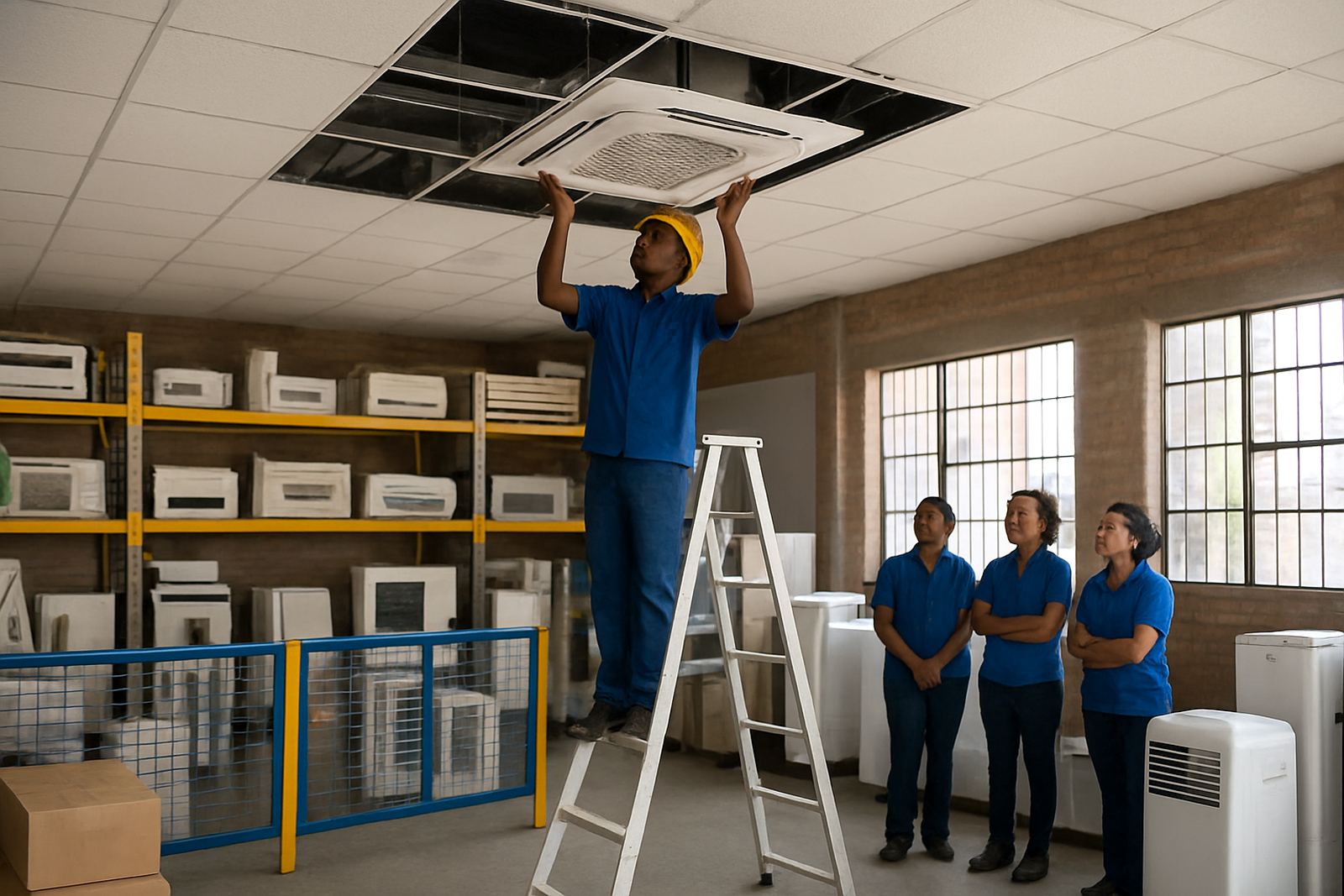
If the room is big, the sun is harsh, or the space is used by many people at once, a fixed wall split or cassette may be the better long-term choice. For an honest comparison, look at how often the room is used, how many people sit there, and whether the unit must work every day through summer. A portable unit can solve a real problem, but only when the room and the expectation are right.
If you need help matching the unit to the room, or you want a site assessment before buying, it is worth getting proper advice first rather than guessing and hoping for the best.