What a condenser stand does on site
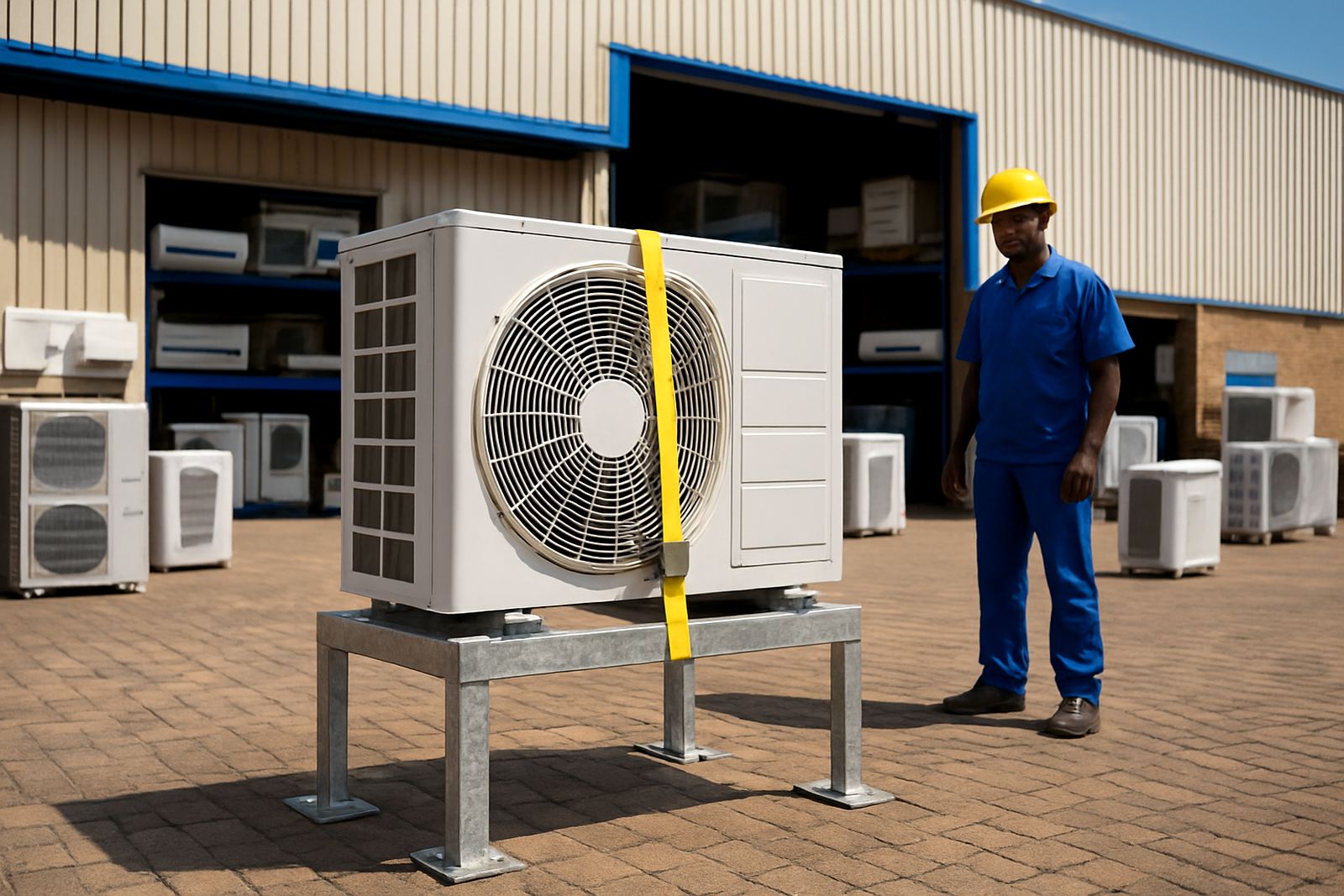
A condenser stand is a raised support frame for the outdoor section of a split air-conditioner. It keeps the unit above standing water, mud, grass, paving dust and small debris, while giving the installer better access for pipework, wiring and service clearance. In places like Mbombela, White River, Hazyview, Klerksdorp, Potchefstroom and Rustenburg, that extra height helps where summer rain, wash-down water or rough ground can shorten the life of the outdoor unit.
The stand also helps with airflow around the condenser. Outdoor units need space to move air through the coil. If the unit sits too low against a wall, in a corner, or on an uneven slab, the system can work harder and pick up more dirt. A proper stand gives a level base, better drainage and a neater finish. It is a simple item but it makes a big difference on installation day and later when the unit needs checking.
Sizes and stand options to match common units
Most condenser stands are made to suit wall split outdoor units from small domestic sizes to larger light commercial units. The important thing is not only the footprint of the base, but also the weight of the unit, the height off the ground and the fixing method. We supply stands for compact units, mid-size homes and larger systems used in shops, clinics and offices.
- Common footprint sizes for smaller units: about 450 x 450 mm to 550 x 550 mm
- Medium unit footprints: about 600 x 600 mm to 750 x 750 mm
- Larger outdoor units: about 800 x 800 mm and up, depending on model
- Typical height off ground: 300 mm, 450 mm or 600 mm
- Galvanised or coated steel finish for outdoor use
- Mounting holes or brackets for bolt-down fixing where required
Some sites only need a simple stand on a firm concrete pad. Others need a raised frame with better height because of flooding, gravel, long grass or municipal wash-down water. If the site is on a slope, the stand can be levelled with proper packing and anchor points. We always check the outdoor unit size before supply, because a stand that is too small or too light can lead to noise, movement and strain on the pipework.
Where a raised stand works best
Raised stands suit properties where the outdoor unit cannot sit directly on the ground. In the Lowveld, this often means wet ground after heavy rain, leaf build-up, or a position near garden beds and paving that traps moisture. In the North West, the issue is often dust, loose stone or a rough concrete edge that does not give a clean base. A stand helps keep the unit cleaner and higher, which can reduce corrosion and blockage around the coil fins.
It is also a good choice where the unit needs to be kept out of splash zones near hose taps, parking areas or courtyards. On small commercial sites, a raised stand can protect the unit from trolley bumps and foot traffic. In homes, it helps when the back yard has uneven slabs or where the client wants the unit off the ground for easier cleaning. If there is a flood risk or poor drainage, the extra height is often worth it straight away, especially in summer.
Installation checks, fixing and power/gas access
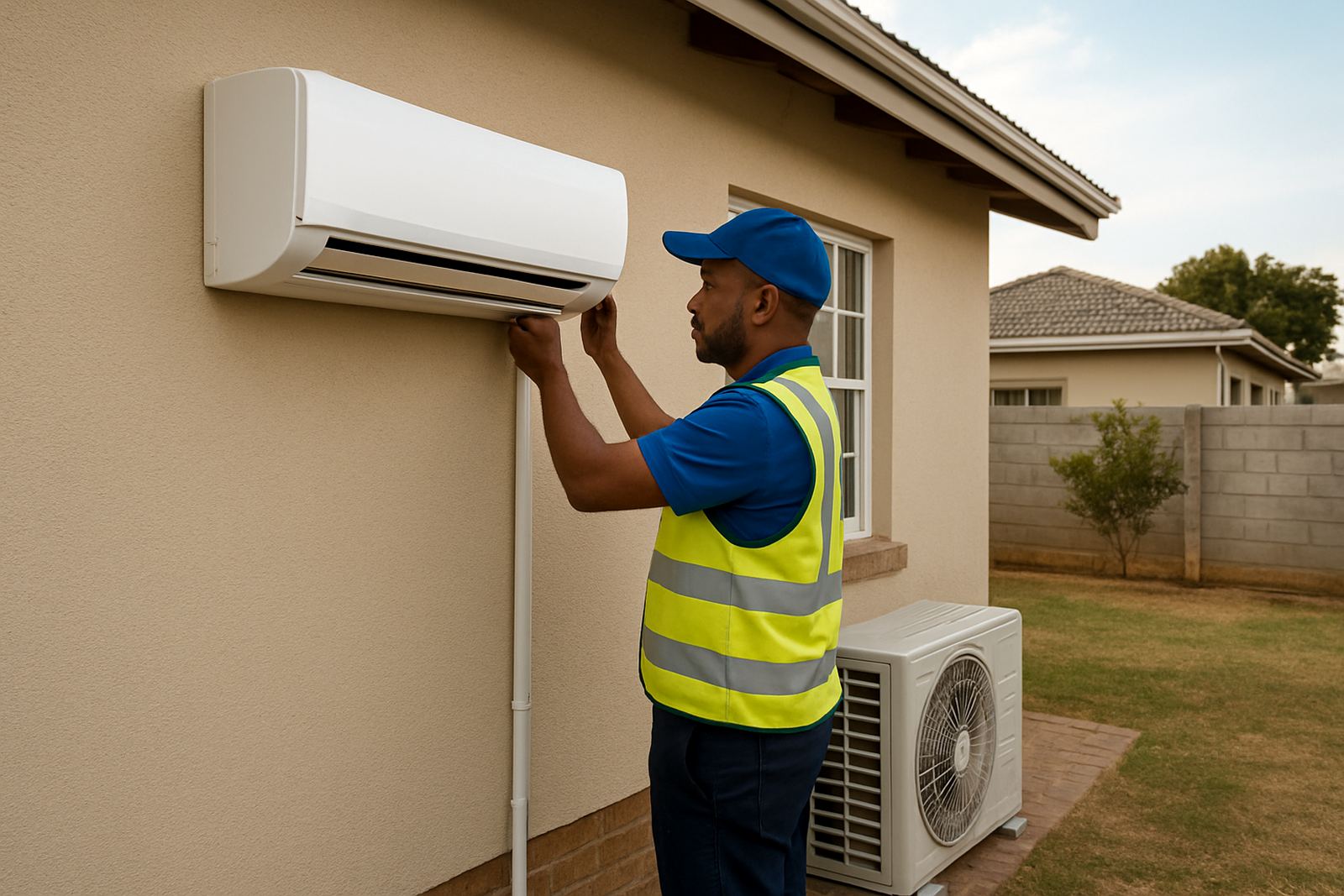
Installing a condenser stand is not just about placing steel on the ground. The base must be level, anchored correctly and positioned so the installer has room to connect the copper pipes, drain path and electrical supply. The unit also needs safe access for future servicing. If a stand is fitted too close to a wall or fence, the airflow can be restricted and the service lid becomes hard to remove. That leads to avoidable call-outs later.
- Check the exact outdoor unit model and weight before ordering
- Confirm the available space for pipe bends, electrical isolator and service access
- Make sure the stand matches the ground type, concrete, paving or compacted base
- Allow enough clearance for airflow on all sides, not only at the front
- Keep the unit away from roof runoff and direct splash from gutters
The stand itself does not use power or refrigerant, but the air-conditioner it carries still needs proper electrical supply and correct gas pipe installation. For new installations we test the system after mounting, then commission it and check for vibration, drainage and operating pressures. If the site has unstable power or frequent load-shedding, we also look at start-up conditions and whether the unit will sit safely when the power returns. One bad footing can rattle the whole unit and loosen fittings over time.
Care, cleaning and service life
A condenser stand needs very little day-to-day care, but it should be checked during routine servicing. The main things are rust, loose bolts, cracked pads, bent feet and movement in the frame. If the stand is steel and the coating gets damaged, moisture can start the corrosion process, especially in humid Lowveld air or near coastal routes used for deliveries. A small touch-up early can save a full replacement later.
During scheduled servicing, the outdoor unit should be lifted or inspected around the base so leaves, sand and grass do not build up under it. The drainage path must stay open, and the unit should remain level. If the property is washed down regularly, the stand should be checked for water pooling around the feet. Clients sometimes forget that the stand is part of the installation support, not just a piece of hardware, so a quick visual check every few months is worthwhile.
- Tighten mounting bolts if vibration has started
- Keep the base clear of mud, leaves and long grass
- Look for rust after the rainy season
- Check that the unit is still level after storms or ground movement
What to check before you order one
Before ordering a condenser stand, measure the outdoor unit base and confirm the available installation space. The right stand depends on the unit size, the weight, the height you want off the ground and how the unit will be fixed. If the site is new, it helps to know whether the installer will be working on concrete, paving, soil or a raised plinth. If the ground is soft, the stand may need a broader base or extra support points.
Also check the direction of the pipe run and where the isolator will sit. The stand must not block the access panel, the fan discharge or the service valve side. If you are replacing an old unit, the new outdoor cabinet may differ slightly in size, so the old stand may not suit without adjustment. For practical ordering, send the model number, a photo of the site and the footprint measurements. That saves time and helps avoid a stand that is a bit too short or too narrow.
In short, the best stand is the one that suits the site, the unit and the weather it has to handle. On many jobs in Mbombela and Klerksdorp, it is the difference between a clean, stable installation and one that gives trouble later on.
Key facts
| Product type | Raised support stand for split system outdoor units |
|---|---|
| Typical material | Galvanised or coated steel |
| Common height options | 300 mm, 450 mm, 600 mm |
| Common footprint range | 450 x 450 mm up to 800 x 800 mm and larger |
| Fixing | Bolt-down or level-set installation, site dependent |
| Best use | Drainage, clearance, uneven ground and splash protection |