What a non-inverter wall split actually does
A non-inverter split air conditioner uses a compressor that runs at fixed speed. When the room gets to the set temperature, the unit switches off, then starts again when cooling is needed. That simple operating style keeps the price lower than variable-speed units, and it is easy for many customers to understand and service.
For a buyer in Mbombela, White River, Hazyview, Klerksdorp or Potchefstroom, the main appeal is value for money. If you need cooling for a bedroom, small office, takeaway, boardroom or a flatlet, a non-inverter wall split can do the job without overcomplicating the install. It is also a practical option where the unit may only run for a few hours a day rather than all day long.
These units are usually paired with a simple indoor wall unit and an outside condenser. With the right pipe run, drain line and electrical supply, they cool quickly and keep maintenance straightforward.
Typical sizes and options available
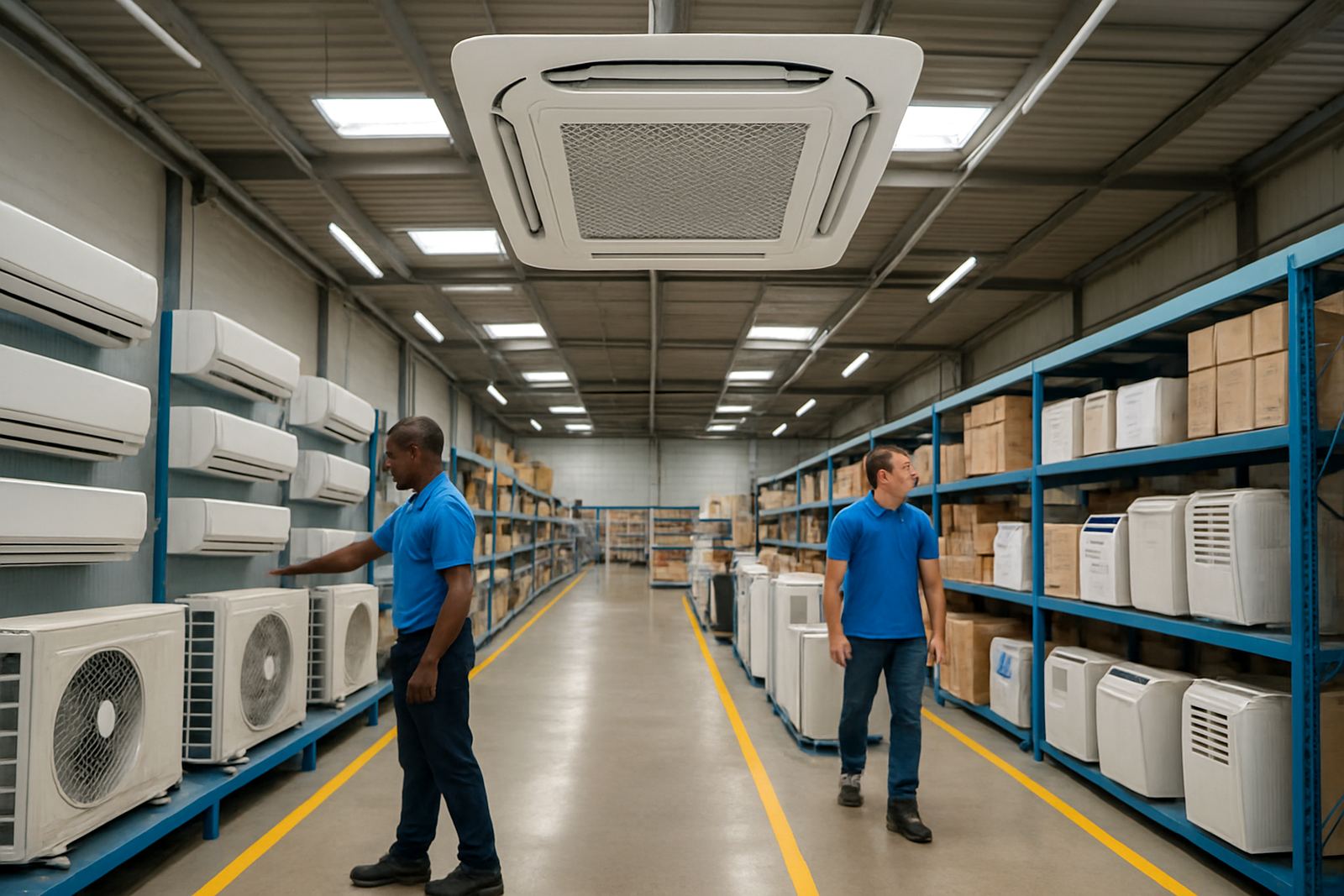
We supply common wall split capacities to match room size and heat load. The exact model depends on the space, insulation, sun exposure and how many people use the room. In the Lowveld, a room facing west or getting late afternoon sun often needs a bit more capacity than the same size room inland.
- 9 000 BTU for small bedrooms, compact studies and ticket booths
- 12 000 BTU for average bedrooms, small offices and consulting rooms
- 18 000 BTU for larger living rooms, open offices and small retail areas
- 24 000 BTU for bigger rooms, meeting spaces and light commercial use
Some models are cooling only, while others include heating for winter use in North West where mornings can get cold. Indoor units normally include a remote control, temperature display and basic fan speed settings. Outdoor units are built for wall mounting or slab mounting, with copper pipe connections and a condensate drain to manage water safely.
Where this unit suits best
A non-inverter split is often the right fit for places that need reliable cooling, but do not need advanced energy management or very fine temperature control. It works well in family homes, rental units, small surgeries, hair salons, bakkie fitment offices, container offices and staff rooms. It is also a sensible choice for site cabins and temporary admin spaces where the cost of the equipment must stay low.
Because the compressor starts and stops, it may be less ideal for spaces where people want a very constant temperature through the full day. In those cases an inverter may be a better match. But for many customers the savings on purchase and the easy servicing make fixed-speed units worth considering. They are common in both urban and semi-rural areas where power supply can be irregular and the installation has to be practical, not fussy.
- Good for short operating hours
- Good for budget-conscious fitouts
- Good for rooms with basic cooling needs
- Good where a simple service record matters
Installation, power and gas requirements
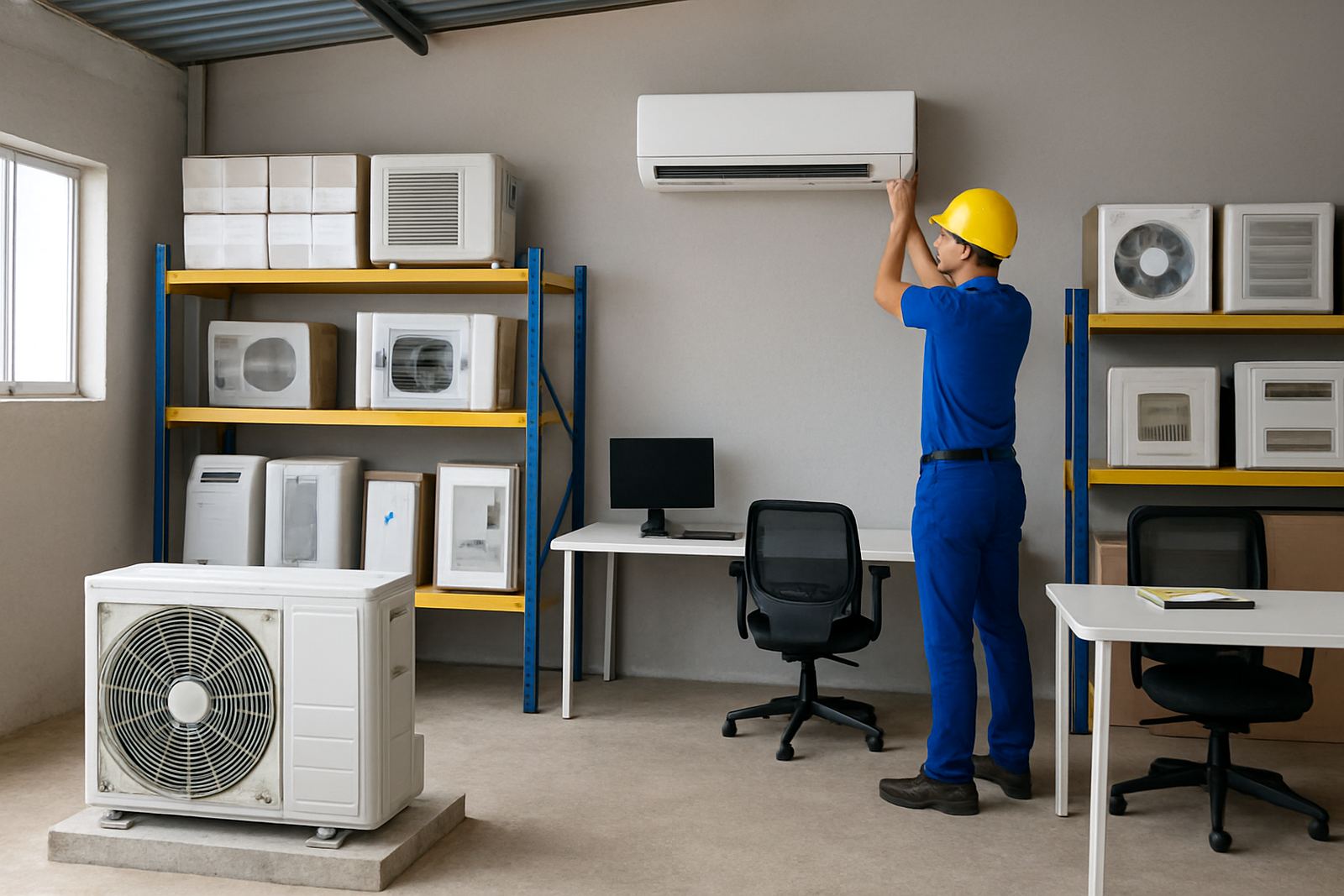
Correct installation matters more than the badge on the front cover. The indoor and outdoor units must be sized properly, fixed securely, and connected with the correct copper pipe length. The drain line should fall away cleanly so water does not back up into the room or stain the wall. In coastal or humid areas, careful sealing and good bracket choice help protect the system over time.
Most wall splits need a dedicated electrical circuit, the right breaker rating and proper isolation close to the unit. The starting current on a non-inverter system is higher than on some variable-speed units, so the electrician should check the supply before handover. On older sites, we also look for weak plugs, overloaded boards and cable runs that will not cope with regular use during load shedding recovery.
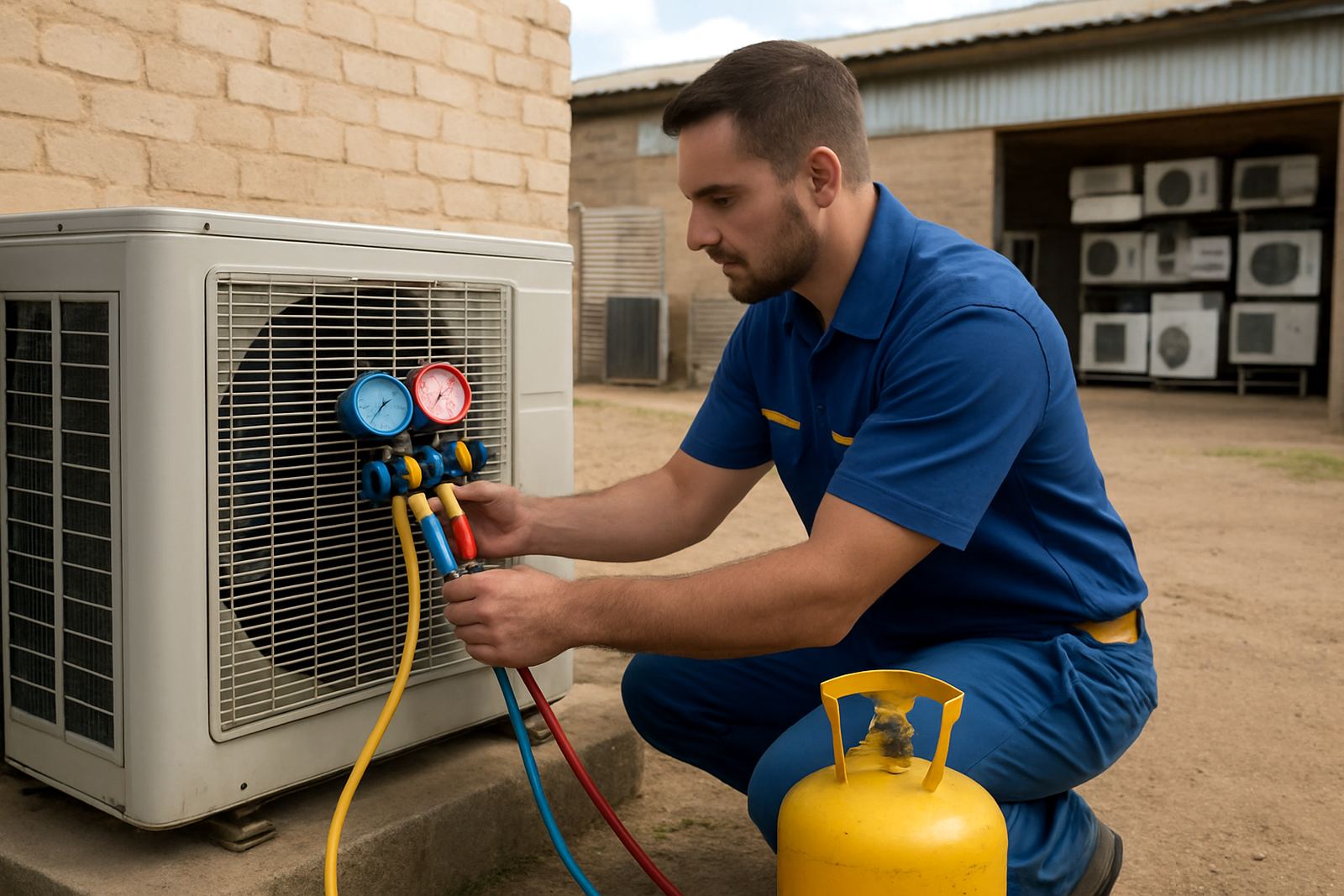
The refrigerant charge must be correct for the pipe length and the installation must be pressure tested before commissioning. A low or high gas charge can lead to poor cooling, noisy operation and unnecessary wear. That is why installation, commissioning and final testing should be done as one job, not split up. A neat fit today saves call-outs later, and keeps the system running properly.
Care, servicing and common fault signs
Like any split system, a non-inverter unit lasts longer when it is cleaned and serviced on schedule. Dust on the filters reduces airflow, which makes the system work harder and can cause icing or weak cooling. In dusty parts of North West or during pollen season in the Lowveld, filter cleaning may need to happen more often than people expect.
Scheduled servicing should include filter cleaning, indoor coil cleaning, outdoor coil inspection, fan checks, drain clearing and a look at gas pressure and electrical connections. A quick service visit can catch small problems before they become expensive ones. If a unit starts tripping, blowing warm air, smelling musty or making unusual noise, it needs fault finding before the issue gets worse.
- Clean filters every few weeks in heavy use
- Book a full service at least once a year
- Keep the outdoor unit clear of grass, leaves and dust
- Check for water dripping where it should not
What to check before you place an order
Before ordering, measure the room properly and note the ceiling height, sun exposure and number of people in the space. A room that is 16 m² with normal shade may need less capacity than the same size room with a west-facing window and glass door. Also check whether the unit will be used mainly in the afternoon, overnight or for short bursts through the day.
Confirm where the outdoor unit can be mounted, whether wall brackets or a ground stand will work, and if the drain can run to a safe discharge point. In some buildings body corporate rules or landlord rules may affect where the outdoor unit can sit, so it helps to check first. If the site is in Mbombela, Klerksdorp, Rustenburg or Potchefstroom, let us know the area and we can advise on the install conditions and likely pipe run.
For replacement work, check the old unit size, pipe size and cable route before you order. If you are fitting into a new room, send through the room size and a few photos. That makes it easier to match the right capacity and avoid under-sizing, which is one of the most common mistakes we see.
Key facts
| Type | Fixed-speed wall split air conditioner |
|---|---|
| Capacity range | 9 000 BTU to 24 000 BTU |
| Supply | 220V to 240V single phase, model dependent |
| Function | Cooling only or cooling and heating |
| Refrigerant | Gas charge as specified for the selected model and pipe run |
| Use areas | Bedrooms, offices, shops, flats and light commercial spaces |