What a copper pipe pair does on a split aircon
The copper pipe pair is the part that links the indoor evaporator unit to the outdoor condenser on a split system. One pipe carries the cold refrigerant back to the indoor unit and the other carries the hot gas or liquid side, depending on the cycle, so both need to be sized correctly and installed with care.
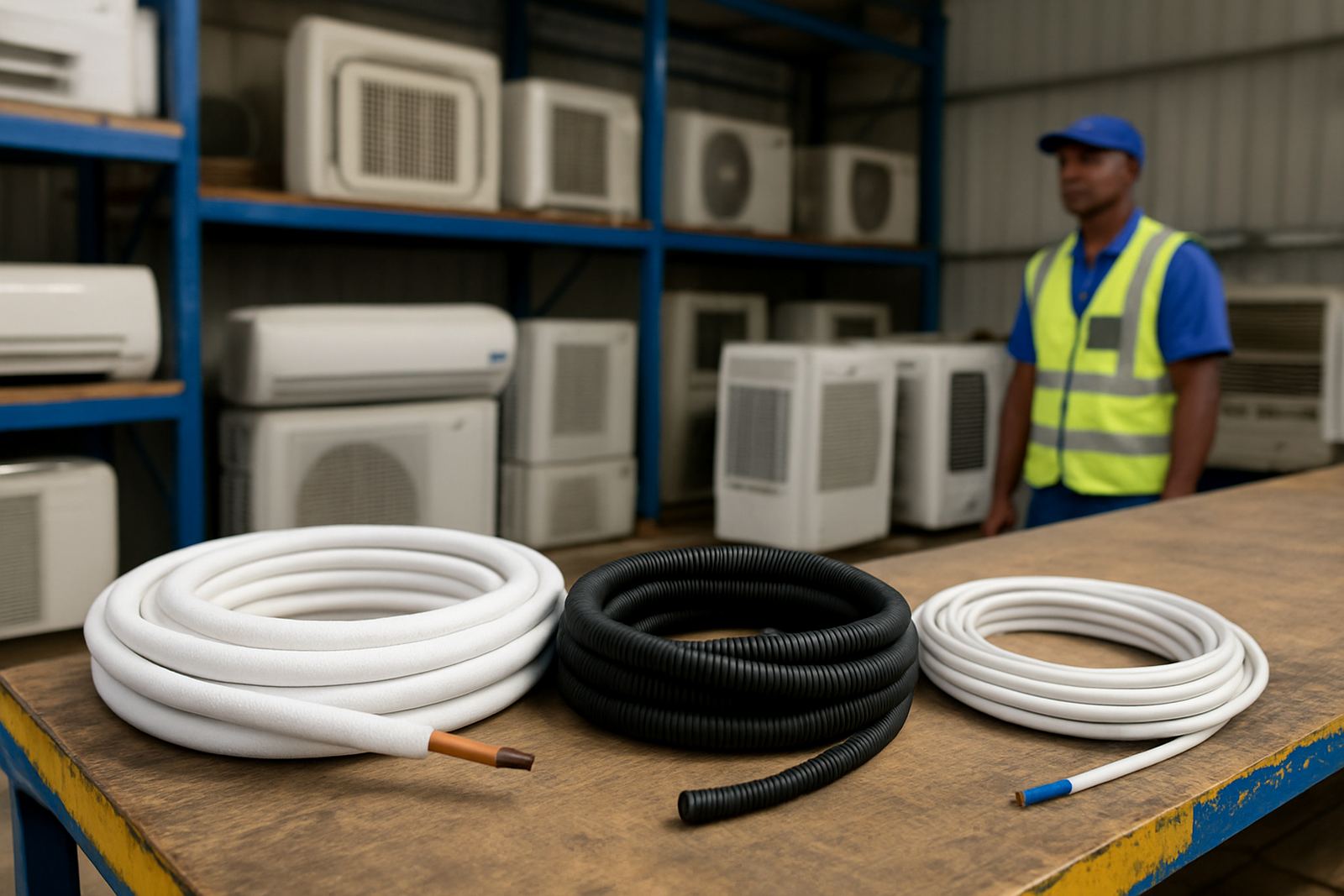
For standard wall splits, the pipe pair is usually supplied as a matched set with insulation already on the line set. That insulation matters in the Lowveld and along the North West heat, because uninsulated pipe can sweat badly, lose cooling output and pick up dust and moisture. If the line set is kinked, undersized or too long for the run, the unit can struggle and use more power, especially when the sun is on the west wall or when load-shedding cuts power back on and the system has to restart often.
We supply copper pipe pair for trade and fitment work where the installer needs clean, straight pipe that will braze, flare or connect properly to the indoor and outdoor unit. It is used on new installs, unit replacements and site extensions where the existing line is damaged or too short.
Sizes, wall thickness and pipe pair options
Pipe size must match the capacity of the aircon and the manufacturer connection sizes. Common split sizes use a smaller liquid line and a larger suction line. For longer runs, exposed roof spaces or commercial ceilings, the installer may need a heavier wall pipe, extra insulation or a longer pre-insulated pair to suit the route.
- Common pair sizes for domestic split units
- Pre-insulated line sets for quicker installation
- Flexible lengths for short and medium route work
- Option for replacement runs where old pipe has been crushed or contaminated
As a guide, small wall splits often use 1/4 inch and 3/8 inch pipe pair, while larger residential and light commercial units may use 1/4 inch and 1/2 inch, or other combinations depending on capacity. Cassette units can call for different sizes and longer runs through ceiling voids, so it is best to confirm the exact connection points before ordering. A pipe set that is too small can reduce gas flow, and one that is too big can be a poor match for the system design.
In coastal or humid areas, insulation quality is just as important as the copper itself. Cheap foam breaks down fast, leaves gaps and starts sweating. That can drip onto ceilings, walls or shop fittings, and it becomes a headache during summer when the unit is working hard.
Where the pipe pair suits best
This product suits most standard split installations in homes, offices, shops, clinics, lodges and small workshops. It is a practical fit where the indoor unit and outdoor unit sit on opposite sides of a wall or where the line must run through a ceiling and out to a bracket outside. In Mbombela, White River and Hazyview, it is often used for homes that need long runs around patios or through roof space. In Klerksdorp, Potchefstroom and Rustenburg, it is commonly used on replacement units where the old line set has been left in place for years and needs checking before reuse.
The pipe pair is also suited to aircon changeovers where the customer is moving from an older unit to a new one with similar piping needs. If the old line is clean, dry and the right size, it may be re-used after pressure testing and vacuuming. If it is contaminated with oil, water or blackened compressor residue, replacement is the safer choice. That saves time later and avoids faults that can show up after commissioning.
- Home wall splits and bedroom units
- Office and retail split systems
- Cassette connections through ceiling voids
- Replacement line sets on older installations
Installation basics, gas and power checks
Copper pipe pair must be installed by someone who understands refrigerant pipework, evacuation and commissioning. The pipe needs to be cut cleanly, flared or brazed correctly, pressure tested and then pulled down with a vacuum pump before gas is released into the system. If moisture is left inside the pipe, it can react with the refrigerant and oil, which leads to poor cooling and early compressor wear.
The pipe itself does not use power, but the full installation affects how much power the aircon draws. Correct pipe size, clean bends and the right gas charge all help the compressor work within range. A line set that is too long without the right additional gas can cause low cooling and warm return air. In a place like Rustenburg or Potchefstroom, where summer heat can sit high for days, that extra strain shows up quickly on the electricity bill.
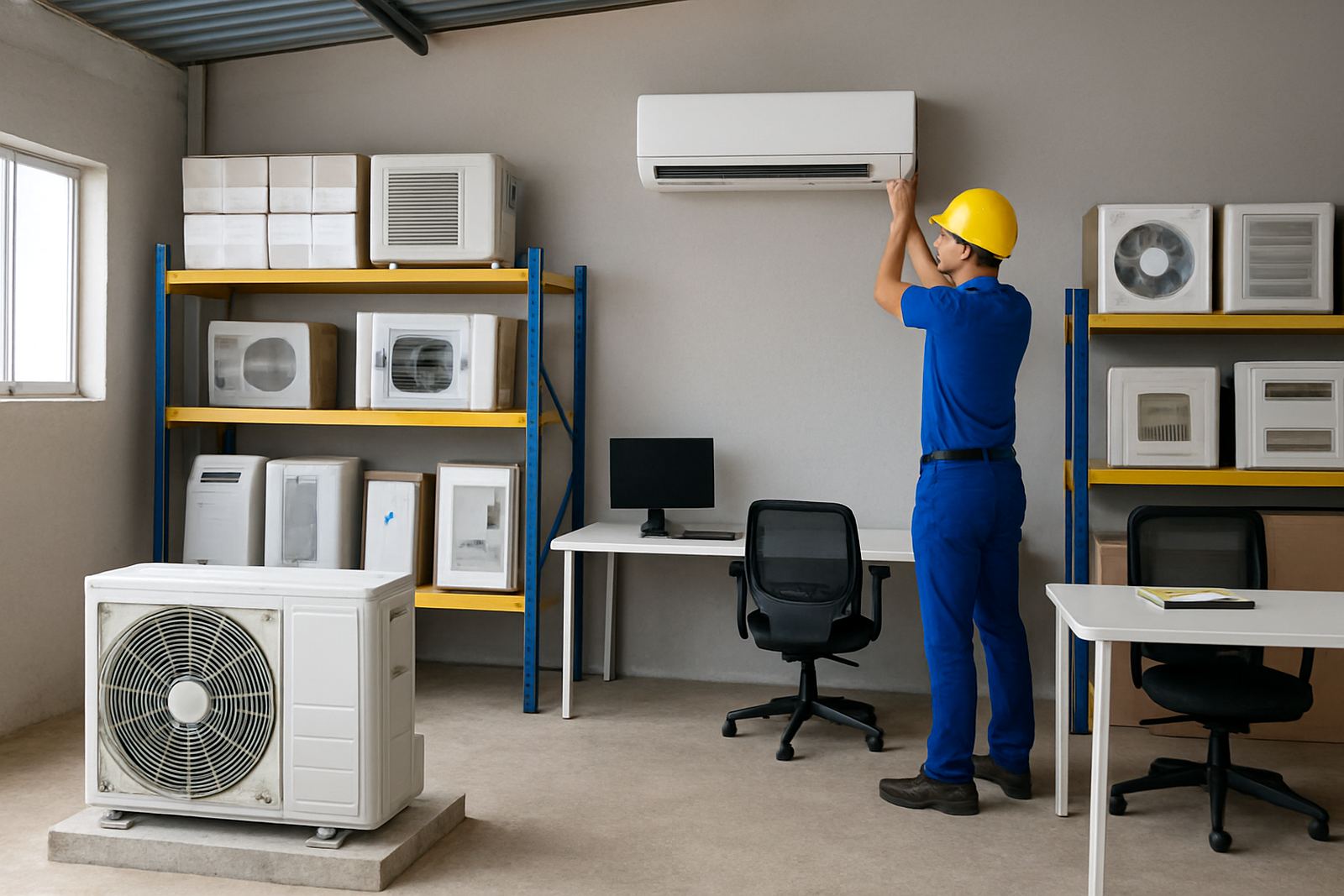
When we do new installations or replacement units, we also check bracket height, drainage fall, wall penetration and pipe protection outside. On coastal or dusty sites, the line should be clipped neatly and covered where needed to avoid sun damage and vibration. It is a small thing, but it makes a proper diffrence over time.
Care, servicing and signs the line set needs attention
A copper pipe pair does not need daily care, but it does need to be protected from knocks, corrosion and poor repairs. During scheduled servicing, the installer should check for oil marks at joints, damaged insulation, rubbing against sharp edges and signs that the pipe has been crushed behind a wall or in a ceiling. If the unit starts losing cooling, cycling too often or tripping on pressure faults, the line set should be checked before the problem gets worse.
We also recommend checking the pipe during deep cleaning and gas top-up work. If the system has lost gas more than once, there is usually a leak somewhere. Top-ups without leak finding only mask the issue and can lead to a bigger repair later. In the Lowveld heat, small leaks become bigger complaints very quickly because the unit runs harder and longer each day.
- Look for sweating on exposed copper or insulation
- Check for vibration noise at wall entry points
- Inspect for oil stains around flare nuts or joints
- Replace damaged insulation before summer starts
What to check before you order
Before ordering copper pipe pair, confirm the aircon capacity, the connection sizes on both units, the run length and whether the pipe will be surface-mounted, run through a ceiling or buried in a chase. Measure the actual route, not only the straight wall-to-wall distance. A 6 m route can become 8 m once bends and vertical drops are included.
Also check whether the installation needs standard pre-insulated pipe or a heavier-duty option for longer exposure. For trade work in Mbombela, Klerksdorp and surrounding areas, it helps to know if the job is for a first fit, replacement unit or a cassette fitment. That tells the installer whether the line will need extra insulation, more brackets, or a full re-route. If you are unsure, send the model details and the planned route before collection, and we can help match the pipe size to the job.
For older premises, ask whether the wall opening and outdoor position allow a neat run. A short saving on pipe can create a bad angle, sharp bend or a line that rubs against brick or steel. It is better to get the size right first time than to patch it later.
Key facts
| Product type | Insulated copper refrigerant pipe pair |
|---|---|
| Use | Split air-conditioner line set for indoor to outdoor connection |
| Common sizes | 1/4 inch x 3/8 inch, 1/4 inch x 1/2 inch and other matched pairs |
| Insulation | Closed-cell foam insulation on both lines |
| Application | Wall splits, cassette fitments, replacements and new installations |
| Supply area | Mbombela, White River, Hazyview, Klerksdorp, Potchefstroom and Rustenburg |