What anti-vibration pads do on an aircon install
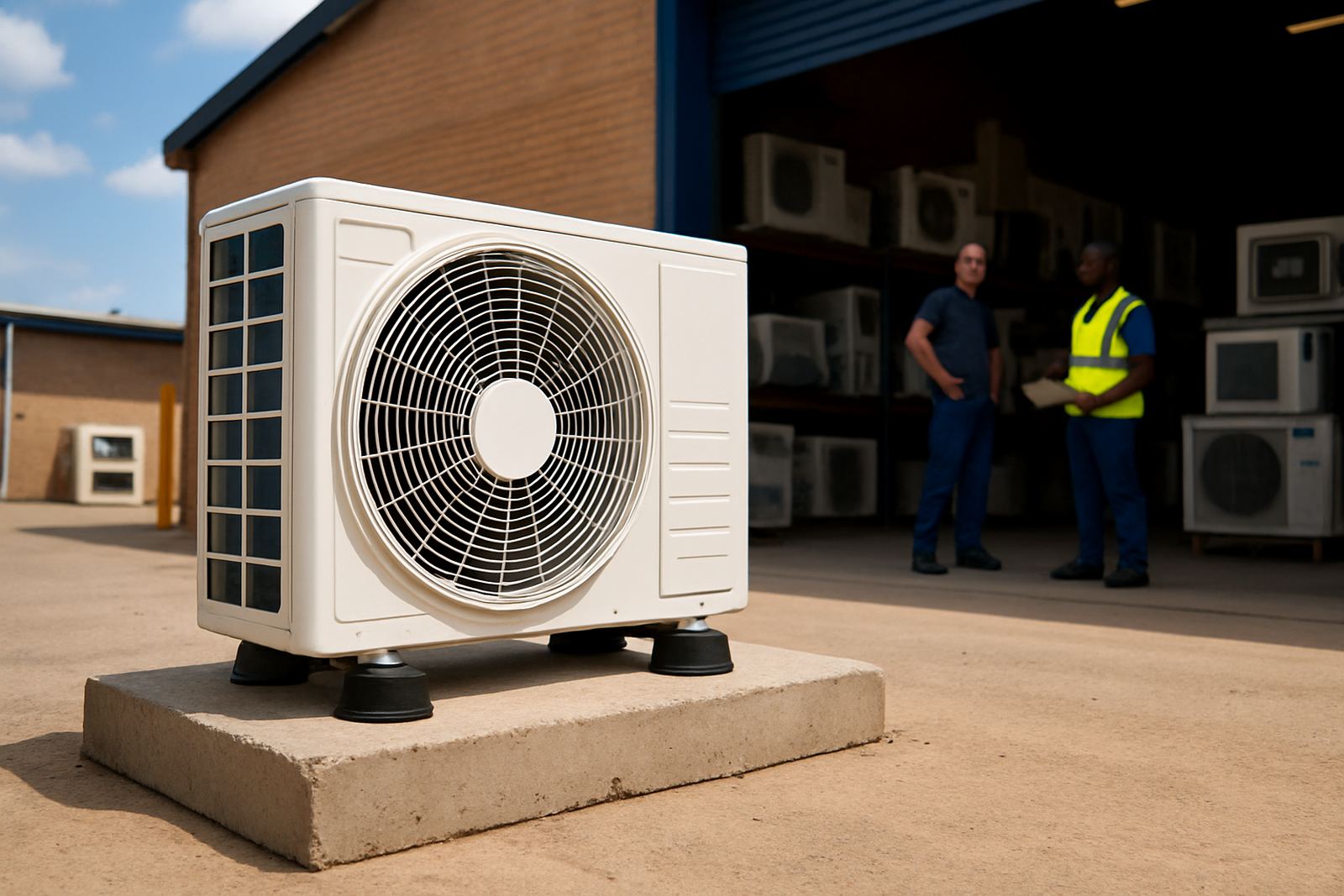
Rubber mounting pads sit between the condenser feet and the surface it stands on. Their job is simple, they soften contact so less vibration travels into the slab, steel frame or paving below. That matters on wall splits, cassettes with outdoor units and replacement condenders where the old bracket or plinth has already started to shake a bit more than it should.
In practice, the pad helps reduce rattling, humming and the low buzz that can travel into a bedroom wall or braai area. It also helps protect fittings from long term wear, especially where the unit runs often during summer in Mbombela, Hazyview or Rustenburg.
They do not fix a badly mounted unit on their own. The condenser still needs to sit level, with proper clearance for air flow and correct pipe work. But as part of a clean install they are a smart add-on and they cost far less than dealing with a noisy call-back later.
Pad sizes and material options we supply
We supply rubber pads sized for common domestic and light commercial condenser feet. The exact fit depends on the base of the outdoor unit and whether it stands on a concrete slab, roof frame or steel stand. Most trade orders are matched to the make-up of the unit at the time of installation, then checked again during commissioning.
- Standard flat rubber pads for ground-mounted condensers
- Heavy-duty pads for larger wall split outdoor units
- Raised anti-vibration blocks where extra clearance is needed
- Pack sets for pair mounting under two front and two rear feet
- Options suited to coastal humidity and hot inland conditions
For most homes a simple rubber pad set is enough. For a larger cassette system or a unit near an office wall, we may recommend thicker pads so the vibration transfer is reduced more effectively. If the base is uneven, we will first sort the support surface before fitting the pads, because a pad should not be used to compensate for a poor level.
Where they suit best around Mbombela and North West
Anti-vibration pads are useful anywhere the condenser is close to a living area, boundary wall or steel structure. In the Lowveld they are often fitted on homes with tiled roofs and light wall construction, where even a small vibration can be heard inside at night. In North West, they are common on townhouses, offices and shops where the outdoor unit sits near paving or a boundary wall.
They also help on installations where municipal or estate rules expect reduced noise transfer. That includes guest houses, rental units and small businesses that want to avoid complaints from neighbours. If the condenser is mounted on a roof or bracket, the right pad or block can also reduce metal on metal contact and help keep the installation quiet from day one.
- Homes in White River, Nelspruit and Hazyview
- Townhouses and offices in Klerksdorp and Potchefstroom
- Retail sites and clinics where low noise matters
- Replacement units where the old feet are worn or hard
Fitment details, power points and gas line checks
These pads do not need power and they do not change the refrigerant charge, but they do form part of a proper install. The outdoor unit still needs the correct electrical supply, isolator position and safe cable route. During fitment our team checks the base, the footing and the pipe run so the condenser is not pulled sideways once the gas pipes are connected.
On a new installation or replacement, the technician will make sure the unit sits square, with enough room for service access and air flow. If the line set is tight or the flare joints are under strain, vibration will still move through the system and cause trouble later. That is why pad placement, level mounting and pipe support all go together.
For systems that have already been running, we can inspect whether the pads are compressed, cracked or missing. If the unit is slightly off level after a patio repair or slab movement, we will advise on a better support setup before the gas service is completed. A small adjustment now can prevent a return visit later.
Care, wear and when to replace the pads
Rubber pads are low maintenance, but they do age. Heat, sunlight, oil residue and general pressure can flatten them over time. In places with strong sun and dust, we often see pads harden sooner than expected. If the unit starts making more noise, or if you can see the feet digging into the pad, it is time to inspect them.
During scheduled servicing we look at the pad condition at the same time as the fan motor, drain route and electrical connections. If the pad has split or gone brittle, we replace it before it starts transferring vibration into the mounting surface. This is a simple job and it can save the customer from repeated humming complaints.
- Check for cracking, flattening or oil damage
- Look for rust under the feet or on the stand
- Confirm the condenser is still level
- Replace pads if noise has started to travel indoors
What to check before you order
To get the right anti-vibration pads, have the condenser details ready. The foot spacing, unit weight and mounting surface all matter. If you are ordering for a trade job, send the outdoor model details, the installation town and a clear note on whether the unit is going on a slab, roof frame or wall bracket. That helps us match the pad type properly and avoid delays on site.
You should also check whether the install needs extra clearance for drainage or maintenance access. On some sites in Potchefstroom or Rustenburg, the unit sits close to a wall and there is only just enough room for a service hand. In that case, the pad height and layout must be planned with the whole unit position in mind.
For replacements, measure the old pads or photograph the base before removing them. If the old unit was noisy, let us know whether the sound was a light hum, a heavy shake or a metal knock. That detail helps our team decide if the issue is only the pad or if the mounting frame also needs attention.
Key facts
| Product type | Rubber anti-vibration mounting pads for condenser feet |
|---|---|
| Typical use | Reducing noise and vibration transfer from outdoor aircon units |
| Common fitment | Wall split condensers, replacement units and light commercial setups |
| Material | Durable rubber compound suited to indoor-outdoor temperature swings |
| Mounting | Placed under condenser feet on slabs, stands or steel frames |
| Service support | Available with site assessments, installation and servicing in Mbombela and North West |