Cooling that matches real church attendance
A church is not cooled like a small office. One Sunday may be quiet, the next may be full with families, children, a choir and visiting groups. That means the aircon must handle changing occupancy, long service times and doors opening often for late arrivals. In Mbombela, White River, Hazyview, Klerksdorp and Potchefstroom, we look at the actual use of the hall or sanctuary before recommending equipment.
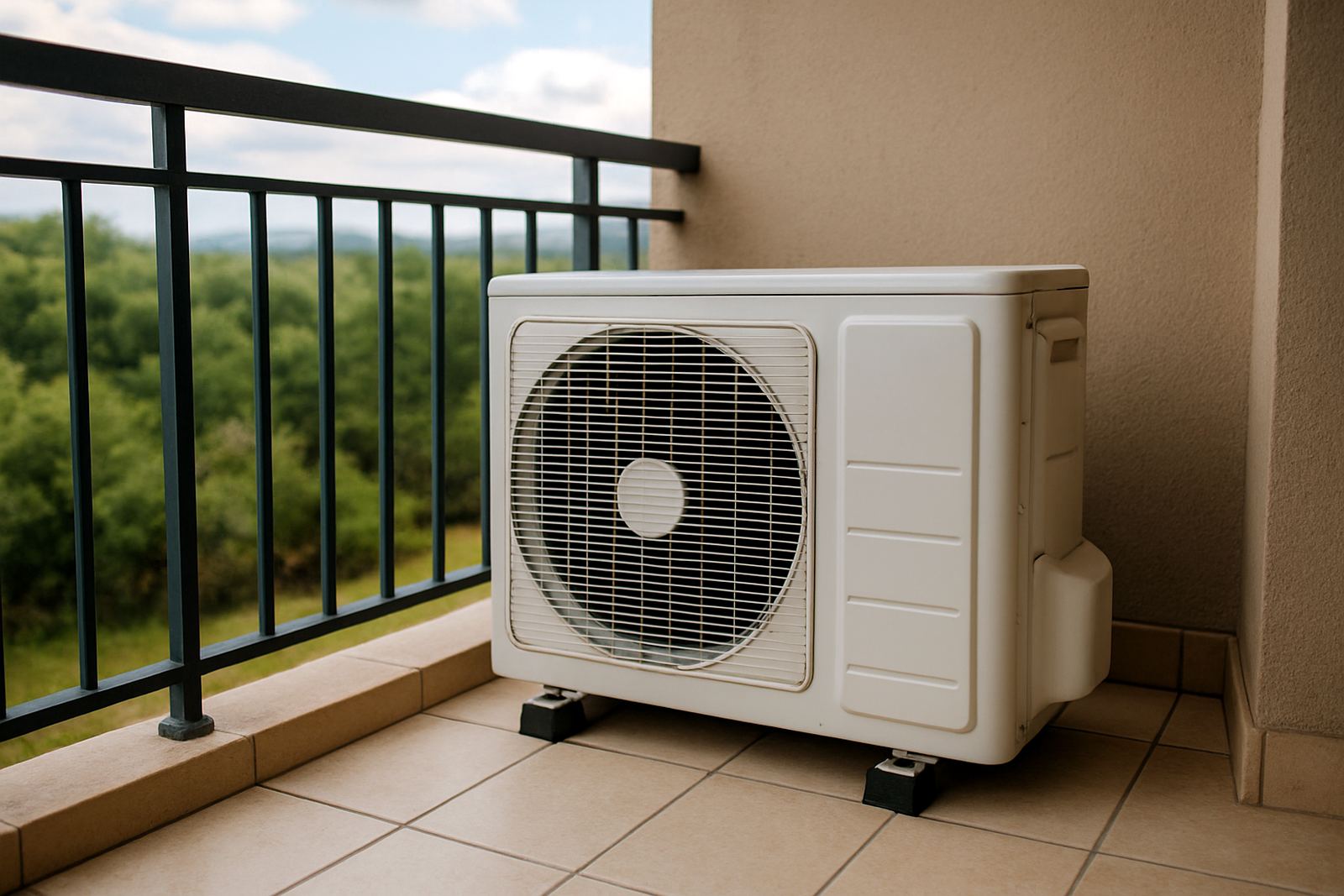
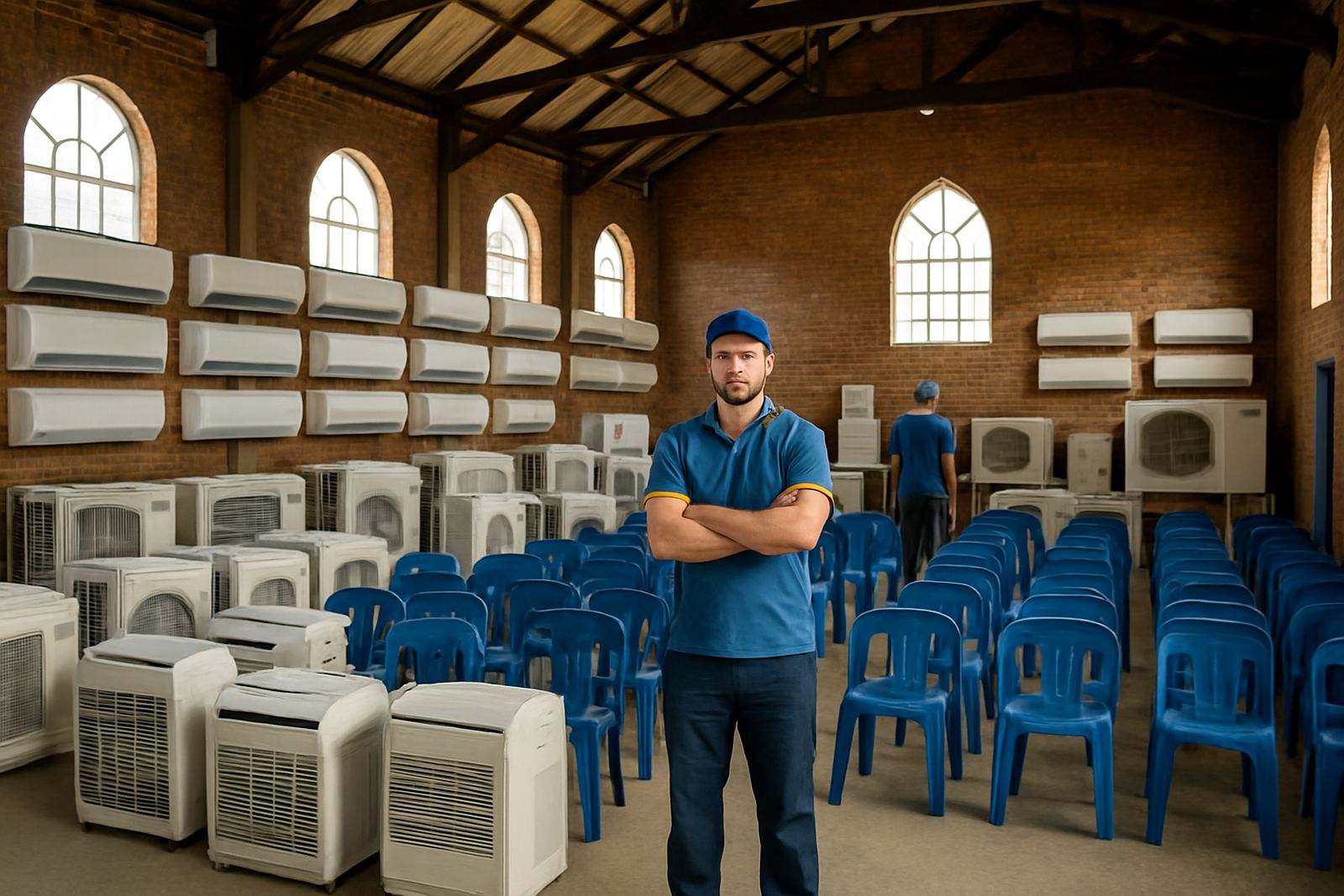
For smaller chapels and meeting rooms, wall split units often work well if the layout is simple and the space is divided into clear zones. For larger sanctuaries, cassettes are often better where a ceiling void is available, because they spread air more evenly across rows of seating. Portable units can help for nursery rooms, offices or temporary overflow spaces, though they are not the best answer for a packed main hall. The right choice depends on ceiling height, insulation, window area and how many people are usually inside.
Typical equipment for worship spaces
Most churches need a mix rather than one single unit. The main hall may need one or two larger systems, while side rooms can be handled separately. That allows the pastor, admin team or caretaker to run only the areas in use and avoid unnecessary power use during load-shedding recovery or quiet weekday hours.
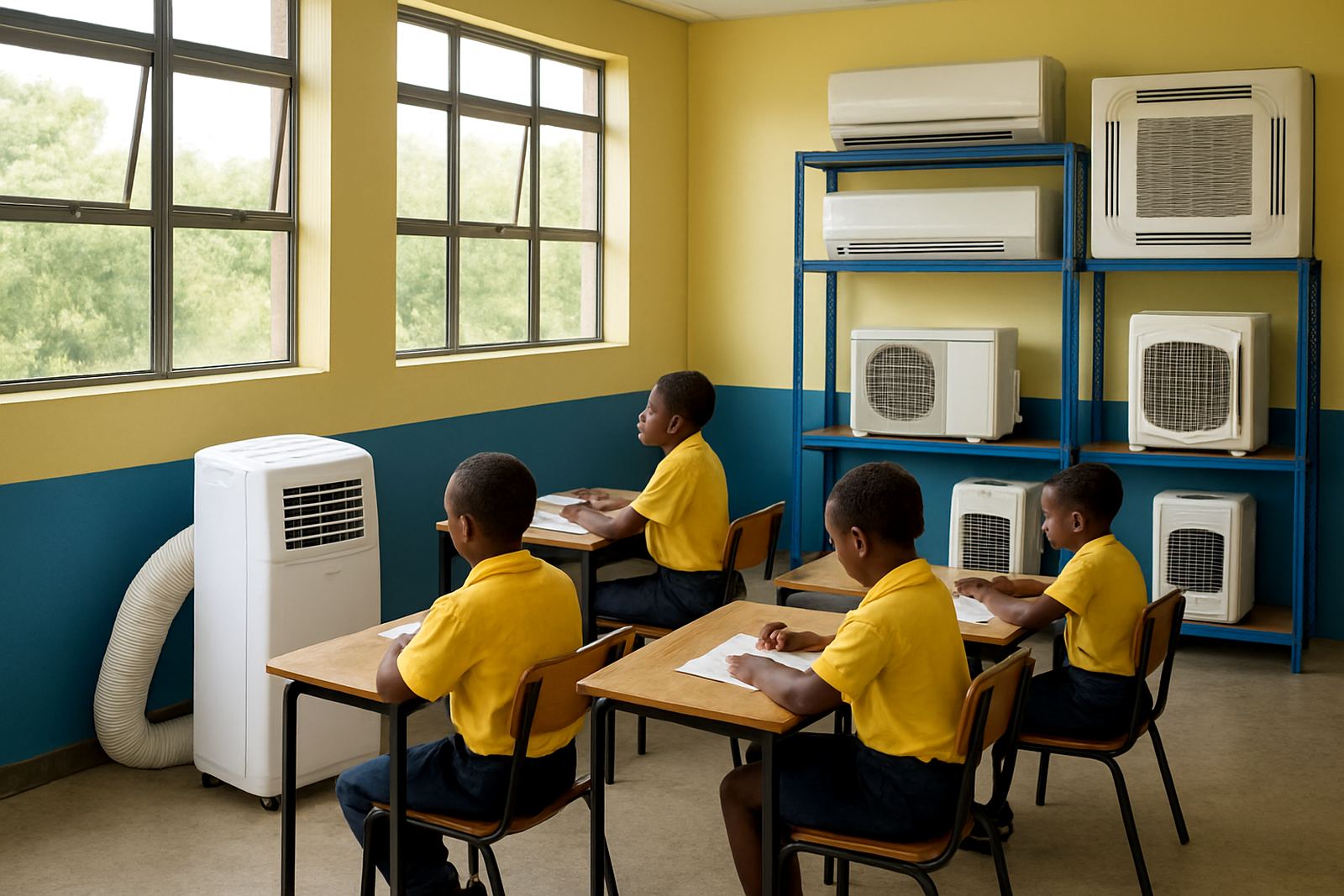
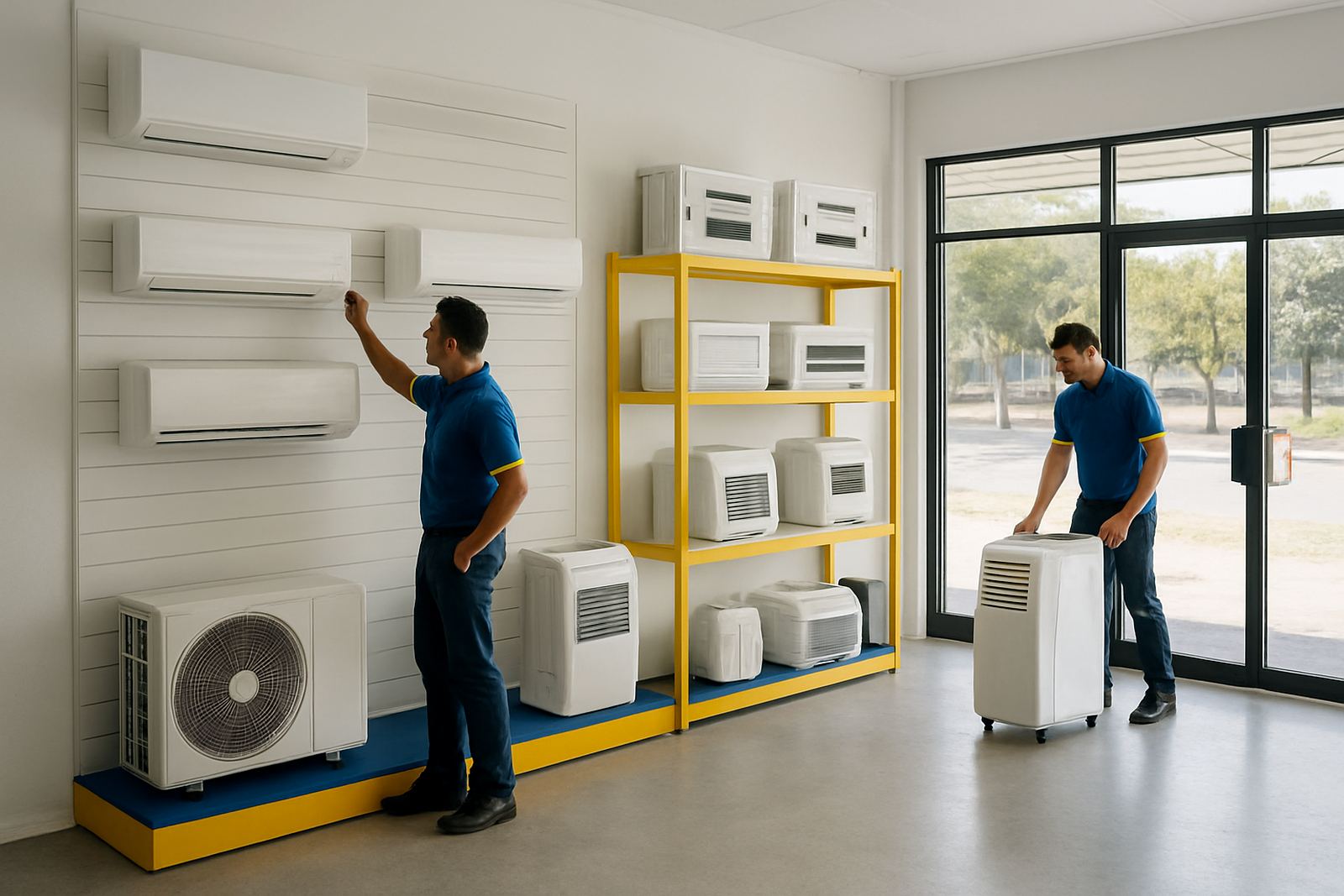
- Wall split units for smaller halls, offices, counselling rooms and classrooms
- Cassette units for sanctuaries with ceiling access and wider air spread
- Portable units for temporary use, extra rooms or event support
- Replacement units where old equipment has failed and repair no longer makes sense
- Deep cleaning and scheduled servicing to keep airflow healthy in dusty or coastal areas
We also supply gas top-ups, fault finding and commissioning after installation. In the Lowveld, dust and heat put extra strain on filters and coils. In Rustenburg and parts of North West, churches often deal with hot afternoons and large temperature swings, so good sizing matters even more.
Layout and planning advice before you buy
Church cooling works best when the airflow follows the seating plan. A unit placed badly can blow straight onto the front pews while leaving the back hot and stuffy. We normally start with a site assessment to check the room length, roof type, wall materials and where cables and drains can run neatly. If the building has multiple halls, we plan each zone separately rather than trying to force one unit to do everything.
Ceiling height matters more than many people expect. High roofs can trap hot air and make a unit work harder, while open side doors can pull cooled air out faster than expected. In older buildings, we also look for municipal or building restrictions on external mounting positions and drainage. It is better to solve these points upfront than to discover them after the system is on site.
For churches with Sunday school rooms or fellowship halls, we often recommend a staged plan. Start with the main worship space, then add smaller rooms as budget allows. That keeps spending under control and lets the church see clear gains from each phase.
Common mistakes churches make with aircon
The biggest mistake is buying by guesswork. A unit that is too small will run flat-out and still leave the room warm. A unit that is too big may cool the air too quickly without removing enough humidity, which can leave the hall clammy and uncomfortable. Another common issue is ignoring how people move in and out during a service, especially where doors stay open for long periods.
- Choosing a system based only on floor size and not occupancy
- Putting all cooling in one room and leaving side rooms to overheat
- Skipping proper commissioning after installation
- Neglecting filter cleaning in dusty towns and near busy roads
- Waiting until a unit fails completely before planning a replacement
We also see churches trying to use one portable unit as a permanent solution for a large hall. It can help in the short term, but it is rarely cost effective over a full season. A proper installation usually gives better comfort, lower strain and fewer interruptions during services.
Budget ranges for church aircon projects
Budgets vary a lot because a small prayer room and a full sanctuary are not the same job. As a working guide, a single wall split setup for a smaller church room may start from around R9 000 to R18 000 supplied and installed, depending on capacity and pipe runs. A cassette installation for a mid-size hall can sit from about R22 000 to R45 000, again depending on access, ceiling work and electrical requirements.
Larger worship spaces with multiple units, long pipe runs or more complex zoning can move into the R50 000 to R120 000 range and beyond. If the church needs replacement units only, the spend may be lower. If there are several rooms, a commissioning visit, deep cleaning and ongoing service plan, it helps to budget for the full life of the system rather than only the purchase price.
We quote plainly and work with trade prices where possible. That gives church boards a better idea of what can be done now and what can wait for a second phase. For churches in Mbombela, White River, Hazyview, Klerksdorp, Potchefstroom and Rustenburg, local support also cuts down on delays and call-out costs.
Service support after the installation
Church aircon needs regular attention because many buildings only use the system on weekends, then leave it idle during the week. That can lead to blocked filters, slow leaks or units that do not start properly when the hall is full. We handle scheduled servicing, fault finding, gas top-ups and deep cleaning to keep systems ready for service day. It is worth checking the units before winter programs, holiday services and large events.
Aircon Warehouse is based in Mbombela and works across the Lowveld and North West, including Klerksdorp and surrounding towns. Our team includes people who handle sales, installations, service coordination, warehouse control and admin so the job does not get lost between different contacts. If your church needs a new install, a replacement unit or help with an old system that is not coping, we can assess the space and advise on the simplest practical route.
For church leaders and trustees, the goal is simple: steady comfort, sensible power use and equipment that keeps working when the hall is full. That is the standard we work to.