What the fresh air duct kit does
This kit is fitted to selected air-conditioning systems to draw in outside air through a duct and introduce it into the space in a controlled way. It is not a full ventilation plant, but it does help improve air turnover in rooms that can feel stuffy, especially in summer heat or where doors stay closed for long periods.
In practical terms, the kit supports areas such as small offices, consulting rooms, reception spaces, board rooms, staff areas and enclosed retail sections. It can also assist in buildings where municipal rules or internal building policies call for some fresh air make-up. The duct is usually paired with a filter section or grille, so the incoming air is less likely to bring in leaves, dust or insects.
For businesses in Mbombela, White River, Hazyview, Klerksdorp, Potchefstroom and Rustenburg, this matters because hot weather, dust and closed spaces can put pressure on comfort. On humid Lowveld days, people often want cooler air but also need some outside air exchange, otherwise the room starts to feel flat. This kit gives you more control than just cracking a window, and it avoids the extra load from constant uncontrolled air entry.
Sizes, duct options and practical build details
The right kit depends on the unit size, the room size and how much fresh air you want to introduce. Most installations use a compact duct run with a short entry point, but longer runs are possible where the ceiling space allows it. We normally check the route first so the added duct does not interfere with the condensate drain, ceiling boards or access panels.
- Duct diameters commonly supplied: 100 mm, 150 mm, 200 mm and 250 mm
- Suitable for wall split and cassette applications, depending on the unit and space
- Can include a weather louvre, bird mesh, filter section and manual or motorised damper
- Can be set up for direct outside air intake or connected to a short ceiling plenum
- Best results come from a straight run with minimal bends and proper sealing
We always check the air conditioner size first because a kit that is too large can introduce more warm air than the system can handle. A kit that is too small may not make much difference. The aim is a balanced setup that supports comfort, not a rushed fitment that causes noise or poor cooling. A neat install also matters in dusty towns where a loose joint will pull in dirt quicker than expected.
Where the kit suits best
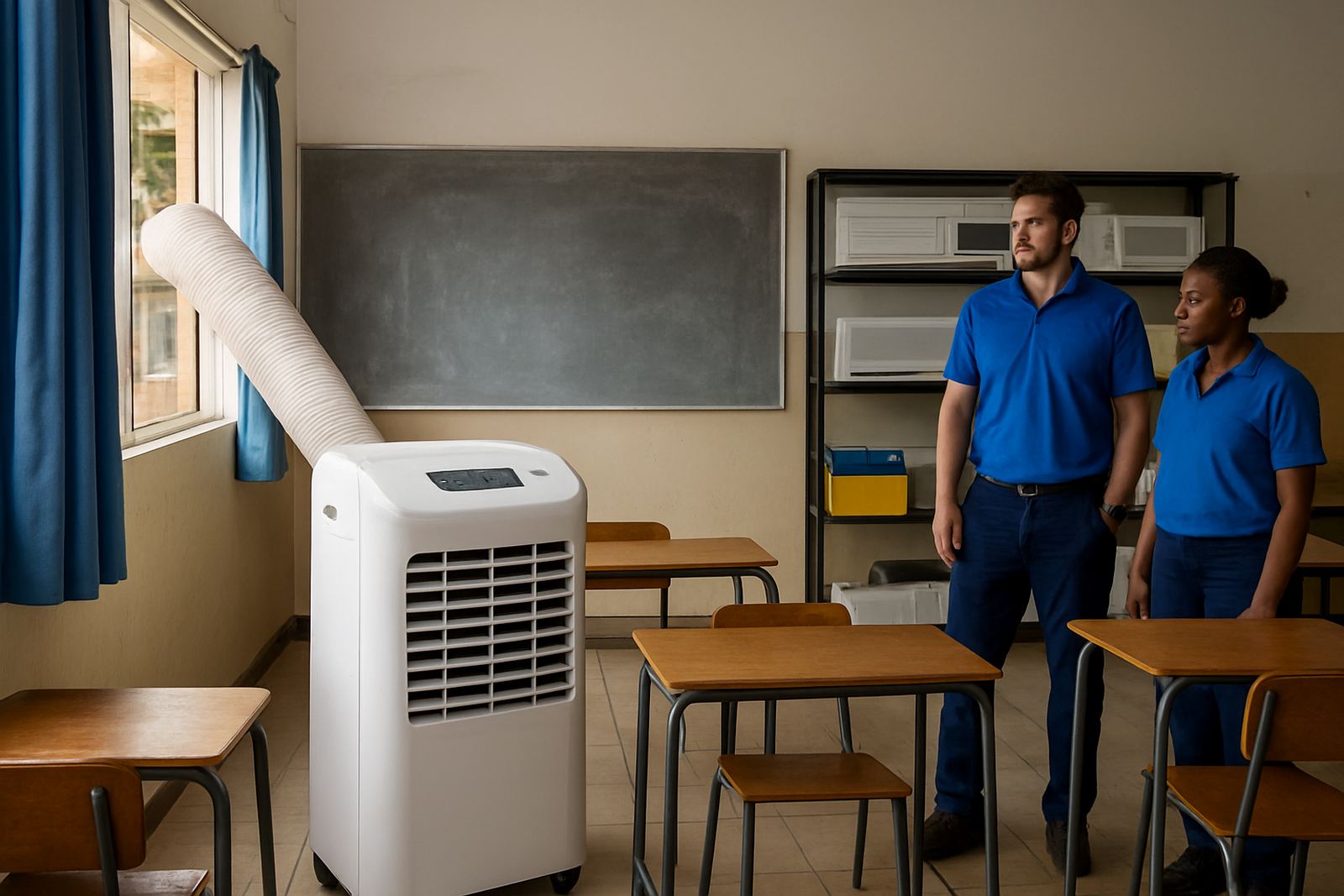
This product suits areas where people spend time in a closed room and the same air keeps circulating. It is a useful add-on for commercial sites, clinics, estate offices, churches, classrooms, saloons, call centres and small hospitality spaces. In offices with several people in one room, fresh air can make the space feel less stale and more comfortable during long work periods.
It also works well where doors open and close often, because the system can keep a more controlled airflow than an open window. In the Lowveld, where high humidity can make a room feel heavy, the kit can help the space feel fresher while the aircon does the cooling. In North West towns such as Klerksdorp, Potchefstroom and Rustenburg, dust control is often the bigger issue, so the intake needs proper screening and maintenance.
- Best for enclosed rooms with regular occupancy
- Useful where a building needs extra fresh air but windows are not practical
- Good choice for spaces with heavy foot traffic or odours
- Can support comfort in areas affected by load-shedding recovery, once power comes back and the room needs airing
Installation, power and gas requirements
The fresh air duct kit itself does not use refrigerant gas and it does not need gas charging. It is an air path add-on, so the main concern is correct physical fitment and how much extra air the air-conditioning system can handle. If the kit includes a motorised damper or powered fan, then a suitable electrical supply is needed and the controls must be wired neatly and safely.
During installation, we check for clear access, safe roof or wall entry and enough service space for future maintenance. On ceiling-mounted cassette systems, the position of the intake and grille matters because bad placement can create draughts or uneven room conditions. On wall split systems, the duct route has to be planned carefully so the unit still breathes properly and does not become noisy.
Where load-shedding is a concern, the added intake should be kept simple if possible. A basic passive setup often suits sites that want fewer electrical parts to fail when power is unstable. For sites with a generator or inverter supply, we can advise on a powered damper or extraction fan if the application needs it. In coastal or humid parts of KZN and the Lowveld, we also watch out for corrosion risk on fixings and grilles.
Care, cleaning and scheduled servicing
Like the air-conditioning system itself, the duct kit needs regular care if it is going to stay effective. Dust, insects and moisture can collect in the intake path, and if that is ignored the airflow drops off. A quick check every few months helps, while a proper clean should be tied into the normal scheduled servicing of the aircon.
Service checks normally include the grille, filter section, duct joints, damper movement and any powered components. If there is a smell of damp air, a whistling sound or less airflow than usual, the kit should be inspected sooner. In humid areas we also look for condensation around the duct entry and signs of corrosion on exposed metal parts.
- Clean or replace intake filters as needed
- Check for loose duct joints and air leaks
- Inspect the damper for smooth opening and closing
- Keep the outside intake clear of leaves, dust and nests
- Include the kit in routine aircon servicing rather than leaving it out
A little upkeep goes a long way here. If the intake is allowed to clog, the system works harder and the room loses the benefit of the kit. That creates more complaints and can even make the unit seem under-sized, when the real issue is just a blocked duct or dirty screen.
What to check before you order
Before ordering, measure the room, confirm the air-conditioning model and check where the outside air can be drawn from. The intake position should be away from exhaust outlets, braai smoke, generator fumes, vehicle bays and any dusty service yard. You should also know whether the building allows a wall penetration or whether the duct has to travel through a ceiling void.
It helps to have the unit details ready, plus a clear idea of whether you need a simple passive duct or a more controlled set-up with a damper. If you are not sure, our team can do a site assessment and advise on the best route, the likely duct size and the type of grille or filter section needed. That saves time and avoids rework later on.
For installations in Mbombela, White River, Hazyview, Klerksdorp, Potchefstroom and Rustenburg, we can also look at access, ceiling height, roof type and service clearance. These small details matter more than people think. A neat installation is not just about looks, it affects how well the kit performs from day one.
Key facts
| Product type | Add-on fresh air duct kit for selected air-conditioning applications |
|---|---|
| Typical duct sizes | 100 mm, 150 mm, 200 mm and 250 mm options |
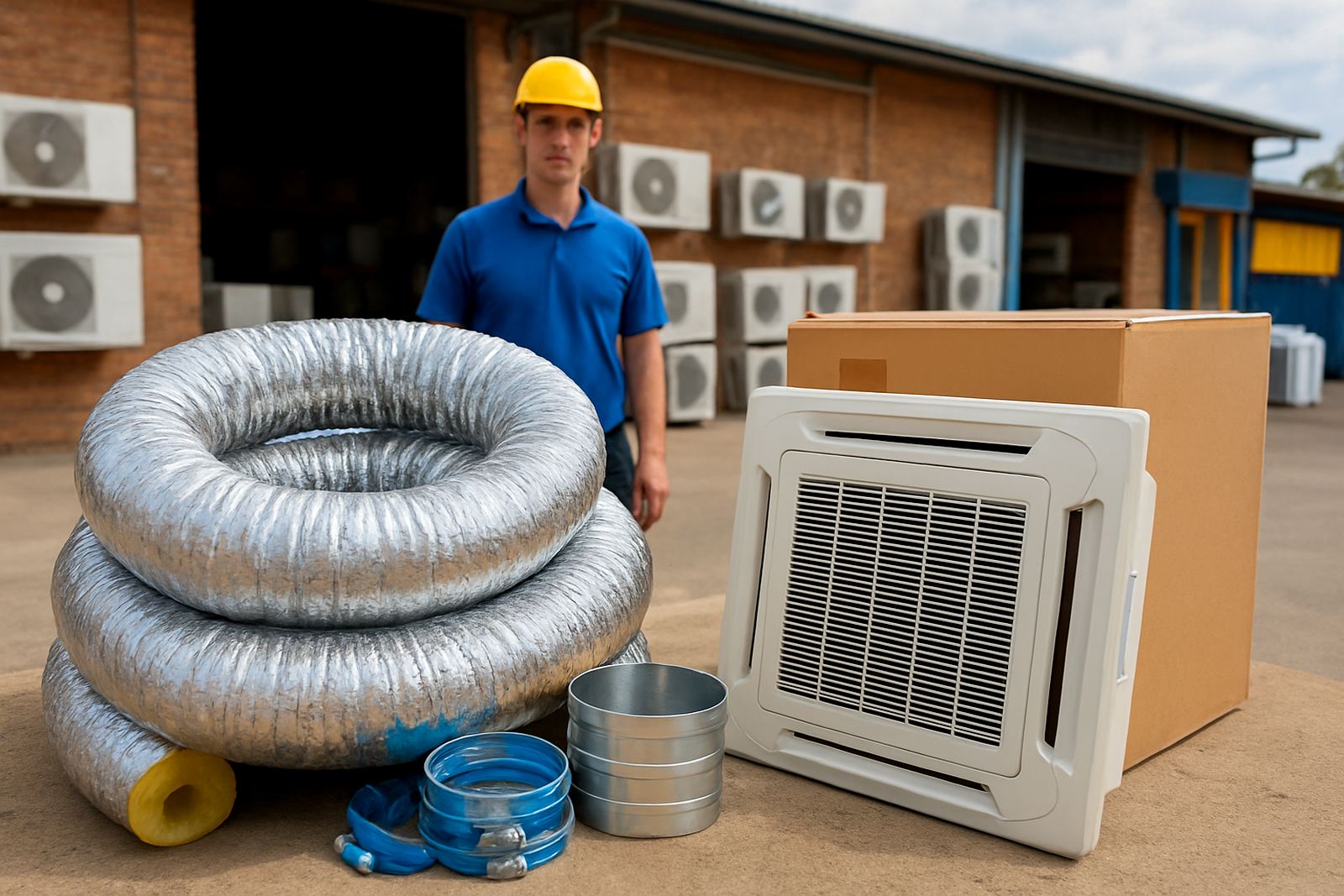
| Main components | Ducting, grille or louvre, filter section, damper, fixings and seals |
| Power requirement | Passive option or powered damper/fan where specified |
| Refrigerant gas | No gas charge required for the duct kit itself |
| Best use | Controlled outside air intake for offices, clinics, retail and enclosed rooms |