Cooling a dining room without upsetting service flow
In a restaurant, the aircon must do more than make the room feel cool. It has to keep tables comfortable at lunch, hold a steady temperature during the supper rush, and avoid blowing straight onto guests or staff carrying plates. In Mbombela, White River, Hazyview, Klerksdorp, Potchefstroom and Rustenburg, we often start with the dining room first, then work back towards the bar, waiting area and any private function space.
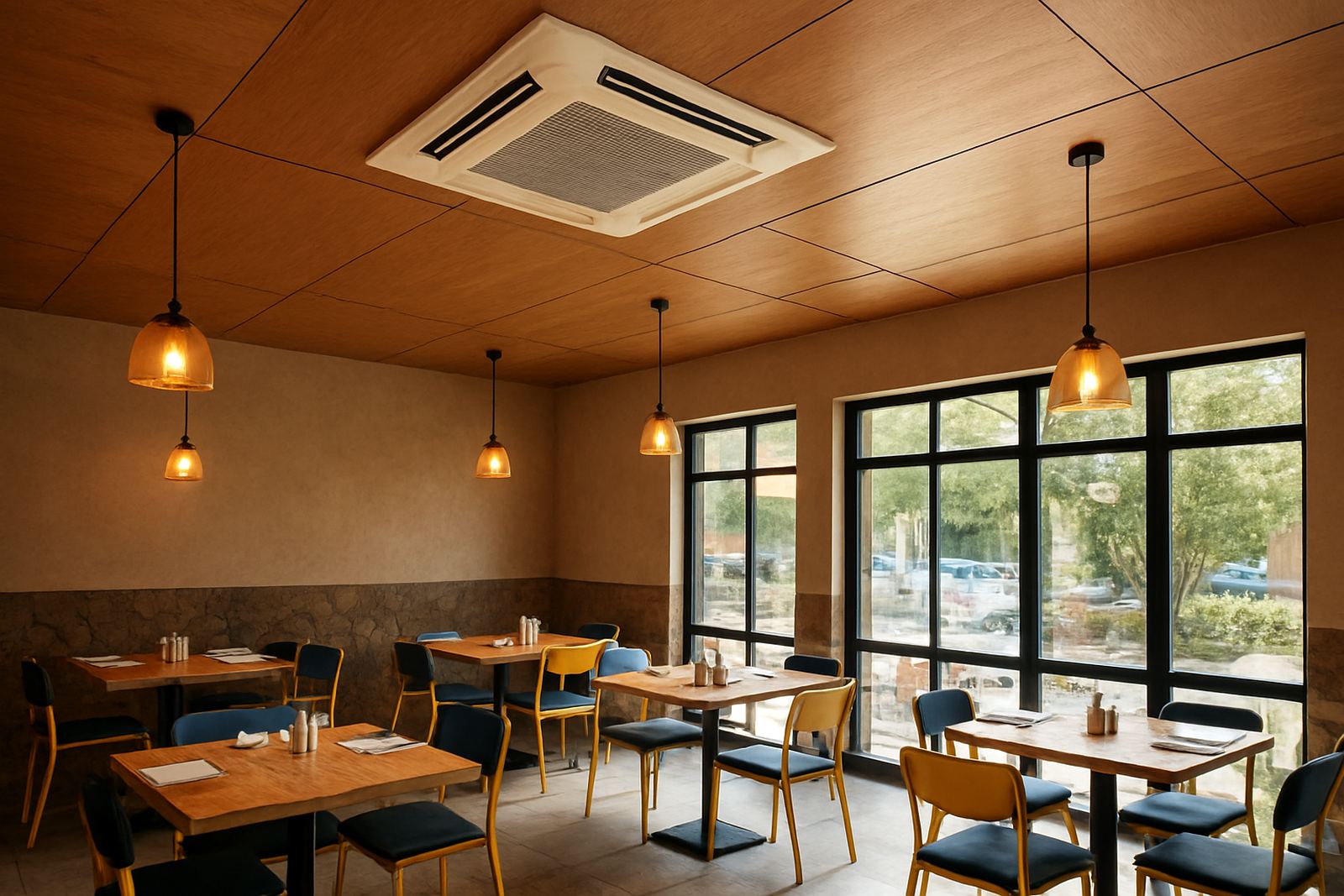
The usual mistake is fitting one unit where there is a clear wall, not where the room actually needs cooling. A dining room with high turnover, glass frontage or a lot of midday sun may need more than one wall split, or a cassette unit centred over the seating rows. We also look at doorway traffic, because every open door lets hot air in and cold air out. If the room is being cooled but the entry keeps pulling in dust and warm air, the system ends up running harder than it should.
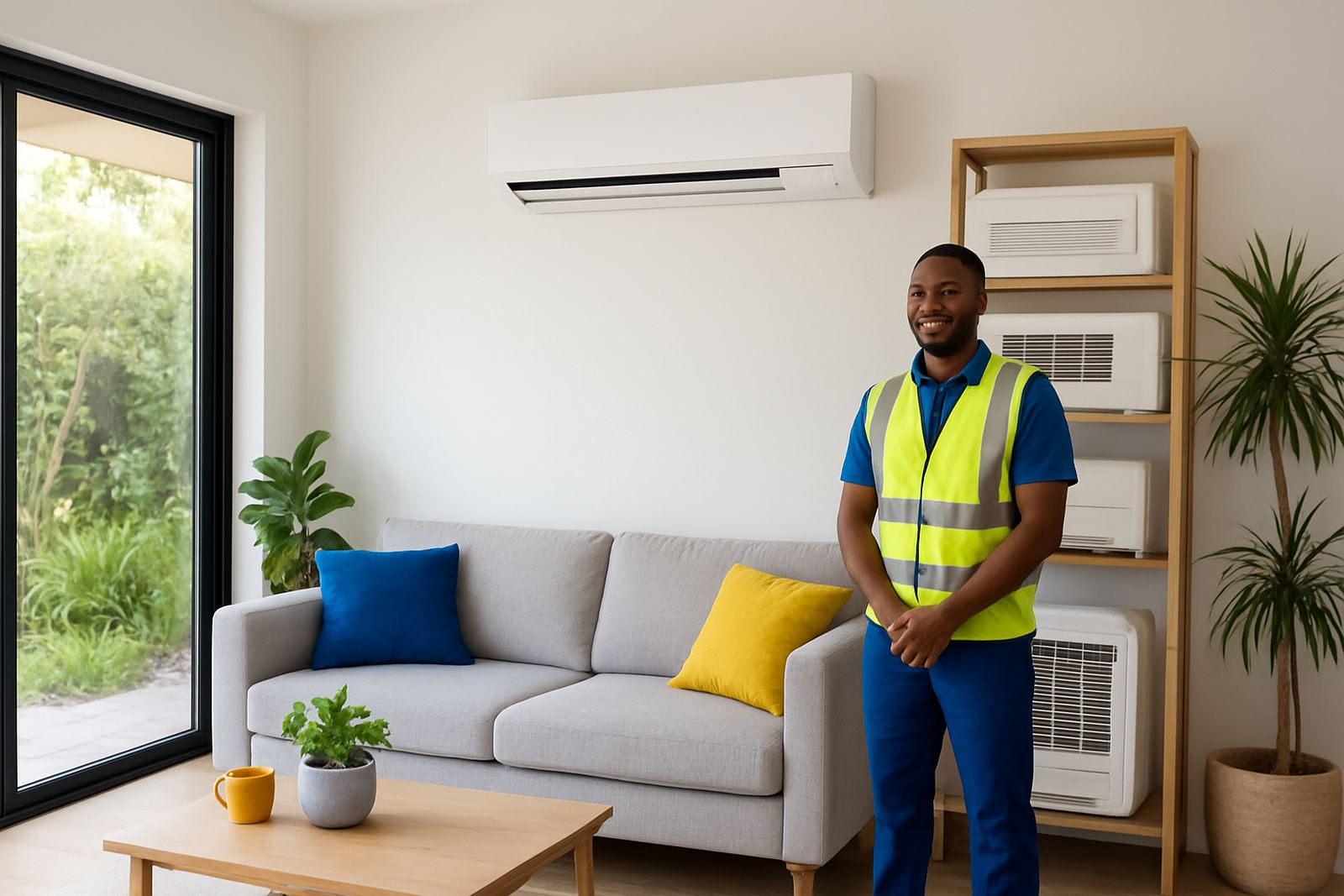
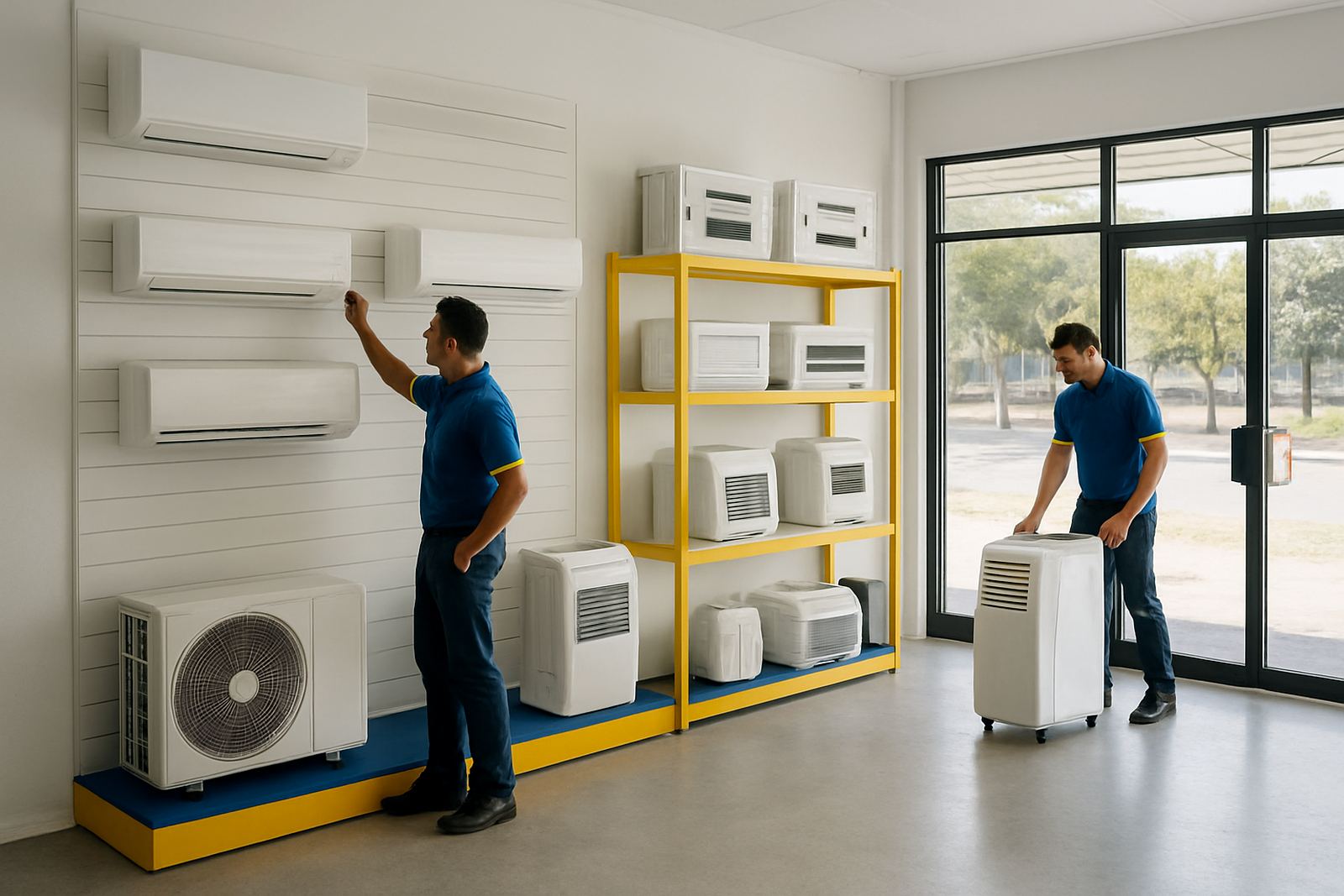
For most restaurant front-of-house areas, we work with wall split units for smaller rooms and cassette units for wider open plans. Portable units can help in a temporary overflow area, but they are not a long-term fix for a busy dining room. Good planning matters more than just buying the biggest unit available.
Typical equipment set for restaurants and cafés
Every site is different, but restaurant air conditioning usually falls into a few practical options. We stock trade-priced wall splits, cassettes and portable units, with installation available in the Lowveld and North West. The right mix depends on the dining area size, ceiling height, glazing, and whether the kitchen sits close enough to add extra heat into the room.
- Wall split units for smaller dining rooms, offices and takeaway counters.
- Cassette units for open plan seating, function rooms and larger restaurants.
- Portable units for temporary use, pop-up areas or short-term relief during peak heat.
- Replacement units where an old system is beyond repair or no longer energy efficient.
- Scheduled servicing, deep cleaning and gas top-ups to keep systems working properly.
We also handle system commissioning after installation, so the unit is set up correctly from the start. That includes checking airflow, drain fall, insulation on pipe runs and the correct position of the indoor unit. If a restaurant has already had problems with dripping water, foul smells or uneven cooling, it is often traced back to poor installation or skipped servicing rather than the equipment itself.
Layout planning around diners, kitchen heat and the pass
Restaurant cooling should be planned around the room, not just mounted on the nearest wall. Tables near windows usually need more attention, especially in Mbombela where the afternoon sun can heat up glass fast. In Klerksdorp and Potchefstroom, we also see older buildings with mixed ceiling heights and added partitions, which can trap heat in odd corners. A proper site assessment helps identify where the hot spots are before any drilling starts.
The best layout usually keeps cold air moving across occupied space without blasting onto guests. That means placing units so the air throw works across the room, not straight down on one table. If the kitchen is open or semi-open, we also need to separate that heat load from the dining area as much as possible. A service hatch, partition or even a simple change in unit position can make a big difference.
For larger restaurants, especially where there are private rooms or a bar area, zoning can help control costs. One area may only need cooling during breakfast, while another gets full load over lunch and dinner. Proper zoning also helps during load-shedding because you can cool the most important area first when power comes back on. It saves money and keeps the room more stable.
What restaurant owners get wrong before installation
Many restaurant owners only call when the room is already uncomfortable, then want a quick fix before the weekend rush. That often leads to undersized units, poor placement or a rushed quote based on square metres alone. Square metres matter, but they do not tell the full story. A room with high ceilings, direct sun, glass doors and a hot kitchen needs a different solution to a shaded café with light foot traffic.
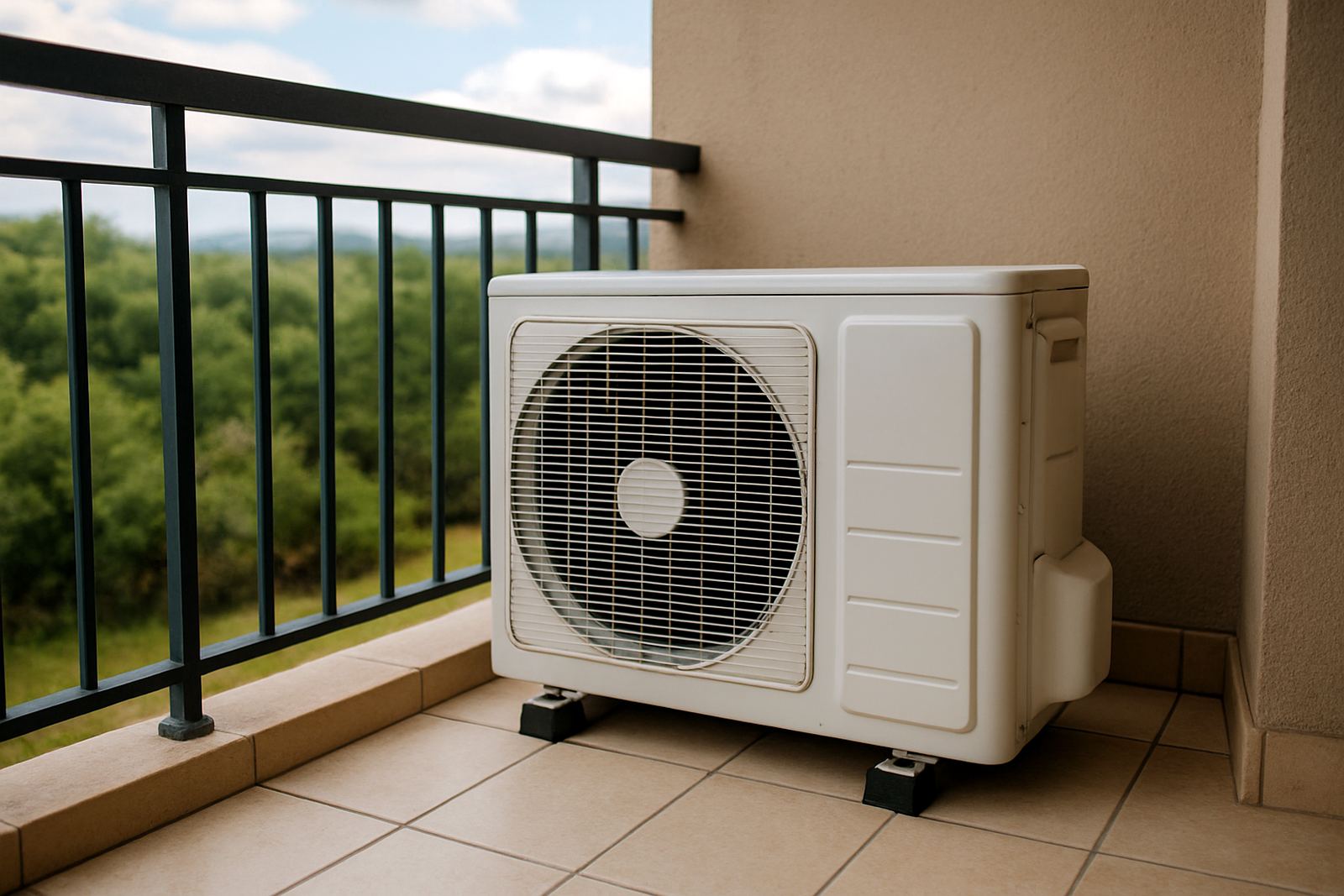
Another common error is forgetting about maintenance access. If a cassette is boxed in above a ceiling with no clearance, it becomes difficult to service and slows everything down later. Wall splits also need enough space for air circulation and for the condensate drain to run properly. If the drain line is badly routed, the unit may drip onto the floor or cause smell issues near the counter.
Restaurants near the coast or in humid parts of the Lowveld need extra care with corrosion, cleaning and drainage. Grease, dust and cooking vapour build up faster than people expect, and that affects airflow. We always recommend regular servicing rather than waiting until the unit starts struggling. A dirty system will use more electricity, cool less evenly and can go out on fault at the worst possible time.
Budget ranges for small cafés to busy dining rooms
Budgets vary quite a bit depending on the size of the room, the unit type and the complexity of the install. For a small café or takeaway seating area, a basic wall split installation may start from around R12 000 to R20 000, depending on pipe length and electrical work. A larger dining area with one or more cassette units can run from about R28 000 to R65 000 or more, especially where ceiling work, longer pipe runs or multiple zones are needed.
Portable units are cheaper upfront, usually from around R6 000 to R15 000, but they are best for temporary or light use only. They move around but they do not replace proper fixed cooling in a full-service restaurant. If an existing system can be salvaged, a replacement unit may cost less than a full new install, though labour and materials still need to be factored in.
We quote after a site assessment so the numbers reflect the real job. That helps avoid surprises with cable runs, drain lines, mounting brackets, ceiling access and power supply upgrades. In some restaurants, the actual install work costs more than the unit because the room layout is awkward. It is better to price that correctly up front than to patch things later.
Servicing that keeps lunch and dinner trading smoothly
Restaurant aircon works hard and it should be serviced on a schedule, not only when it stops cooling. Filters, coils and drains collect dust, grease and moisture, and that affects air quality in the dining room. We offer scheduled servicing, fault finding, gas top-ups and deep cleaning for restaurants that need predictable performance through the week.
- Seasonal servicing before summer and before festive trading.
- Deep cleaning where dust and cooking vapour have built up.
- Fault finding for weak cooling, strange noises or short cycling.
- Gas top-ups only after checking for leaks and pressure loss.
- Replacement units when repair costs no longer make sense.
For owners in Mbombela, White River, Hazyview, Klerksdorp, Potchefstroom and Rustenburg, our team can assist with installation and ongoing support from our Mbombela base. Sipho Mandla Nkosi leads the business, with support from Annelie van Wyk on sales, Thabo Mokoena on installations, Lerato Molefe on service coordination, Johan Steyn in the warehouse and Nokuthula Dlamini on accounts and admin. If your restaurant needs cooling that works with service flow instead of against it, we can help plan the right setup.